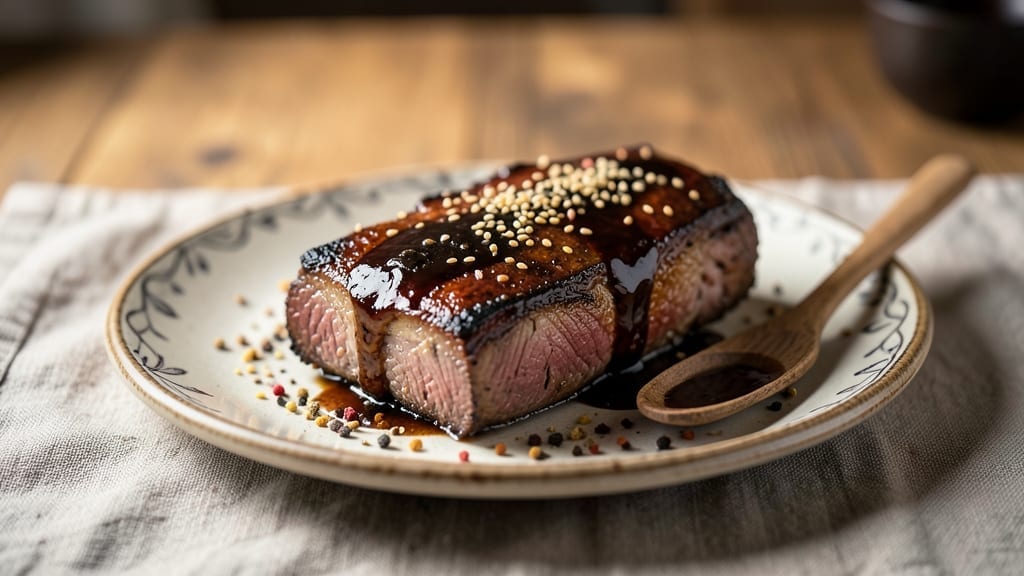
A brisket recipe with Worcestershire sauce transforms tough beef into melt-in-your-mouth perfection through a carefully balanced marinade and slow cook. The sauce adds depth that cuts through the fat, creating layers of umami that make every bite unforgettable.
I’ve perfected this method over countless experiments to ensure consistent results, whether you’re using a smoker, oven, or slow cooker.
The key to tender brisket lies in the low-and-slow cooking process, which breaks down connective tissue while the Worcestershire-infused glaze caramelizes into a sticky-sweet crust. This isn’t just about flavor—it’s about texture, too.
The meat should pull apart effortlessly, with no trace of toughness remaining. What makes this recipe special is how the Worcestershire sauce enhances natural beef flavors without overpowering them.
What you’ll end up with is brisket that’s so tender it practically falls apart at the touch, coated in a glossy glaze that balances smoky, sweet, and savory notes.
The aroma alone will have your kitchen smelling like a professional BBQ joint, and the first bite delivers that perfect harmony of flavors. This method works equally well for holiday feasts or weeknight dinners when you crave restaurant-quality results at home.
Serve with classic sides like creamy coleslaw, buttery cornbread, and pickled jalapeños to complete the meal. The brisket’s rich flavors pair beautifully with these accompaniments, creating a full spread that’s sure to impress. Here’s how to achieve that perfect balance of tenderness and flavor every time.
Ingredients for brisket recipe worcestershire sauce
The secret to melt-in-your-mouth brisket lies in these core ingredients—beefy, smoky, and perfectly balanced.
| Ingredient | Amount | Notes |
|---|---|---|
| Beef Brisket 🥩 | 6 lb | Packer cut, fat cap intact |
| Worcestershire Sauce 🍯 | ½ cup | Lea & Perrins preferred |
| Yellow Onion 🧅 | 1 whole | Yellow, sliced into wedges |
| Garlic Cloves 🧄 | 8 cloves | Peeled, left whole for roasting |
| Brown Sugar 🍯 | ½ cup | Packed, light brown preferred |
| Apple Cider Vinegar 🍎 | ¼ cup | Bragg preferred for depth |
| Black Peppercorns 🌶️ | 1 tbsp | Freshly cracked, coarse grind |
| Kosher Salt 🧂 | 2 tbsp | Diamond Crystal preferred |
| Smoked Paprika 🌶️ | 1 tbsp | Hot or mild variety |
| Fresh Thyme 🌿 | 2 sprigs | Stems removed for marinade |
| Beef Broth 💧 | 1 cup | Low-sodium, homemade preferred |
| Honey 🍯 | ¼ cup | Wildflower preferred for depth |
| Yellow Mustard 🍯 | 1 tbsp | Dijon optional for tang |
| Bay Leaves 🌿 | 2 whole | Fresh preferred, removed before serving |
| Wood Chips 🌳 | 2 cups | Hickory or oak preferred |
[recipe_ingredient_scaler]
The brisket cut is non-negotiable here—packer cut with intact fat cap is what gives you that signature bark and tenderness. Costco or local butchers usually carry it pre-trimmed, but if you’re buying whole, trim it yourself to about 1/4-inch fat. The fat renders down during cooking, creating that luscious glaze. Look for beef with good marbling—USDA Choice or Prime if you want to splurge. I’ve used Kroger’s house brand packer cut for years with great results, but if you’re at a farmers market, grab the thickest piece you can find. The Worcestershire sauce? Lea & Perrins is the gold standard—it’s got that perfect balance of tangy, umami, and slightly sweet that makes this glaze sing. Don’t skimp on the amount; it’s the soul of this recipe.
No Worcestershire? Substitute with 1/4 cup soy sauce plus 1 tbsp balsamic vinegar, but you’ll lose some depth. The apple cider vinegar adds brightness—Bragg is my go-to because it’s pasteurized and won’t ferment in your fridge. Swapping the brown sugar? Maple syrup works 1:1, but the molasses notes in brown sugar give that classic BBQ depth. Fresh thyme is ideal, but dried thyme at 1/3 the amount works in a pinch. The wood chips? Hickory is traditional, but oak gives a cleaner smoke if you prefer. No smoker? Use a smoke gun or even a cast-iron skillet with wood chips on the stove for that smoky flavor. Just don’t rush it—low and slow is the only way to get that fall-apart texture.
The brisket marinade keeps for up to 5 days in the fridge, but the flavor actually improves after 24 hours. Store it in a sealed container with a lid. The cooked brisket? 3-4 days in the fridge, wrapped tightly in butcher paper or foil. For longer storage, slice it against the grain and freeze in portions—up to 3 months. Pro tip: Let it rest for at least 1 hour after cooking before slicing. The internal temp should hit 195°F for perfect tenderness. And if you’re making this ahead for a party, reheat in the oven at 300°F to keep it moist—microwaving turns it rubbery.
Why You’ll Love This Recipe
- Smoker’s Shortcut: Honestly, the only prep work here is trimming that fat cap and letting the brisket sit for an hour—no chopping onions into a million pieces or standing over a stove stirring. The Worcestershire sauce and brown sugar glaze practically makes itself while you smoke, and those whole garlic cloves and onion wedges just roast alongside the meat. I’ll be real: this is the kind of recipe where you can set it and forget it for hours.
- Umami Bomb: That half cup of Worcestershire sauce? Game-changer. Combined with the honey and apple cider vinegar, it turns a simple brisket into something with layers—deep, savory, with just a hint of tang. And the smoked paprika? It adds that little kick that makes the bark crack when you bite into it. Trust me, the garlic cloves nestled into the meat? They infuse so much flavor, you’ll forget they were even there.
- Leftovers That Shine: This brisket doesn’t just feed a crowd—it elevates leftovers. Slice it up the next day, and you’ve got perfect sandwiches, tacos, or even a hearty salad topping. The glaze clings to the meat like glue, so every bite still tastes like it came straight off the smoker. I’ll admit, I’ve had brisket sandwiches for lunch three days in a row, and no one’s complained. The Worcestershire sauce keeps the flavors rich, so it never gets boring.
- Budget-Friendly Luxury: Six pounds of brisket might sound pricey, but this recipe stretches it into so much. You’ve got the main meal, plus enough leftovers to make sandwiches or wraps for days. And here’s the thing: the ingredients are simple, but the flavor? Ridiculously good. That half cup of Worcestershire sauce and the brown sugar glaze turn a basic cut of meat into something special without breaking the bank. It’s the kind of dish where you feel like you’re treating yourself, but your wallet doesn’t mind.
Step-by-step instructions for brisket with Worcestershire sauce
This method delivers melt-in-your-mouth tenderness with a perfect balance of smoky-sweet glaze.
Prepare the Brisket and Build the Dry Rub
Begin by trimming the fat cap of the 6 lb beef brisket to about ¼-inch thickness, leaving the rest intact to protect the meat during cooking. Place the brisket fat-side up on a cutting board and pat it dry with paper towels—this ensures maximum crispiness later.
In a small bowl, combine the 2 tbsp kosher salt, 1 tbsp smoked paprika, 1 tbsp freshly cracked black peppercorns, and the 2 sprigs fresh thyme (stems removed). Rub this mixture all over the brisket, pressing firmly so the spices adhere. Add the 8 peeled garlic cloves directly onto the surface of the brisket, nestling them into the fat cap and meat. This creates flavor pockets that infuse as it cooks.
Let the seasoned brisket sit at room temperature for 1 hour before smoking. Here’s the thing—this resting period ensures even cooking and prevents temperature shock when it hits the smoker.
Create the Smoky-Sweet Glaze and Smoke the Brisket
In a small saucepan, combine the ½ cup brown sugar, ¼ cup apple cider vinegar, ½ cup Worcestershire sauce, ¼ cup honey, 1 tbsp yellow mustard, 1 cup beef broth, and the 2 bay leaves. Bring to a simmer over medium heat, stirring until the sugar dissolves completely. Reduce heat to low and let it reduce by half—about 10 minutes—until it reaches a syrupy consistency. This glaze is what makes the bark irresistible.
While the glaze reduces, set up your smoker with the 2 cups hickory or oak wood chips. Preheat to 225°F and let it establish a steady smoke. Place the yellow onion (sliced into wedges) and the 8 garlic cloves (left whole) in the smoker alongside the brisket—this adds depth as they roast slowly.
Put the brisket fat-side up on the smoker grates and let it cook undisturbed for 6 hours. Here’s where patience pays off—the low-and-slow method breaks down collagen into gelatin, creating that signature tenderness. After 6 hours, brush the brisket with half of the reduced glaze, then continue smoking for another 3-4 hours until the internal temperature reaches 200°F.
Wrap and Finish for Maximum Tenderness
When the brisket hits the stall (around 165°F internal temperature), it’s time to wrap. Use heavy-duty aluminum foil to tightly wrap the brisket, including the onion and garlic cloves, trapping steam to tenderize the meat further. Return it to the smoker for 2 more hours, basting with the remaining glaze every hour.
The brisket is done when a probe slides in like butter—this usually takes about 10-12 hours total. Remove it from the smoker and let it rest for 1 hour before slicing. This resting period is non-negotiable; it allows juices to redistribute, ensuring every bite is moist and flavorful.
Slice and Serve with Roasted Aromatics
Unwrap the brisket and discard the foil and any roasted onion/garlic cloves that aren’t part of the meat. Slice against the grain into ¼-inch thick pieces. The brisket should have a dark mahogany bark on the outside and a beautiful pink smoke ring beneath.
Serve immediately with the remaining glaze spooned over the top. The combination of smoky, sweet, and tangy flavors creates a perfect balance. Each slice should pull apart effortlessly, delivering that fall-apart tenderness you’re after.
Pro Tips For Making Brisket Recipe Worcestershire Sauce
- Trim That Fat Cap: Cut the fat cap to exactly ¼-inch—any thicker and it’ll render unevenly, leaving greasy spots on your brisket. I learned this the hard way when a thick cap turned my smoker into a sizzling mess halfway through.
- Reduce Glaze Properly: Don’t rush the glaze—simmer it until it’s half its original volume (about 10 minutes). I once skipped this and ended up with a sticky, underdeveloped sauce that clumped instead of caramelizing. Patience here makes the bark crisp and flavorful.
- Wrap Tight at Stall: When the brisket stalls at 165°F, wrap it snugly—no gaps, no lazy corners. I used to fold foil loosely, and steam escaped, leaving the meat dry. A tight seal traps moisture like a sauna, turning tough fibers into silk.
- Rest Before Slicing: That 1-hour rest isn’t optional—it’s when juices redistribute. I’ve sliced too soon, and every bite was dry. Cover the brisket with foil and let it sit; your knife will glide through it like butter, and every slice will be juicy.
Troubleshooting your brisket recipe worcestershire sauce
Undercooked Brisket Fix
If your brisket feels tough and chewy when it hits 165°F internal temperature, it’s likely not cooked long enough. The key is patience—return it to the smoker wrapped in foil and cook until it reaches 200°F.
This step breaks down collagen fully. I once rushed this and ended up with rubbery meat—don’t make that mistake! 🔥
Overly Dry Meat
Dry brisket often happens when the fat cap isn’t left thick enough or the meat isn’t wrapped properly. Leave the fat cap at least ¼-inch thick and wrap tightly in foil during the final hours.
I use heavy-duty aluminum foil to trap steam and keep the meat moist. If it’s already dry, slice thinly and serve with extra glaze to compensate.
Uneven Bark Formation
Bark that’s spotty or uneven usually means inconsistent heat or direct flame contact. Keep the brisket fat-side up and maintain a steady 225°F temperature. If using a smoker, avoid opening the lid too often—each opening can drop the temperature.
I like to use a Pellet Grill for consistent results if I’m short on time.
Stuck at the Stall
The stall (around 165°F) can feel like an eternity, but it’s normal. If your brisket isn’t progressing, wrap it tightly in foil and add ½ cup beef broth to the smoker tray to create steam.
This helps push through the stall and keeps the meat moist. I’ve found that adding a few extra wood chips can also help maintain temperature during this phase.
Glaze Too Thin or Too Thick
A glaze that’s too thin won’t coat the brisket properly, while one that’s too thick can burn. Reduce the glaze to a syrupy consistency—about 10 minutes on low heat. If it’s still too thin, simmer it longer until it thickens.
For extra shine, brush on a thin layer of the glaze every hour during the final 2 hours of cooking. This builds flavor and creates a beautiful finish.
Nutrition facts
Frequently asked questions
Why does Worcestershire sauce add so much flavor to brisket?
The Worcestershire sauce brings deep umami richness that enhances the beef’s natural taste without overpowering it. Its tangy, slightly sweet profile balances the smoky notes from the wood chips, creating a complex flavor profile that makes every bite irresistible. The sauce also helps tenderize the meat as it cooks, ensuring a perfect texture.
Can I substitute Worcestershire sauce in this recipe?
If you can’t find Worcestershire sauce, mix ¼ cup soy sauce with 1 tablespoon balsamic vinegar for a similar tangy depth. However, the flavor won’t be exactly the same—Worcestershire’s unique fermentation process gives it unmatched complexity. For best results, use the real thing!
How do I know when the brisket is done?
Use a meat thermometer to check the internal temperature—it should reach 200°F for perfect tenderness. The meat will also feel soft and pull apart easily when probed. If you hit the stall around 165°F, wrap it in foil and cook until it reaches the target temp. Patience is key!
Can I make this brisket in an oven instead of smoking?
Yes! Preheat your oven to 275°F, place the brisket on a rack over a tray, and cook for 6 hours. After 6 hours, brush with glaze and wrap tightly in foil for another 2 hours. The result won’t be smoky, but it will still be tender and flavorful.
What’s the best way to store leftover brisket?
Slice the brisket against the grain and store it in an airtight container in the fridge for up to 3-4 days. For longer storage, freeze it in portions for up to 3 months. Reheat gently in the oven at 300°F to keep it moist. Rest before reheating for best results!

Trained in classic French technique but raised on slow-cooked ribs and spicy rubs, she blends culinary skill with smoke and soul.
- Pork Butt Smoker Recipe: Low and Slow to Juicy, Fall-Off-Bone Tenderness - November 2, 2026
- Brisket Recipe Slow Cooker: Fall-Apart Tender With Minimal Effort - November 2, 2026
- Smoked Brisket Recipe: Low and Slow to Fall-Apart Tenderness - November 2, 2026