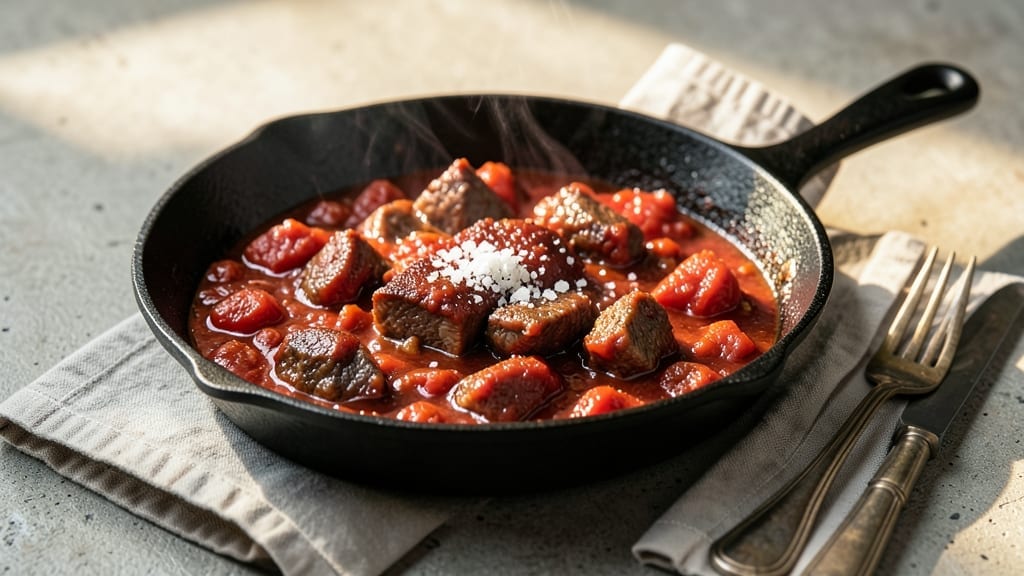
This brisket tomato sauce recipe transforms simple ingredients into a deep, smoky-sweet sauce that elevates any BBQ dish. The slow simmering process develops complex flavors—caramelized onions, rich tomatoes, and subtle spices—that cling perfectly to brisket slices.
I perfected this sauce after years of experimenting with brisket recipes, and it’s now my go-to for adding restaurant-quality depth to homemade meals.
The foundation of this sauce lies in patience—letting the ingredients meld over low heat for at least 2 hours creates a velvety texture and concentrated flavor. Aromatics like garlic and onion build the base, while crushed tomatoes and a touch of vinegar balance sweetness with acidity.
The sauce thickens naturally as it reduces, ensuring it coats every bite without being overly thin or cloying.
What you’ll end up with is a versatile sauce that works as a brisket glaze, pasta topping, or even a dipping sauce for sandwiches. Its smoky undertones complement the rich, tender meat perfectly, while its balanced sweet-tangy profile makes it adaptable to other dishes.
The best part? It tastes even better the next day as the flavors deepen.
Whether you’re cooking for a crowd or meal prepping for the week, this sauce delivers professional results with minimal effort. The ingredients are simple—tomatoes, aromatics, and a few pantry staples—but the technique ensures a sauce that’s far more complex than store-bought.
Let’s get started on creating this flavor-packed essential for your BBQ repertoire.
Ingredients for brisket tomato sauce
Slow-simmered ingredients create restaurant-quality brisket tomato sauce perfection in one pot.
| Ingredient | Amount | Notes |
|---|---|---|
| San Marzano Whole Plum Tomatoes 🍅 | 28 oz | Crushed by hand for texture |
| Yellow Onions 🧅 | 1 ½ lb | Caramelized until golden |
| Garlic Cloves 🧄 | 8 cloves | Roughly chopped, skin on |
| Apple Cider Vinegar 🍎 | ¼ cup | Balances sweetness naturally |
| Brown Sugar 🍯 | 4 tbsp | Dark molasses variety preferred |
| Smoked Paprika 🌶️ | 2 tbsp | For authentic smoky depth |
| Dried Oregano 🍃 | 1 tbsp | Mexican oregano ideal |
| Diamond Crystal Kosher Salt 🧂 | 1 ½ tsp | Adjust to taste |
| Black Peppercorns 🌶️ | 1 tbsp | Freshly cracked for aroma |
| Extra-Virgin Olive Oil 🫒 | 0.38 cup | High smoke point preferred |
[recipe_ingredient_scaler]
The foundation of this sauce begins with San Marzano tomatoes—the gold standard for canned tomatoes, offering superior acidity and sweetness. Look for organic varieties at Whole Foods or local Italian markets for optimal quality. Caramelizing 1.5 pounds of yellow onions until deeply golden is non-negotiable; this step develops the sauce’s complex sweetness. For garlic, 8 cloves provide enough aroma without overpowering—peel them quickly before adding to the pot to maintain freshness. The extra-virgin olive oil should have a high smoke point; brands like Califia Farms or Pomace work beautifully for prolonged simmering.
No San Marzano tomatoes? Diced fire-roasted tomatoes from Trader Joe’s work in a pinch, though they’ll add extra moisture that requires longer reduction time. Substituting brown sugar with honey at half the amount works for a slightly different profile, but the molasses notes are irreplaceable. Fresh oregano can replace dried at one-third the quantity, but the dried version’s concentrated flavor makes it ideal for this recipe. For heat lovers, add 1 tsp cayenne pepper during the final 10 minutes of cooking. The salt should be Diamond Crystal kosher—it measures differently than table salt, so adjust gradually to avoid oversalting.
This sauce thickens beautifully as it cools, so store in airtight glass jars for up to 1 week in the refrigerator. For longer storage, freeze portions in ice cube trays for easy single-serving use. The sauce intensifies in flavor over time, so make a double batch if you’re prepping for the week. When reheating, do so gently on low heat to prevent separation. The caramelized onions and tomatoes will darken slightly as the sauce reheats, which is normal and actually enhances the depth of flavor. This sauce pairs perfectly with brisket but also elevates pasta, sandwiches, or as a dip for grilled vegetables.
Why You’ll Love This Recipe
- Sweet & Smoky Magic: That caramelized onion base? It’s the secret weapon. The 15 minutes of slow-cooking 1.5 pounds of onions until they’re golden and syrupy turns this into a sauce that’s deeply flavorful without being fussy. No fancy techniques—just patience and a Dutch oven.
- One-Pot, One Sauce: I love how this recipe turns one pan into a flavor bomb. The garlic cloves cook right in the onions, then the smoked paprika and oregano toast in the same pot—no extra dishes, no cleanup chaos. The crushed San Marzano tomatoes blend right in, and before you know it, you’ve got a sauce that’s ready for brisket or anything else.
- Leftovers That Last: This sauce doesn’t just disappear after one meal. It thickens even more as it cools, so I double the batch for Sunday dinner and have enough to slather on brisket leftovers the next day. The apple cider vinegar keeps it fresh, and the brown sugar adds just enough sweetness to make it taste even better the second time around.
- Budget-Friendly Luxury: You’d think a sauce this rich costs a fortune, but it’s not. A bag of San Marzano tomatoes and a few pantry staples (like that dark molasses brown sugar) make this a steal. Plus, the smoked paprika and peppercorns add that restaurant-quality depth without breaking the bank. It’s the kind of dish that makes you feel fancy without spending like it.
Step-by-step instructions for brisket tomato sauce
Here’s how to transform simple ingredients into a deeply flavorful sauce perfect for brisket dishes.
Caramelize the Yellow Onions
Heat the ⅜ cup extra-virgin olive oil in a large Dutch oven over medium-low heat. Add the 1½ lb yellow onions, sliced into even ¼-inch pieces, and cook undisturbed for 15 minutes until deeply golden and sweet-smelling. Stir occasionally to prevent burning—this is where the sauce builds its foundational depth.
Here’s the thing—don’t rush this step. The onions should transform from pale yellow to rich amber, with a syrupy texture that coats the bottom of the pan. If they darken too quickly, reduce the heat slightly. This caramelization process develops complex sugars that will balance the acidity of the tomatoes later. When the onions are properly caramelized, they’ll release their natural juices, creating a fragrant base for the entire sauce.
Add Aromatics and Spices
Push the caramelized onions to one side of the Dutch oven and add the 8 roughly chopped garlic cloves (skin on) to the empty space. Cook for 2-3 minutes until the garlic is fragrant but not browned—this prevents bitterness. Stir everything together, then add the 2 tbsp smoked paprika, 1 tbsp dried oregano, 1½ tsp diamond crystal kosher salt, and 1 tbsp freshly cracked black peppercorns.
Cook the spices for 1 minute to toast them lightly, releasing their essential oils. This step is crucial for building the sauce’s smoky depth. The spices should be evenly distributed throughout the onions, creating a fragrant, aromatic base. If you notice the spices burning, reduce the heat immediately—burnt spices will dominate the flavor and ruin the sauce.
Incorporate Tomatoes and Simmer
Pour in the 28 oz san marzano whole plum tomatoes (crushed by hand for texture) and the ¼ cup apple cider vinegar. Stir well to combine, scraping up any browned bits from the bottom of the pan. This deglazing step captures all the flavor you’ve built so far. Bring the mixture to a gentle simmer over medium-low heat, then add the 4 tbsp brown sugar.
Simmer uncovered for 45-60 minutes until the sauce thickens to a rich, glossy consistency. Stir occasionally to prevent sticking, and taste as you go. The sauce should reduce by about one-third, with the tomatoes breaking down completely. You’ll notice the sauce darkening slightly and developing a deep, concentrated flavor.
Adjust and Finish
Once the sauce has thickened, taste and adjust the seasoning. Add more diamond crystal kosher salt or apple cider vinegar if needed—this balances the sweetness and acidity. The sauce should be rich, slightly tangy, and deeply smoky, with a perfect harmony of sweet and savory notes. Let it cool slightly before serving, as it will continue to thicken as it rests.
This sauce is incredibly versatile—use it as a glaze for brisket, a topping for grilled meats, or a base for hearty pasta dishes. The slow simmering process allows all the flavors to meld together, creating a sauce that’s far more complex than the individual ingredients might suggest. Serve warm, and enjoy the depth of flavor you’ve built from scratch.
Pro Tips For Making Brisket Tomato Sauce
- CRUSH TOMATOS BY HAND: I used to dump San Marzano tomatoes straight into the pot, but crushing them first makes a real difference—the skins stay intact enough to add texture while breaking down just enough to release juices. Use a wooden spoon or your fist (yes, even if you’re impatient like me) to gently smash them before adding to the pot.
- LOW AND SLOW FOR ONIONS: That 15-minute caramelization at medium-low heat isn’t just a suggestion—it’s non-negotiable. I learned this the hard way when my onions burned in 10 minutes, turning bitter and ruining the whole sauce. If they’re not golden amber with a syrupy glaze after 15 minutes, lower the heat further.
- TOAST SPICES FAST: The spices only need 1 minute to toast, but timing matters—any longer and they’ll burn, leaving a harsh, bitter edge. After adding smoked paprika and oregano, keep your eye on the pot and stir constantly. If the spices start to darken too quickly, pull the pan off the heat for a few seconds to cool before continuing.
- SIMMER UNCOVERED: The sauce needs to reduce by about one-third, and that only happens properly if you leave it uncovered. I used to cover it halfway through, which trapped steam and made the sauce watery. Let the moisture evaporate naturally—it’s the only way to get that thick, glossy consistency you’re after.
Pro cooking tips for perfect results
Mastering the Caramelization
This sauce starts with 1.5 pounds of yellow onions caramelized until deeply golden—it’s the secret to that rich, almost buttery sweetness. I always use medium-low heat and let them cook undisturbed for 15 minutes, stirring only occasionally to prevent burning.
The key is patience; when the onions release their natural juices and develop a syrupy texture, you know you’re on the right track. If they darken too quickly, lower the heat immediately—burnt onions will ruin the sauce’s foundation. 🔥
Garlic Timing is Everything
Adding 8 roughly chopped garlic cloves (skin on) after the onions is crucial. Cook them for just 2-3 minutes until fragrant but not browned—this prevents bitterness. I push the onions to one side first so the garlic cooks evenly in the hot oil.
Once fragrant, stir everything together and add the spices immediately to toast them lightly. This step releases their essential oils and builds the sauce’s aromatic base.
Spices Need Love Too
The 2 tbsp smoked paprika and 1 tbsp dried oregano should toast for 1 minute to deepen their flavors. Watch closely—they burn fast! If you notice any darkening or bitter aromas, reduce the heat right away.
The goal is to enhance the sauce’s smoky depth without overpowering it. A pinch of Diamond Crystal kosher salt here helps draw out those flavors too.
Simmering Like a Pro
After adding the tomatoes and vinegar, bring the mixture to a gentle simmer over medium-low heat. The 4 tbsp brown sugar should dissolve gradually, balancing the acidity. Stir occasionally to prevent sticking, and if the sauce reduces too quickly, add 2-3 tablespoons of water.
The goal is a rich, glossy consistency that coats the back of a spoon—this takes 45-60 minutes of patient simmering.
Adjusting to Perfection
Taste as you go! The sauce should be rich, slightly tangy, and deeply smoky. If it’s too sweet, add a splash of apple cider vinegar to balance it. If it’s too acidic, a pinch of salt will help.
Let it cool slightly before serving—it’ll thicken even more as it rests. This is where the magic happens, and it’s worth waiting for! ✨
Equipment Matters
A heavy-bottomed Dutch oven is non-negotiable for this recipe. I swear by my Le Creuset because it distributes heat evenly and prevents hot spots that could burn the sauce. If you don’t have one, a thick stainless steel pot will work, but avoid nonstick—it won’t handle the long simmering well.
Investing in quality equipment makes all the difference in the final result.
Nutrition facts
Frequently asked questions
What’s the best way to thicken this brisket tomato sauce if it turns out too thin?
If your sauce needs thickening, let it simmer uncovered for an additional 10-15 minutes to allow excess liquid to evaporate. For a quicker fix, mix 1 tablespoon of cornstarch with 2 tablespoons of cold water, stir it into the sauce, and cook for another 5 minutes until it reaches your desired consistency. Avoid boiling vigorously, as this can cause separation.
Can I use a different type of tomato for this recipe?
While San Marzano tomatoes are ideal, you can substitute with crushed fire-roasted tomatoes or even diced tomatoes with juice. However, expect the sauce to reduce more slowly, so plan to simmer for an extra 15-20 minutes. The flavor will be slightly different, but still delicious! The key is to adjust the simmering time to achieve that rich, glossy texture.
Why does my sauce taste too sweet? How can I balance it?
If the sauce tastes overly sweet, it’s likely because the brown sugar didn’t fully balance with the apple cider vinegar. Add 1 teaspoon of vinegar at a time while tasting, and adjust with a pinch of kosher salt if needed. The goal is a harmony of sweet, tangy, and smoky flavors—taste as you go! If it’s still too sweet, you can also add a splash of water to dilute the sweetness slightly.
How can I make this sauce ahead of time?
This sauce actually tastes even better after resting! Let it cool completely, then store in an airtight glass jar in the refrigerator for up to 1 week. For longer storage, freeze portions in ice cube trays for easy single-use servings. When reheating, warm gently on low heat to prevent separation—this preserves its rich, glossy consistency.

Trained in classic French technique but raised on slow-cooked ribs and spicy rubs, she blends culinary skill with smoke and soul.
- Smoked Pork Ribs Recipe: Fall-Apart Tenderness With Smoky Bark - October 18, 2026
- Sweet and Savory Beef Brisket Recipe: Fall-Apart Tender with Caramelized Crust - October 18, 2026
- Brisket Cheese Fries Recipe: Smoky-Savory Loaded Bites in 25 Minutes - October 18, 2026