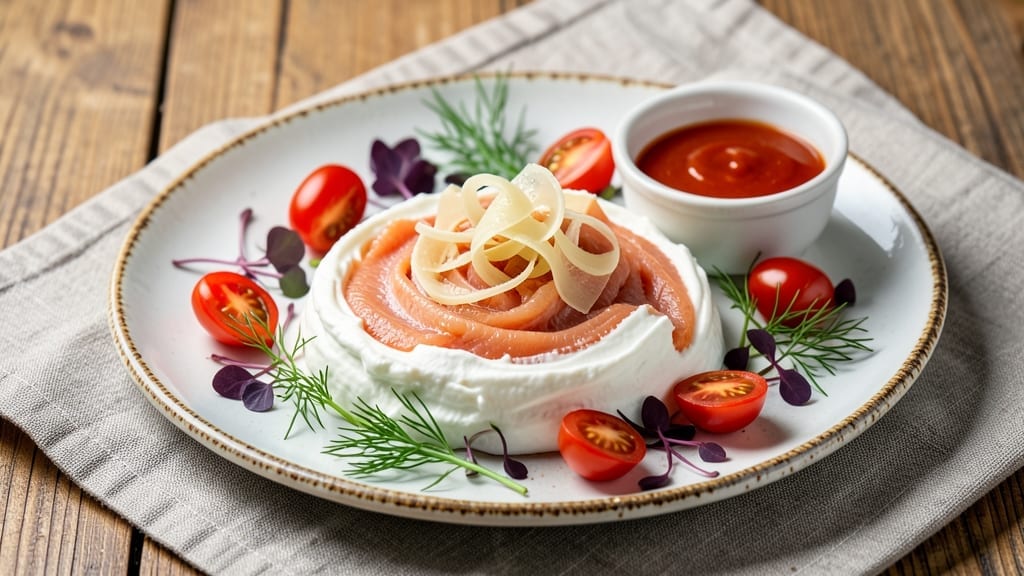
This smoked salmon cream cheese recipe transforms simple ingredients into a velvety, herbed spread that elevates everything from bagels to blini. The secret lies in balancing rich cream cheese with delicate smoked salmon and bright citrus, creating a texture that’s both silky and sturdy enough to hold its shape.
I developed this recipe after years of testing variations—too much salmon makes it heavy, too little loses that signature briny depth.
The beauty of this spread is its versatility. Use it as a breakfast topping, a sophisticated appetizer with crackers, or even as a sandwich filling for a gourmet twist.
The herbed tang from fresh dill and lemon zest cuts through the creaminess, while a touch of capers adds that essential salty punch. What makes it truly special is how it keeps its perfect consistency for up to a week in the fridge—no lumps, no separation, just pure, restaurant-quality flavor.
What you’ll end up with is a spread that’s dangerously addictive—creamy yet structured, with layers of salmon flavor that linger on the palate. The key technique is blending everything just until combined, not overmixing, which preserves that luxurious, melt-in-your-mouth texture.
This isn’t just another cream cheese recipe; it’s a game-changer for anyone who wants to bring that deli counter experience home without the hassle.
Perfect for meal prep, gifts, or last-minute entertaining, this recipe delivers professional results with minimal effort. Let’s create this silky, herbed spread that will have everyone asking for seconds—and thirds. The ingredients are simple, but the flavor impact is anything but ordinary.
Ingredients for smoked salmon cream cheese
A harmonious blend of creamy richness and briny tang transforms ordinary spreads into restaurant-quality elegance.
| Ingredient | Amount | Notes |
|---|---|---|
| Full-Fat Cream Cheese 🧀 | 8 oz | Room temperature for blending |
| Smoked Salmon 🐟 | 4 oz | High-quality, flaked finely |
| Fresh Dill 🌿 | ½ cup | Chopped, vibrant green leaves |
| Lemon Zest 🍋 | 1 tbsp | Freshly grated from organic lemons |
| Capers 🫒 | 1 tbsp | Rinsed, chopped finely |
| Extra-Virgin Olive Oil 🫒 | 1 tbsp | High-quality, fruity profile |
| Fresh Lemon Juice 🍋 | 1 tbsp | Bright, freshly squeezed |
| Diamond Crystal Kosher Salt 🧂 | ¼ tsp | Fine grain preferred |
| Freshly Ground Black Pepper 🌶️ | ¼ tsp | Lightly cracked on top |
[recipe_ingredient_scaler]
The foundation of this recipe lies in the quality of your smoked salmon. Opt for high-grade, sustainably sourced salmon—look for vibrant pink color and minimal oxidation. Wild-caught Alaskan salmon is ideal, but high-quality farmed varieties work well. Store-bought salmon? Rinse it thoroughly to remove excess salt, then pat it dry. The cream cheese must be full-fat, room temperature—this ensures a silky texture without lumps. For the dill, fresh is non-negotiable—it provides that essential herbed brightness dried can’t replicate. I always grab organic bunches from local markets when possible, but even grocery store dill works if it’s fresh.
No capers on hand? Substitute 1/2 tsp of salt with a dash of Worcestershire sauce for that umami depth. Short on fresh lemon zest? Use 1 tbsp of bottled lemon juice plus 1/2 tsp extra lemon zest—the acidity will still brighten the spread. Want to stretch the salmon? Add 1 oz of herbed goat cheese for a tangy twist. The olive oil quality matters—avoid cheap supermarket brands—opt for extra-virgin with fruity notes like California Olive Ranch or Colavita. The salt? Diamond Crystal is preferred—it’s finer and dissolves better than Morton’s. If you’re using a different salt, reduce the amount by half.
This spread maintains its perfect consistency for up to 7 days in an airtight container in the refrigerator. For best results, layer a thin film of olive oil on top before sealing to prevent a skin from forming. Freezes beautifully for up to 3 months—thaw overnight in the fridge. I portion mine into small silicone molds for easy grab-and-go servings. The texture may slightly separate when frozen, but it revives beautifully when blended again. For a gourmet touch, serve with toasted bagel thins or blini—the contrast is divine. Always taste before serving and adjust salt/pepper as needed; flavors deepen in the fridge.
Why You’ll Love This Recipe
- No Food Processor? No Problem: I keep a mini food processor on my counter just for this—it’s the only reason I own one. The key is that room-temperature cream cheese blends in seconds, and you’re left with that perfectly smooth texture without overworking it. No need for fancy gadgets; even a hand mixer gets the job done if you pulse it just right.
- The Perfect Balance: That first bite? Creamy, smoky, and bright—all at once. The capers add a little briny punch, the lemon zest cuts through the richness, and the dill? It’s like a fresh breeze on your taste buds. I’ll be real: it’s not just a spread, it’s a flavor party in your mouth.
- Meal-Prep MVP: This isn’t just for bagels. Slather it on toasted baguette slices for a fancy brunch, dollop it on avocado toast, or use it as a dip for cucumber slices. I make a big batch on Sundays and it’s gone by Wednesday—no waste, just delicious leftovers. The fridge keeps it fresh for weeks, so you’re always ready.
- Budget-Friendly Luxury: High-quality smoked salmon isn’t cheap, but a little goes a long way. This recipe stretches it perfectly, and the rest of the ingredients? Basic pantry staples. It’s the kind of dish that makes you feel like you’re splurging without actually breaking the bank. Plus, it’s so good, you’ll want to make it again.
Step-by-step instructions for smoked salmon cream cheese spread
This silky spread comes together in minutes with a perfect balance of herbed brightness and smoky depth.
Blend the Cream Cheese Until Smooth
Place the 8 oz full-fat cream cheese in a food processor fitted with the metal blade attachment. Pulse briefly to break up any large lumps, then process on medium speed for 1-2 minutes until completely smooth and creamy. The mixture should be homogeneous with no visible streaks—this ensures your spread will have that signature velvety texture.
Here’s the thing—room temperature cream cheese is critical. If it’s too cold, it won’t blend properly and will leave grainy bits. If it’s too soft, it might seize up. The ideal consistency is slightly yielding when pressed but still holding its shape. Scrape down the sides of the bowl with a spatula every 30 seconds to prevent overheating, which can cause the cream cheese to separate.
Incorporate the Smoked Salmon and Aromatics
Add the 4 oz smoked salmon, ½ cup chopped fresh dill, 1 tbsp lemon zest, and 1 tbsp finely chopped capers to the food processor. Pulse 3-4 times just until the salmon is finely distributed—you want visible flecks rather than a completely blended texture. Over-processing will break down the salmon’s delicate flakes and mute its smoky flavor.
Stop occasionally to taste and assess the balance. The spread should have a pronounced smokiness from the salmon, a bright citrus note from the lemon zest, and a briny pop from the capers. If the mixture seems too thick at this stage, it’s normal—the remaining ingredients will help emulsify it. The fresh dill adds a vibrant herbal contrast that cuts through the richness of the cream cheese.
Finish with Acid and Fat for Stability
With the processor running on low speed, slowly drizzle in the 1 tbsp extra-virgin olive oil and 1 tbsp fresh lemon juice. This sequence matters—the oil helps emulsify the mixture while the lemon juice adds acidity to brighten all the flavors. Process for an additional 20-30 seconds until everything is fully incorporated and the texture is uniformly smooth.
Season with ¼ tsp diamond crystal kosher salt and ¼ tsp freshly ground black pepper. Taste again and make any final adjustments—this is your quality control moment. The spread should be tangy, herby, and just slightly briny with a clean finish. If it needs more brightness, add another teaspoon of lemon juice. For extra depth, you could incorporate a pinch more salt, but be cautious—smoked salmon is already quite salty.
Chill and Rest for Optimal Texture
Transfer the spread to a clean bowl and cover it with plastic wrap pressed directly onto the surface to prevent a skin from forming. Refrigerate for at least 2 hours, or up to 24 hours, before serving. This chilling period allows the flavors to meld completely and the texture to set properly—you’re aiming for a spread that’s smooth yet slightly yielding, not runny.
Real talk: Don’t skip this step. The initial blend might seem perfect, but the spread will continue to develop in the fridge. The cream cheese will firm up slightly while the salmon and herbs infuse more deeply. When you’re ready to serve, give it one final taste and adjust seasoning if needed. This spread keeps beautifully for up to 5 days in the refrigerator, making it perfect for meal prep.
Pro Tips For Making Smoked Salmon Cream Cheese
- Press Test Cream Cheese: Stick your finger in the bowl before blending—if it leaves a clean indent but holds shape, you’ve got the perfect room-temperature cream cheese. Too soft? Pop it back in the fridge for 10 minutes. Too firm? Let it sit another 10. I’ve ruined batches both ways, and this quick check saves you from grainy or seized spread.
- Rinse Those Capers: Don’t skip rinsing the capers—even if they look clean. The brine clings like glue, and unrinsed capers will make your spread taste like a pickle jar exploded. Toss them in a fine-mesh strainer, give them a quick swirl under cold water, and pat dry. Trust me, your dill won’t thank you for the soggy texture.
- Pulse, Don’t Purée Salmon: Those 3-4 pulses with the salmon aren’t just for show. Over-blending turns the flakes into mush, and suddenly your spread tastes like a sad, gray paste instead of luxurious smoked salmon. Hit pulse until you see tiny, uneven bits—like confetti, not wallpaper. Your taste buds will notice the difference immediately.
- Chill Flat, Not Stacked: When refrigerating, flatten the spread in the bowl so it cools evenly. Stacked layers trap heat and create a skin, turning your silky blend into a cracked, rubbery mess. Press plastic wrap directly onto the surface like you’re tucking in a newborn—no air gaps, no regrets. Two hours later, you’ll have a spread that’s smooth, not sad.
Common mistakes when making perfect results
Overmixing the Spread
This is the most common mistake I see—people pulse the food processor until the salmon disappears completely. The key is 3-4 pulses only to distribute the salmon evenly, leaving visible flecks.
Overprocessing breaks down the delicate salmon texture, turning your spread into a mushy, flavorless paste. Trust me, the smoky notes will be stronger when you stop early. 🔥
Skipping the Chill Time
I get it—you’re excited to eat it immediately! But skipping the 2-hour chill means missing out on the full flavor development. The cream cheese firms up slightly, and the salmon’s smokiness infuses more deeply.
Without this step, the spread tastes flat and lacks that restaurant-quality depth. Patience here pays off big time.
Using Cold Ingredients
The cream cheese must be room temperature—no exceptions. Cold cream cheese creates grainy lumps that won’t blend smooth, no matter how long you process. Even the salmon should be slightly softened.
I always take it out of the fridge 30 minutes before starting. This ensures that velvety texture we all crave.
Neglecting the Acid Balance
Adding the lemon juice and zest at the very end is a common oversight. These acids are essential for brightening the rich salmon and cream cheese flavors. I drizzle them in during the final processing to ensure they’re fully incorporated. Without this step, the spread can taste heavy and unbalanced.
Inconsistent Salt Levels
Smoked salmon is already salty, so adding ¼ tsp kosher salt might seem like too little. But underseasoning is a frequent mistake—people either skip the salt entirely or add too much.
Taste as you go! The spread should be tangy, herby, and just slightly briny. Adjust gradually to avoid overpowering the salmon’s delicate flavor.
Poor Storage Techniques
Many people cover their spread with plastic wrap that isn’t pressed directly onto the surface, creating an air pocket. This leads to a skin forming, ruining the texture. Always press the wrap tightly against the spread before refrigerating.
I also recommend adding a thin layer of olive oil on top to prevent drying out. Small details make a big difference! ✨
Nutrition facts
Frequently asked questions
Why does the recipe call for room-temperature cream cheese?
Room-temperature cream cheese blends smoothly without leaving grainy lumps or separating. Cold cream cheese resists blending and can create an uneven texture, while overly soft cream cheese may seize up in the processor. This simple step ensures that velvety consistency you crave for your spread.
Can I use a blender instead of a food processor?
A food processor works best for this recipe because it handles the cream cheese and salmon more efficiently, creating that signature silky texture. While a blender can technically work, it might struggle with the cream cheese’s texture and could require more processing time, risking overheating. Stick to the food processor for best results!
What if my spread is too thick after chilling?
A slightly thick spread is normal after chilling, but if it’s too stiff, simply let it sit at room temperature for 10-15 minutes to soften. You can also gently warm it in small increments in the microwave (10-second bursts) while stirring until it reaches your desired consistency. This won’t affect the flavor, just the texture.
How do I prevent the spread from drying out while storing?
Press plastic wrap directly onto the surface of the spread before refrigerating to minimize air exposure. For extra protection, add a thin layer of extra-virgin olive oil on top before sealing. This creates a barrier that keeps the spread moist and prevents a skin from forming. Small steps make a big difference in texture!

Trained in classic French technique but raised on slow-cooked ribs and spicy rubs, she blends culinary skill with smoke and soul.
- Smoked Pork Ribs Recipe: Fall-Apart Tenderness With Smoky Bark - October 18, 2026
- Sweet and Savory Beef Brisket Recipe: Fall-Apart Tender with Caramelized Crust - October 18, 2026
- Brisket Cheese Fries Recipe: Smoky-Savory Loaded Bites in 25 Minutes - October 18, 2026