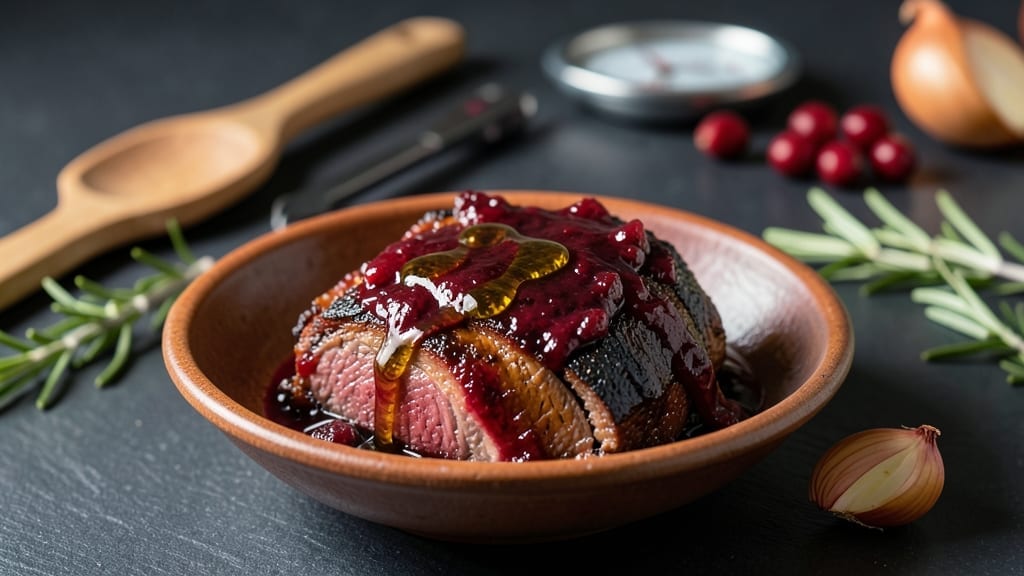
This brisket with cranberry sauce recipe transforms traditional holiday flavors into a year-round showstopper, where smoky, tender meat meets a vibrant, tangy-sweet glaze that cuts through the richness perfectly.
The key to success lies in low-and-slow cooking paired with a cranberry sauce that balances bold flavors without overpowering the star of the show. I developed this method after years of experimenting with brisket techniques, and the cranberry glaze was the breakthrough that elevated it from good to unforgettable.
The brisket itself requires patience—smoking or slow-roasting until it reaches 203°F internal temperature ensures melt-in-your-mouth tenderness, while the cranberry sauce simmers just long enough to develop depth without turning mushy.
What makes this recipe stand out is the way the cranberry glaze caramelizes slightly during the final resting phase, creating a sticky, flavor-packed crust that clings to every bite. This isn’t just a side dish; it’s the star of the plate.
By the time you serve this brisket, you’ll have a dish that’s rich, aromatic, and perfectly balanced—juicy meat with a glossy, caramelized finish and a cranberry sauce that’s tangy yet sweet enough to complement rather than compete.
The aroma alone will have everyone gathering at the table, and the first bite will make it clear why this method delivers restaurant-quality results at home.
Serve with classic sides like roasted potatoes or crusty bread to soak up every last drop of that glaze, or pair it with a simple green salad for contrast.
The beauty of this recipe is its versatility—it works for holiday feasts or casual weeknight dinners, proving that great food doesn’t require special occasions.
Ingredients for brisket with cranberry sauce
A symphony of smoky beef and vibrant cranberry glaze transforms humble ingredients into a restaurant-worthy centerpiece.
| Ingredient | Amount | Notes |
|---|---|---|
| Beef Brisket 🥩 | 4 lb | Packaged flat cut, 1/2 inch thick |
| Fresh Cranberries 🍇 | 1 ½ cups | High-quality, unsweetened |
| Orange Juice 🍊 | ¾ cup | Freshly squeezed, no pulp |
| Orange Zest 🍊 | 1 tbsp | From 1 large organic orange |
| Granulated Sugar 🍚 | ¾ cup | Light brown preferred |
| Apple Cider Vinegar 🍏 | ¼ cup | Unfiltered for depth |
| Yellow Onion 🧅 | 1 whole | Yellow or red, diced small |
| Garlic Cloves 🧄 | 6 cloves | Fresh, minced finely |
| Fresh Rosemary 🌿 | ¼ cup | Chopped, needle-like leaves |
| Fresh Thyme 🌿 | ¼ cup | Leaves only, finely chopped |
| Smoked Paprika 🌶️ | 1 tbsp | High-quality, not sweet |
| Ground Black Pepper 🌶️ | 1 ½ tsp | Freshly cracked preferred |
| Kosher Salt 🧂 | 1 ½ tbsp | Diamond Crystal preferred |
| Yellow Mustard 🍯 | 1 tbsp | Dijon-style for depth |
| Beef Tallow 🧈 | ½ cup | Or substitute rendered beef fat |
[recipe_ingredient_scaler]
The brisket is non-negotiable—look for a packaged flat cut from a reputable butcher or Costco’s pre-trimmed packs for consistency. A 1/2-inch thickness ensures even cooking without drying out. For optimal flavor, source from grass-fed or heritage breeds when possible, though conventional works fine. The cranberries should be plump and firm (avoid those sad, shriveled bags)—Trader Joe’s or Whole Foods carry excellent frozen options if fresh aren’t available. Fresh herbs like rosemary and thyme should have a vibrant green color and strong aroma; if they smell musty, skip them. The orange zest must come from organic oranges to avoid wax residue, and freshly squeezed juice (not bottled) ensures proper acidity balance.
No fresh cranberries? Frozen unsweetened cranberries (thawed) work perfectly—they’re often sweeter and more concentrated. Substitute orange juice with grapefruit juice for a tart twist, though the color will differ slightly. Running short on beef tallow? Rendered duck fat or bacon grease adds a smoky depth, though the texture will vary. For the glaze, balsamic vinegar can replace apple cider vinegar in a pinch, though it adds a slightly sweeter note. The smoked paprika is crucial—Penzeys or McCormick’s brands offer superior quality, but avoid the pre-mixed ‘BBQ seasoning’ blends which often contain fillers. When mincing garlic, peel and chop while cold for cleaner results, and toast the spices (paprika, thyme) in a dry pan for 30 seconds to deepen their flavors.
Brisket can be prepped 24 hours ahead—trim excess fat, apply rub, and refrigerate uncovered for better texture. The cranberry glaze components keep 5 days in the fridge (except zest, which lasts 3 days), and the cooked glaze freezes beautifully for 3 months. For leftovers, reheat brisket low-and-slow at 275°F with a splash of beef broth to prevent drying. Store glaze in an airtight container with a thin layer of olive oil on top to preserve freshness. The brisket’s caramelized crust is best enjoyed immediately, but the glaze actually improves overnight as flavors meld—perfect for reheating with roasted potatoes or cornbread.
Why You’ll Love This Recipe
- I’ll be real: this brisket is so good, I always end up with leftovers. But here’s the thing—those leftovers are even better the next day. Slice it thin, reheat gently, and the glaze clings to the meat like a second skin. I pack it for lunches, freeze portions for busy nights, and honestly? My kids beg for it more than pizza. Budget-friendly and satisfying? Yes, please.
- No-Fuss Prep Night: Honestly, this recipe is one of those rare ones where I can prep the brisket the night before—just rub it, refrigerate uncovered, and forget about it. The cranberries and glaze components even keep for five days, so I can chop the onion and mince the garlic ahead of time and just assemble when I’m ready. No last-minute stress, just deliciousness.
- Unexpected Flavor Twist: The cranberry sauce isn’t your average holiday side—it’s tangy, bright, and just sweet enough thanks to the orange juice and zest. That ¼ cup of apple cider vinegar cuts through the richness of the brisket like a fresh breeze, while the rosemary and thyme add an earthy depth that makes every bite sing. Trust me, it’s not just sweet sauce; it’s a flavor conversation starter.
- Leftovers Are a Dream: I’ll be real: this brisket is so good, I always end up with leftovers. But here’s the thing—those leftovers are even better the next day. Slice it thin, reheat gently, and the glaze clings to the meat like a second skin. I pack it for lunches, freeze portions for busy nights, and honestly? My kids beg for it more than pizza. Budget-friendly and satisfying? Yes, please.
Step-by-step instructions for brisket with cranberry glaze
This method delivers perfectly tender brisket with a vibrant, sweet-tangy cranberry glaze that cuts through the richness.
Prepare the Brisket Rub and Sear the Meat
In a small bowl, combine the 1 tbsp smoked paprika, 1½ tsp ground black pepper, 1½ tbsp kosher salt, ¼ cup fresh rosemary, and ¼ cup fresh thyme to create the dry rub. Pat the 4 lb beef brisket completely dry with paper towels, then generously coat all sides with the rub, pressing it into the meat. This ensures maximum flavor penetration and a well-seasoned exterior.
Heat a heavy skillet over medium-high heat and add the ½ cup beef tallow. Once the tallow is shimmering but not smoking, carefully place the brisket in the pan, fat-side down. Sear for 3-4 minutes per side until a deep golden-brown crust forms. This initial sear locks in juices and develops a rich foundation for the glaze. Transfer the seared brisket to a plate and set aside.
Build the Cranberry Glaze Base
In the same skillet (with rendered tallow still in the pan), add the 1 diced yellow onion and cook over medium heat for 5-6 minutes until softened and translucent. Add the 6 minced garlic cloves and cook for an additional 30 seconds until fragrant—this prevents the garlic from burning and ensures a balanced flavor.
Pour in the ¾ cup orange juice, 1 tbsp orange zest, ¼ cup apple cider vinegar, and ¾ cup granulated sugar. Bring to a simmer and cook for 8-10 minutes until the mixture reduces by half and thickens slightly. The sugar should dissolve completely, creating a syrupy base for the glaze. Remove from heat and stir in the 1 tbsp yellow mustard—this adds depth and helps emulsify the glaze later.
Simmer the Cranberries and Finish the Glaze
Add the 1½ cups fresh cranberries to the simmering mixture and cook for 10-12 minutes until the cranberries burst and the sauce thickens to a jam-like consistency. The glaze should coat the back of a spoon and hold its shape when chilled. Taste and adjust seasoning with additional sugar or vinegar if needed—this balances the sweet-tart profile.
Strain the glaze through a fine-mesh sieve to remove any seeds or herb stems, then return it to the skillet. Reduce heat to low and let it cool slightly while you prepare the brisket for smoking. The glaze should be smooth and glossy, ready to baste the meat during the final stages of cooking.
Smoke the Brisket and Apply the Glaze
Preheat your smoker to 225°F using hickory or apple wood. Place the seared brisket fat-side up in the smoker and cook for 6-8 hours until the internal temperature reaches 165°F. This is when you’ll hit “the stall,” a natural pause in temperature rise. Wrap the brisket tightly in butcher paper and return it to the smoker for an additional 2-3 hours until the internal temperature reaches 203°F and the probe slides in easily.
Remove the brisket from the smoker and let it rest for 30 minutes before slicing. While it rests, brush the glaze generously over the top and sides of the brisket, allowing it to caramelize slightly from the residual heat. The glaze should cling to the meat, creating a sticky, flavorful crust that enhances each bite. Slice against the grain for maximum tenderness and serve with the remaining glaze spooned over the top.
Pro Tips For Making Brisket With Cranberry Sauce
- Sear with Tallow Heat: That beef tallow isn’t just for flavor—it’s for a proper sear. Heat it until it’s shimmering, not smoking, or you’ll end up with a greasy mess instead of a deep golden crust. I learned this the hard way after burning two batches trying to rush it.
- Strain the Glaze: Skipping the fine-mesh sieve? You’ll be scraping cranberry seeds off your plate all night. The glaze tastes better smooth, and it clings to the brisket like it’s supposed to. Trust me, your guests won’t notice the extra 30 seconds of straining.
- Don’t Skip the Stall Wrap: Hitting 165°F and thinking you’re done? That’s where the brisket stalls—and where people rush and ruin tender meat. Wrap it in butcher paper at 165°F, then let it push to 203°F. It’s the difference between shredding and sawing.
- Prep Cranberries Fast: No time to pit cranberries? Toss them in the freezer for 10 minutes first—they’ll crack easier when you simmer them. Less mess, same burst of juice. (And if you’re lazy, frozen unsweetened cranberries work in a pinch, but fresh tastes better.)
Troubleshooting this dish
Glaze Too Thin?
If your cranberry glaze ends up watery, it’s likely because the cranberries released too much liquid during simmering. Reduce the heat to low after adding cranberries and let it cook uncovered for an additional 5-7 minutes to evaporate excess moisture.
For next time, reduce the orange juice by 2 tablespoons to create a thicker base. Straining through a fine-mesh sieve helps remove excess liquid too—just press gently on the cranberries to extract every last drop of juice before discarding them. 🔥
Brisket Drying Out
Dry brisket often happens when the internal temperature spikes too fast during the stall phase. Wrap your brisket in butcher paper (not foil) once it hits 165°F to retain moisture. Keep the smoker temperature steady at 225°F—fluctuations cause uneven cooking.
If you’re using a pellet grill, check that your hopper isn’t running low mid-cook. A meat thermometer with a probe is non-negotiable for tracking progress. 🌡️
Cranberries Won’t Burst
Fresh cranberries need time to soften and release their juices. If they’re still firm after 12 minutes, lower the heat to simmer and cover the pan with a lid. This traps steam and helps break down the skins.
For stubborn cranberries, add 1 teaspoon of apple cider vinegar to the mix—it acts as a natural tenderizer. Avoid overcrowding the pan, or they’ll steam instead of simmer. ✨
Glaze Separating
A separated glaze usually means the mustard wasn’t fully emulsified. Whisk vigorously for 30 seconds after adding it to the simmering mixture, then let it cook for an extra 2 minutes to help bind the ingredients.
If it still separates, blend the cooled glaze briefly in a blender or food processor—just pulse until smooth. For next time, let the glaze cool completely before straining to prevent separation. 💫
Uneven Glaze Application
If the glaze pools in spots instead of clinging evenly, brush it on in thin layers while the brisket is still warm. Use a pastry brush for better control, and focus on the fat cap and edges where the glaze will adhere best.
For extra stickiness, let the brisket rest for 10 extra minutes before applying the glaze—this ensures the meat’s surface is slightly tacky. A light dusting of cornstarch on the brisket before glazing can also help it cling. 🍽️
Nutrition facts
Frequently asked questions
Can I use frozen cranberries for the glaze?
Yes! Frozen unsweetened cranberries work perfectly—they often become sweeter and more concentrated when thawed. Just ensure they’re fully thawed before adding to the simmering mixture. This method delivers the same tangy-sweet flavor without the need for fresh berries.
Why does the recipe call for butcher paper instead of foil when wrapping the brisket?
Butcher paper allows the brisket to breathe slightly while retaining moisture, preventing steam buildup that can make the meat soggy. Foil traps too much moisture, leading to a softer texture. This method ensures a perfect balance of tenderness and crust formation.
How do I adjust the sweetness of the cranberry glaze?
Taste the glaze as it simmers and adjust with either 1 teaspoon of sugar for extra sweetness or ½ teaspoon of apple cider vinegar for tang. Add these gradually while cooking to achieve your preferred balance. The glaze should complement—not overpower—the brisket’s richness.
Can I make the cranberry glaze ahead of time?
The cranberry glaze can be prepped up to 5 days ahead (except zest, which lasts 3 days). Store it in an airtight container in the fridge. For best results, let it cool completely before refrigerating. Reheat gently on the stove before applying to warm brisket.

Trained in classic French technique but raised on slow-cooked ribs and spicy rubs, she blends culinary skill with smoke and soul.
- Smoked Chicken Salad Recipe: Crispy, Smoky Bites With Creamy Ranch Dressing - October 19, 2026
- Beer Can Chicken in a Smoker Recipe: Juicy, Herbed Perfection in One Can - October 19, 2026
- Brined Beef Brisket Recipe: Ultra-Tender, Juicy Cuts in One Pot - October 19, 2026