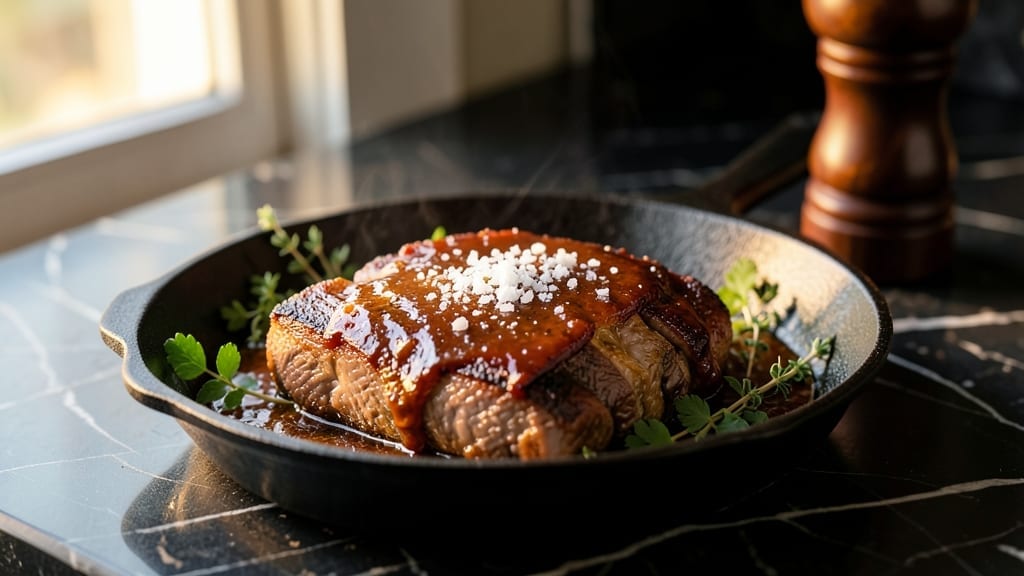
This Jewish-style sweet and sour brisket recipe delivers melt-in-your-mouth perfection by turning tough cuts into tender, tangy-sweet magic with a glaze rooted in tradition. The key lies in slow braising—where hours of gentle heat break down connective tissue while the sauce caramelizes into a rich, balanced finish.
I developed this recipe after years of testing, ensuring every bite delivers that signature harmony of sweetness and acidity that defines Ashkenazi cuisine.
The process begins with a well-trimmed brisket, seasoned simply with salt and pepper before a 3-hour low-and-slow braise in a mix of apple cider vinegar, brown sugar, and aromatic spices. The vinegar tenderizes while the sugar creates a glossy, caramelized crust.
What makes this dish special is how the flavors evolve—starting bright and tangy, then deepening into a complex, slightly sticky glaze that clings to every forkful.
By the time you serve it, you’ll have brisket so tender it falls apart at the touch, bathed in a glossy sauce that’s both sweet and tangy without overpowering the meat.
The result is a restaurant-quality centerpiece that pairs beautifully with roasted potatoes or crusty bread. This is comfort food at its finest—rich, flavorful, and deeply satisfying.
Perfect for Shabbat dinners, family gatherings, or any occasion where you want to impress. The method is straightforward but yields professional results, proving that tender, restaurant-worthy brisket is well within reach at home. Let’s get cooking—your taste buds will thank you.
Ingredients for jewish style sweet and sour brisket
Pantry staples meet tradition—just a brisket, vinegar, sugar, and a few aromatic spices.
| Ingredient | Amount | Notes |
|---|---|---|
| Beef Brisket 🥩 | 4 lb | Flat cut, well-trimmed |
| Apple Cider Vinegar 🍎 | 1 cup | Raw, unfiltered preferred |
| Light Brown Sugar 🍚 | 1 cup | Packed, not granulated |
| Kosher Salt 🧂 | 1 ½ tbsp | For seasoning meat |
| Freshly Ground Black Pepper 🌶️ | 1 tsp | Cracked peppercorns preferred |
| Onion 🧅 | 1 whole | Yellow, peeled, halved |
| Garlic Cloves 🧄 | 6 cloves | Peeled, smashed |
| Fresh Bay Leaves 🍃 | 2 whole | Dried works if needed |
| Allspice Berries 🌿 | 4 whole | Crushed lightly |
| Water 💧 | 2 cups | Room temperature |
| Extra-Virgin Olive Oil 🫒 | 2 tbsp | For searing brisket |
| Honey 🍯 | 2 tbsp | Wildflower preferred |
[recipe_ingredient_scaler]
The brisket is non-negotiable here. Flat cut is ideal—it’s leaner and more forgiving than point cut. Trim any thick fat edges yourself; butchers at Whole Foods or local Jewish delis often do this for you if you ask. Look for vibrant red meat with good marbling—none of that grayish, freezer-burned stuff. I like to buy mine from Costco when they have it on sale, but any reputable butcher will do. The key is patience: a 4-pound brisket feeds 6 generously, but it needs those 3 hours of braising to transform into melt-in-your-mouth perfection.
No apple cider vinegar? White vinegar or lemon juice works in a pinch, but the depth of flavor is worth the hunt—Bragg or Heinz are reliable brands. Brown sugar is a must for that caramelized crust, but if you’re out, white sugar plus 1 tbsp molasses mimics the depth. The allspice berries? Penzeys Spices sells them whole, which is perfect—just crush them lightly with a mortar and pestle. No mortar? A heavy pan works. For the garlic, I always use fresh—roasted garlic adds a sweetness that pairs beautifully with the vinegar. And if you’re short on bay leaves, dried works at double the amount.
This brisket tastes even better the next day—honestly, that’s when the sauce really sings. Store it in its braising liquid in the fridge for up to 5 days, or freeze for 3 months. I like to portion it into containers with some of the sauce so reheating is a breeze. The sauce thickens as it cools, so if it seems too thin when cold, just reheat it gently. And save that leftover braising liquid—it’s perfect for gravy or even a quick pan sauce for roasted veggies.
Why You’ll Love This Recipe
- No-Fuss Dutch Oven Magic: That Dutch oven does all the heavy lifting—just sear, braise, and forget while the oven does its thing. I’ll be honest: the only chopping you’ll do is the onion and garlic, and honestly, that’s about it.
- Sweet-Tart Symphony: The apple cider vinegar and honey create that perfect balance—tart meets caramelized richness, with the allspice berries and bay leaves adding warmth that makes every bite sing.
- Shabbat Showstopper: This isn’t just a weeknight dinner—it’s the kind of dish that makes you want to light candles and set the table. My family always saves it for special occasions, but between us? It’s just as good on a Tuesday night.
- Leftovers That Pay Off: Five days in the fridge? More like five days of “why did I stop eating this?” The sauce gets even better as it sits, and reheating is a breeze—just pop it back in the oven with a splash of water. Budget-friendly too, since brisket stretches for multiple meals.
Step-by-step instructions for Jewish-style sweet and sour brisket
Here’s how to create melt-in-your-mouth brisket with a balanced sweet-tart glaze that’s perfect for Shabbat.
Prepare the Brisket for Maximum Tenderness
Begin by trimming any excess fat from the 4 lb beef brisket, leaving about ¼ inch of fat cap for flavor. Pat the meat completely dry with paper towels—this ensures the seasoning sticks and the sear develops properly. In a small bowl, mix together the 1½ tbsp kosher salt and 1 tsp freshly ground black pepper. Rub this generously over all surfaces of the brisket, pressing it into the meat so it penetrates deeply.
Place the seasoned brisket on a wire rack set over a baking sheet and refrigerate uncovered for at least 1 hour. This drying step is crucial—it prevents the meat from steaming and creates that signature crispy exterior. I like to let it sit for up to 2 hours if I have time, as this helps the seasoning really adhere and the meat cook more evenly.
Sear and Build the Flavor Base
While the brisket is chilling, heat a large Dutch oven over medium-high heat. Add the 2 tbsp extra-virgin olive oil and let it get hot enough to shimmer. Carefully place the brisket fat-side down in the pot and sear for 5-6 minutes until deeply golden brown. Flip the brisket and sear the other side for another 5-6 minutes. You want that beautiful caramelization that locks in flavor.
Remove the brisket and set it aside. In the same Dutch oven, add the halved 1 onion and smashed 6 garlic cloves. Cook for 3-4 minutes until the onion softens and the garlic becomes fragrant. Stir in the crushed 4 allspice berries and 2 fresh bay leaves, letting them toast for 30 seconds to release their aromatic oils. This aromatic base forms the flavor foundation for your sweet and sour glaze.
Create the Sweet-Tart Braising Liquid
Pour in the 1 cup apple cider vinegar and scrape up any browned bits from the bottom of the pot—this is where all the flavor hides. Add the 1 cup light brown sugar and 2 tbsp honey, stirring until everything dissolves completely. The mixture should look syrupy and glossy. Pour in the 2 cups water and bring the liquid to a gentle simmer, stirring occasionally to help dissolve all the sugar.
Return the brisket to the Dutch oven, fat-side up, and place the onion halves and garlic cloves on top. The brisket should be mostly submerged in the liquid. Bring everything to a full boil, then immediately reduce heat to low, cover tightly with a lid, and transfer to a preheated 300°F oven. This low-and-slow approach is what transforms tough brisket into fork-tender perfection.
Braise Until Fork-Tender
Let the brisket braise for 3-3½ hours, checking occasionally to ensure there’s always enough liquid in the pot. If it reduces too much, add a little hot water. You’ll know it’s ready when a meat thermometer inserted into the thickest part reads 200-203°F and the meat is effortlessly tender, falling apart with just a fork.
The sweet-tart glaze should have thickened into a rich, glossy coating that clings beautifully to the meat. If you prefer an even more concentrated flavor, you can continue cooking uncovered for another 15-20 minutes to reduce the sauce further. The key is patience—rushing this step will leave you with tough meat instead of the melt-in-your-mouth texture you’re after.
Pro Tips For Making Jewish Style Sweet And Sour Brisket
- Crisp First, Braise Last: That golden sear isn’t just for looks—it’s the flavor anchor. After salting the brisket, let it sit uncovered in the fridge for the full 2 hours if possible (yes, even if you’re impatient like me). The longer it dries, the better the crust forms during the 5-6 minute sear on each side. I used to skip this, and my brisket always ended up soft instead of crispy—don’t make that mistake.
- Scrape Like Your Life Depends On It: When you deglaze with the apple cider vinegar, grab that wooden spoon and scrape the Dutch oven like you’re trying to win a bet. Those browned bits on the bottom? That’s where the deep, caramelized flavor lives. I learned this the hard way—once I skipped it, and the sauce tasted flat. Spend 30 seconds here, and your glaze will sing.
- Don’t Boil Dry: The braising liquid should always cover at least half the brisket, but here’s the trick: check it every 45 minutes during the 3-3½ hour braise. If it reduces too much, add just enough hot water to keep it simmering gently—not a gush, just enough to keep the meat moist. I’ve seen people walk away and come back to a pot with a brisket sitting in a pool of syrup—add water before that happens.
- Toast the Spices: Those crushed allspice berries and bay leaves aren’t just for show—let them toast in the Dutch oven for those 30 seconds after the onions soften. It’s easy to rush this step, but skipping it means missing out on their warm, earthy depth. Think of it like making tea: the longer you steep (or toast), the more flavor you unlock. Trust me, your brisket will taste like you spent all day in the kitchen.
Dietary considerations for this jewish style sweet and sour brisket
Gluten-Free Adaptation
This recipe is already gluten-free by default since it relies on apple cider vinegar, brown sugar, and natural spices—no flour or wheat-based ingredients are involved. To ensure cross-contamination-free prep, I always use separate cutting boards and utensils when handling the brisket.
If serving with sides like roasted potatoes, opt for gluten-free potatoes or sweet potatoes to maintain purity. 💛
Kosher Diet Considerations
For a kosher-friendly version, ensure all ingredients are certified kosher. Use kosher salt and kosher-certified apple cider vinegar like Bragg. The honey should be kosher-certified as well, such as Chana’s Honey.
The cooking process itself is parve—no meat-to-dairy contact—so it fits within kosher dietary laws. Just double-check your spices for kosher certification from brands like Penzeys.
Lower-Sugar Options
If you want to reduce the sugar content, swap half of the 1 cup light brown sugar for ½ cup unsweetened applesauce or ½ cup pureed dates. This keeps the sauce tangy and thickens it naturally without adding as much sweetness.
The 2 tbsp honey can also be reduced to 1 tbsp or replaced with 1 tsp maple syrup for a lighter touch. The flavor balance will still shine through!
Vegetarian Substitutions
While this dish is traditionally a meat-centric recipe, you can create a vegetarian version using extra-firm tofu or seitan as a substitute. Press the tofu for 30 minutes to remove excess water, then slice it into thick steaks.
Marinate in a mix of 1 tbsp soy sauce, 1 tbsp apple cider vinegar, 1 tbsp honey, and 1 tsp smoked paprika for 2 hours. Braise the tofu in the same sweet-tart liquid as the brisket for 2-2½ hours until tender.
It won’t be the same, but it’s a delicious twist!
Dairy-Free Clarifications
This recipe is naturally dairy-free since it doesn’t include any cheese or milk-based ingredients. However, if you’re serving it with sides like mashed potatoes or sauerkraut, opt for dairy-free versions.
For example, use olive oil or coconut milk to make your mashed potatoes creamy instead of butter. The brisket itself stays rich and flavorful without any dairy interference. ✨
Allergen Awareness
Be mindful of sulfite sensitivity if you or your guests have allergies—apple cider vinegar often contains sulfites. For a sulfite-free option, use white vinegar instead, though it won’t have the same depth of flavor.
Always check labels on pre-packaged spices like allspice berries or bay leaves to ensure they’re processed in allergen-free facilities. When in doubt, opt for organic or specialty stores for cleaner ingredients.
Nutrition facts
Frequently asked questions
Why does this recipe call for refrigerating the brisket before cooking?
Refrigerating the seasoned brisket for at least 1 hour (up to 2 hours) is essential for two key reasons. First, it dries the meat’s surface, helping the seasoning adhere better and creating a perfect sear. Second, this step prevents the meat from steaming during cooking, which ensures a crispy exterior. Skipping this step can result in a soggy, less flavorful brisket.
How do I know when the brisket is fully tender?
Your brisket is ready when a meat thermometer reads 200-203°F in its thickest part, and the meat falls apart effortlessly with a fork. The sweet-tart glaze should also be thick and glossy, clinging beautifully to the meat. Patience is critical—rushing this step will leave you with tough meat instead of melt-in-your-mouth perfection.
Can I make this recipe in a slow cooker instead of an oven?
Yes! Transfer the brisket and braising liquid to a slow cooker after bringing it to a boil. Cook on low heat for 6-8 hours, or high heat for 4-5 hours, until the meat reaches 200-203°F. The slow cooker method works well, though the oven method provides more consistent heat for that perfect caramelization.
What should I do if the sauce reduces too quickly during cooking?
If the sauce reduces too much, simply add ¼ cup hot water at a time to maintain the liquid level. This ensures the brisket stays moist and the sauce remains balanced. If you prefer a thicker sauce later, you can always reduce it uncovered for 15-20 minutes once the brisket is fully cooked.

Trained in classic French technique but raised on slow-cooked ribs and spicy rubs, she blends culinary skill with smoke and soul.
- Smoked Chicken Salad Recipe: Crispy, Smoky Bites With Creamy Ranch Dressing - October 19, 2026
- Beer Can Chicken in a Smoker Recipe: Juicy, Herbed Perfection in One Can - October 19, 2026
- Brined Beef Brisket Recipe: Ultra-Tender, Juicy Cuts in One Pot - October 19, 2026