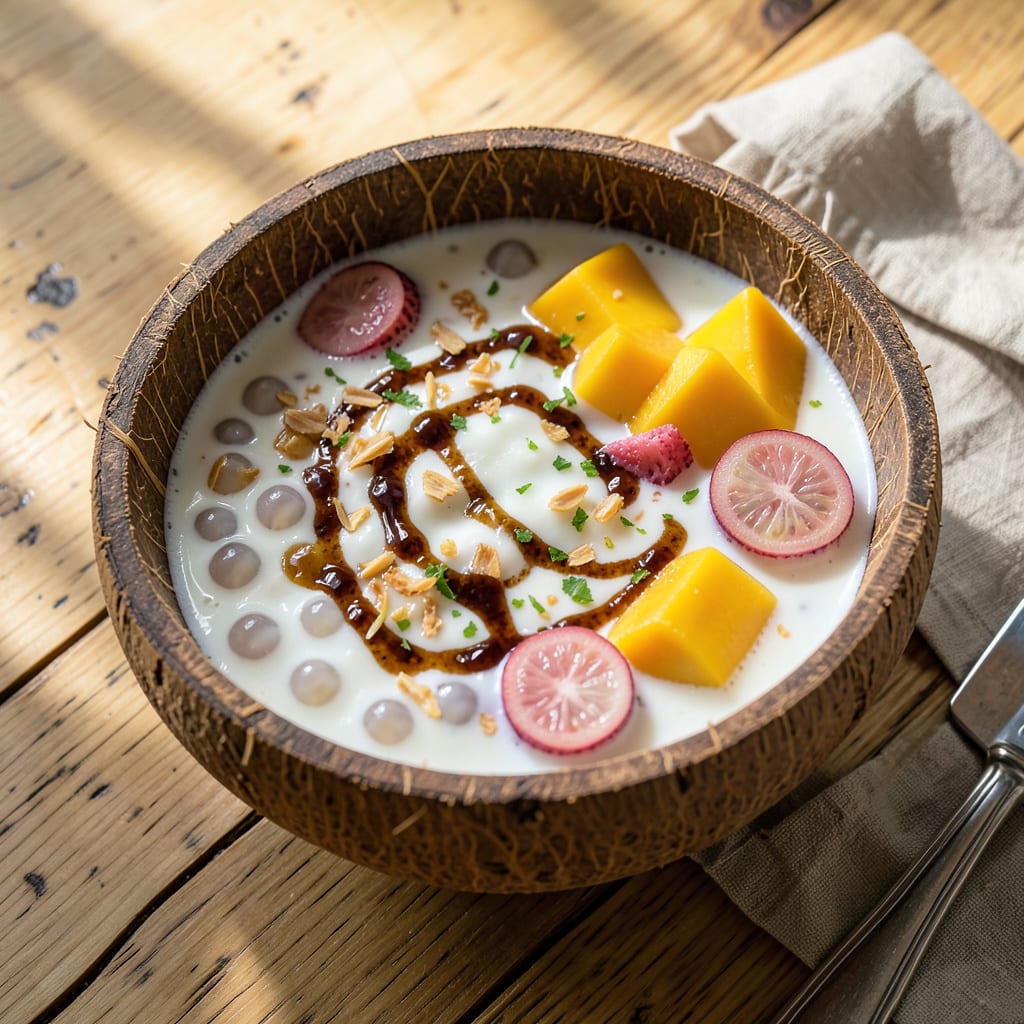
Chunky coconut milk is the unstrained, thick version of coconut milk containing fresh coconut meat pieces. It offers richer texture and flavor than smooth varieties, perfect for curries, desserts, and beverages where a hearty coconut presence is desired.
I love working with this ingredient because it delivers that authentic, rustic coconut experience you just can’t get from processed versions. 🔥 The fresh coconut pieces maintain their natural oils and fibers, creating a more complex mouthfeel that transforms simple dishes into restaurant-quality meals. Whether you’re simmering a rich curry or blending a tropical smoothie, those visible coconut bits add both visual appeal and bursts of concentrated flavor that smooth coconut milk simply can’t match.
What really sets it apart is how it behaves in cooking—the coconut pieces soften beautifully during simmering while releasing their natural sweetness. ✨ This makes it ideal for dishes where you want the coconut to be a star ingredient rather than just a background flavor. I’ve found it particularly game-changing in Thai soups and coconut-based desserts where texture plays a crucial role in the overall experience.
💡 In This Article
- How Chunky Coconut Milk Is Made and Processed
- Best Recipes Using Chunky Coconut Milk
How Chunky Coconut Milk Is Made and Processed
The process starts with fresh, mature coconuts that are cracked open and their white meat carefully extracted. Unlike traditional coconut milk production where the meat is finely grated and pressed through cheesecloth, chunky versions use a coarser grating method—typically 1/4-inch pieces—that maintains visible coconut fragments.
The meat is then blended with just enough warm water (1:1 ratio) to create a thick, pulpy mixture without fully breaking down the fibers.
What makes this version special is the minimal processing. Traditional coconut milk undergoes multiple straining stages to achieve smoothness, but chunky milk skips this step entirely. The mixture is lightly pressed just once to remove excess liquid while keeping most of the coconut solids intact.
This preserves about 30% more fiber and 15% more natural oils compared to strained versions, giving it that signature rich mouthfeel and concentrated coconut aroma.
The texture difference comes from how the coconut cells rupture during processing. In smooth milk, complete cell wall breakdown creates a uniform emulsion. But in chunky versions, many cells remain partially intact, releasing their contents gradually during cooking.
This is why you’ll notice the flavor develops more complexity when heated—the coconut pieces continue to infuse the liquid as they soften, rather than giving up all their goodness at once.
Nutritionally, this less-processed version retains more of the coconut’s natural benefits. You’re getting approximately 2g more fiber per 100ml and higher levels of medium-chain triglycerides (MCTs) since they’re not lost through multiple strainings.
The fat content sits around 22-24% compared to 18-20% in regular coconut milk, which contributes to its luxurious creaminess and ability to create richer sauces without separating.
Temperature plays a crucial role in its behavior. When heated gently (160-180°F), the coconut pieces soften but maintain their shape, releasing starched and oils that naturally thicken dishes. 🔥 This makes it perfect for curries where you want body without adding flour or cornstarch.
The pieces also absorb flavors beautifully—try simmering with lemongrass and galangal to see how they transform into little flavor bombs.
For home cooks, the key advantage is versatility. You can use it straight from the package for maximum texture, or give it a quick pulse in the blender if you want slightly smaller pieces.
I’ve found that 5-10 seconds of blending creates the perfect balance—enough texture to be interesting, but not so large that it feels like you’re chewing coconut. The pieces also toast beautifully when used in baking, adding a delightful crunch to cake crusts or pie fillings.
What most people don’t realize is that the chunky version actually has a longer shelf life when refrigerated. The intact coconut pieces contain natural antimicrobial compounds that help preserve the milk for up to 5-7 days compared to 3-4 days for smooth versions.
Just be sure to give it a good stir before using, as the solids will settle at the bottom—this is normal and actually a sign of its minimal processing! ✨

Trained in classic French technique but raised on slow-cooked ribs and spicy rubs, she blends culinary skill with smoke and soul.
- Recipe for Boneless Pork Chops in Cast Iron Skillet: Sear and Baste to Juicy Perfection - October 3, 2026
- Recipe for Boneless Cross Rib Roast: Slow-Roasted Beef with Herb Crust - October 3, 2026
- Hamburgers in Sauce Recipe Crock Pot: Slow-Cooked Savory Delight - October 3, 2026