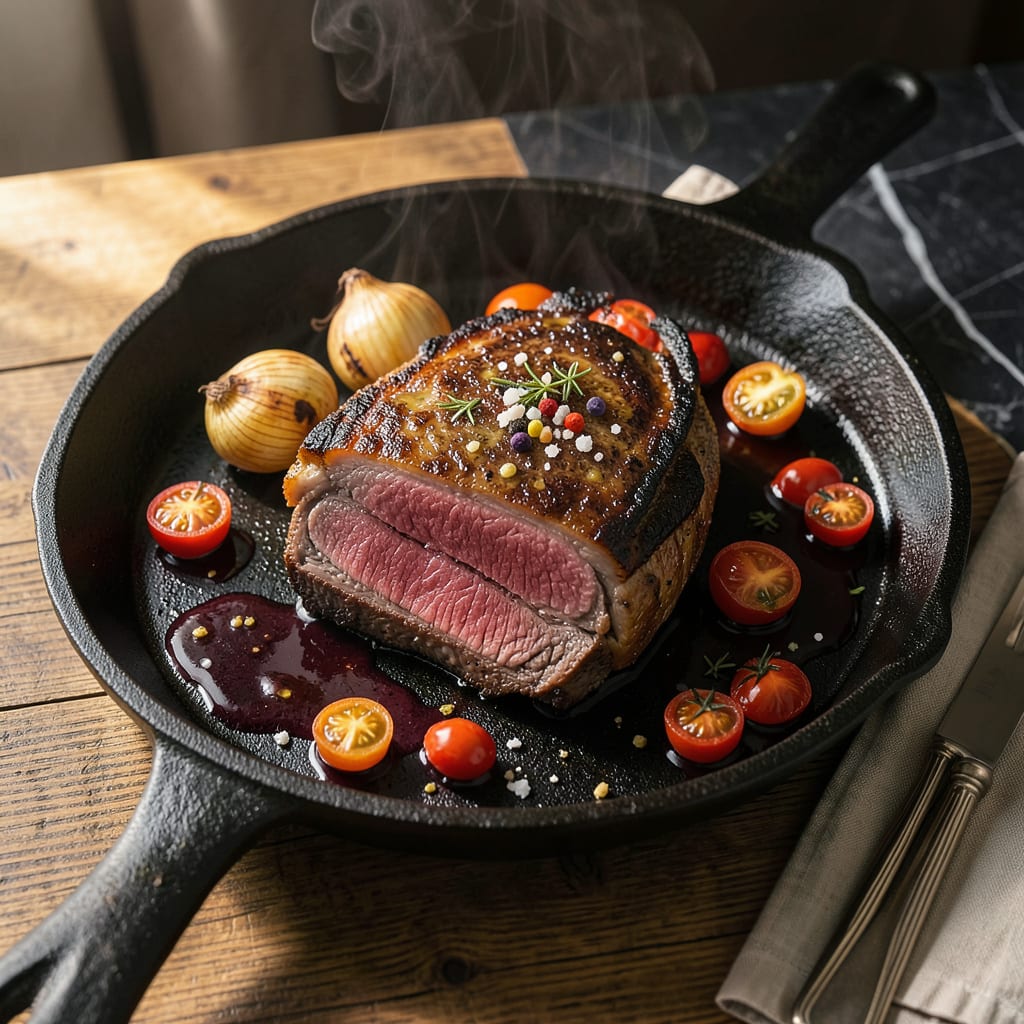
You can cook chuck roast like steak, but it requires special techniques. This tough cut needs marinating, tenderizing, or quick high-heat searing followed by resting to prevent chewiness. Best for thin slices or cubed preparations rather than whole steak-style cooking.
I’ve spent years working with tougher cuts, and chuck roast’s hidden potential comes from its rich marbling and collagen—when handled right. 🔥 The key lies in breaking down those connective tissues through mechanical tenderizing (like scoring or pounding) or chemical methods (acidic marinades with vinegar or citrus). What most home cooks miss is the resting phase: after searing, those juices need time to redistribute throughout the meat fibers.
From my pitmaster experience, thin slices work best because they expose more surface area to heat while keeping the interior juicy. Think of it like transforming a workhorse cut into something special—similar to how I’d treat flank steak, but with even more attention to technique. The reward is a flavor-packed result that rivals pricier steaks when you nail the method. ✨
💡 In This Article
- Why Chuck Roast Differs from Traditional Steak Cuts
- Step-by-Step Guide to Cooking Chuck Roast Steak-Style
Why Chuck Roast Differs from Traditional Steak Cuts
Chuck roast comes from the shoulder area where muscles work hard, creating dense connective tissue and collagen. Unlike ribeye or sirloin steaks with their loose muscle fibers, chuck contains about 10-15% collagen that needs to break down through either long cooking or mechanical tenderizing.
This collagen melts into gelatin at 160°F+, which is why slow cooking works so well—but that’s not what we’re doing here. 🔥
The fat marbling in chuck is more irregular than premium steaks. While ribeye has fine, even fat distribution (about 25-30% intramuscular fat), chuck’s fat appears in larger pockets and streaks. This means uneven cooking if not handled properly.
The muscle fibers themselves are thicker—about 2-3 times wider than tenderloin fibers—requiring more effort to tenderize through scoring, pounding, or marinating.
What most cooks don’t realize is that chuck’s pH level (around 5.6-5.8) makes it more resistant to quick cooking. The slightly acidic environment helps preserve the meat during slow cooking but works against us for steak-style prep.
That’s why we need to either raise the pH with alkaline marinades (like baking soda solutions) or physically break down the fibers with a meat mallet or sharp knife scoring. ✨
The silver skin and elastin fibers in chuck don’t break down like collagen—they stay tough unless physically removed or cut through. Compare this to a filet mignon where these elements are minimal.
For steak-style cooking, you’ll want to trim excess silver skin and cut against the grain in ¼-inch slices maximum to shorten the muscle fibers and reduce chewiness.
Temperature control becomes critical because chuck’s high collagen content means it can handle more heat before drying out compared to lean cuts. While you’d pull a ribeye at 130°F for medium-rare, chuck can go to 135-140°F before resting and still remain juicy if sliced thin.
The resting phase is non-negotiable—those tightened muscle fibers need 10-15 minutes to relax and reabsorb juices. 💫
Here’s what’s actually happening during cooking: The heat causes the muscle proteins (actin and myosin) to coagulate and squeeze out moisture. In tender cuts, this moisture gets reabsorbed during resting. In chuck, the dense structure resists this reabsorption unless we’ve pre-tenderized.
That’s why your preparation method—whether it’s a 24-hour marinade or vigorous pounding—makes all the difference between chewy disappointment and steak-like success.

Trained in classic French technique but raised on slow-cooked ribs and spicy rubs, she blends culinary skill with smoke and soul.
- Recipe for Boneless Pork Chops in Cast Iron Skillet: Sear and Baste to Juicy Perfection - October 3, 2026
- Recipe for Boneless Cross Rib Roast: Slow-Roasted Beef with Herb Crust - October 3, 2026
- Hamburgers in Sauce Recipe Crock Pot: Slow-Cooked Savory Delight - October 3, 2026