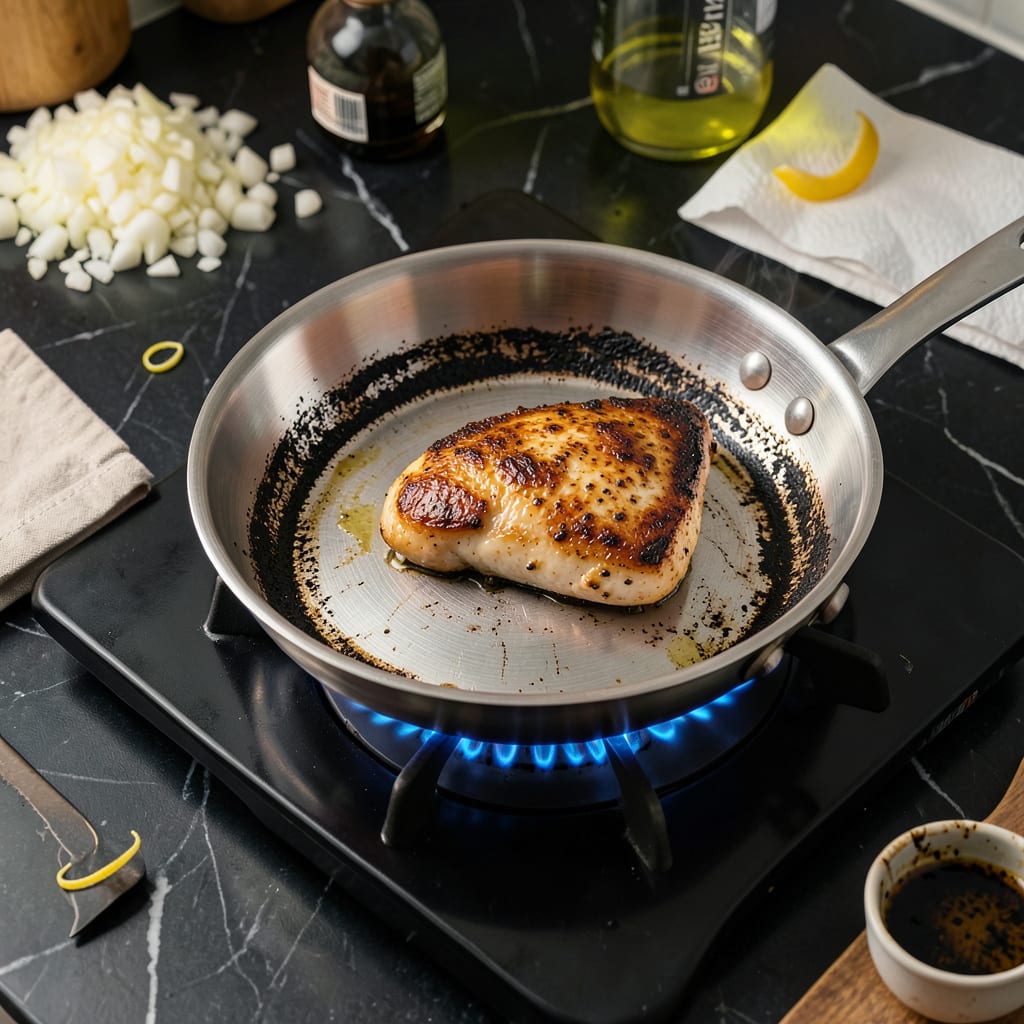
Stainless steel pans burn food when overheated or used without proper oil/fat. The material lacks non-stick coatings, so high heat or insufficient lubrication causes sticking and burning. Preheating too long or using uneven heat sources worsens the issue.
I’ve found that stainless steel’s heat distribution is both its strength and weakness. When you push the temperature too high, the pan’s excellent heat retention creates hot spots that instantly bond proteins to the surface. 🔥 Think of it like a chemical reaction—without that protective fat layer, food essentially welds itself to the metal. What most home cooks miss is that stainless steel requires active temperature management, unlike forgiving non-stick surfaces.
The secret lies in understanding your pan’s behavior. A properly heated stainless steel pan should have oil that shimmers but doesn’t smoke. I always use the water droplet test—when droplets dance across the surface, you’re at the perfect temperature. ✨ This balance between heat and lubrication is what separates perfectly seared meals from burnt disappointments.
💡 In This Article
- Why Stainless Steel Pans Burn Food More Easily Than Others
- Preventing Burns in Stainless Steel Cookware: Pro Techniques
Why Stainless Steel Pans Burn Food More Easily Than Others
Stainless steel’s molecular structure is fundamentally different from non-stick or cast iron. The smooth metal surface lacks microscopic pores that would normally trap oil, creating what chefs call a “mechanical non-stick” effect.
When heated, stainless steel expands slightly but maintains its smoothness, which means any food in contact needs a proper fat barrier or it will bond directly to the metal through protein coagulation. 🔥 This is why you’ll notice eggs or fish sticking immediately if the pan isn’t properly oiled.
The heat retention properties of stainless steel are both its superpower and downfall. A quality stainless pan can reach and maintain 600°F+ temperatures that create perfect sears, but this same capability leads to burning when not controlled.
Unlike cast iron that distributes heat more evenly through its thickness, stainless steel develops hot spots that can exceed 700°F in seconds—well above the 325-375°F range where most foods cook optimally. These temperature spikes cause sugars to caramelize too quickly and proteins to denature aggressively, creating that dreaded burnt layer.
What happens at the microscopic level is fascinating. When you add food to a hot stainless pan, the proteins immediately begin to unfold (denature) and bond with the metal surface through what’s called the Maillard reaction. Without sufficient fat to create a barrier, these bonds become permanent within 30-60 seconds.
✨ The difference between a perfect sear and a burnt mess often comes down to just 10-15 seconds of timing and a thin layer of properly heated oil.
Compare this to non-stick pans where the PTFE coating creates a physical barrier that prevents food from ever touching the metal. Or cast iron, where the seasoned surface provides both a non-stick layer and more gradual heat distribution. Stainless steel demands active temperature management—you’re essentially cooking on bare metal that reacts instantly to heat changes.
This is why professional chefs love it for precise control, but home cooks often struggle with the learning curve.
The oil you choose plays a crucial role in preventing burns. Oils with high smoke points like avocado (520°F) or grapeseed (420°F) create more stable barriers than butter (300°F) or olive oil (375°F).
When oil reaches its smoke point, it breaks down and loses its protective qualities, which is why you’ll see burning even if you’ve used oil—it just wasn’t the right type for the heat level you applied. 💫
Another factor most people overlook is the pan’s thickness. Professional-grade stainless pans are typically 3-5mm thick with aluminum or copper cores that distribute heat more evenly. Cheaper pans often have 1-2mm bases that create dramatic temperature variations across the surface.
This uneven heating means some areas might be at perfect cooking temperature while others are already burning your food before you even notice.
The water droplet test isn’t just chef theater—it’s your best defense against burning. When droplets skitter across the pan like tiny ice skaters, you’ve hit the sweet spot between 350-400°F. This is where oil will properly polymerize to create that temporary non-stick layer without breaking down.
⚡ Miss this window by going too hot, and you’re essentially cooking on a surface that’s actively working against you, bonding food instead of releasing it.

Trained in classic French technique but raised on slow-cooked ribs and spicy rubs, she blends culinary skill with smoke and soul.
- Recipe for Boneless Pork Chops in Cast Iron Skillet: Sear and Baste to Juicy Perfection - October 3, 2026
- Recipe for Boneless Cross Rib Roast: Slow-Roasted Beef with Herb Crust - October 3, 2026
- Hamburgers in Sauce Recipe Crock Pot: Slow-Cooked Savory Delight - October 3, 2026