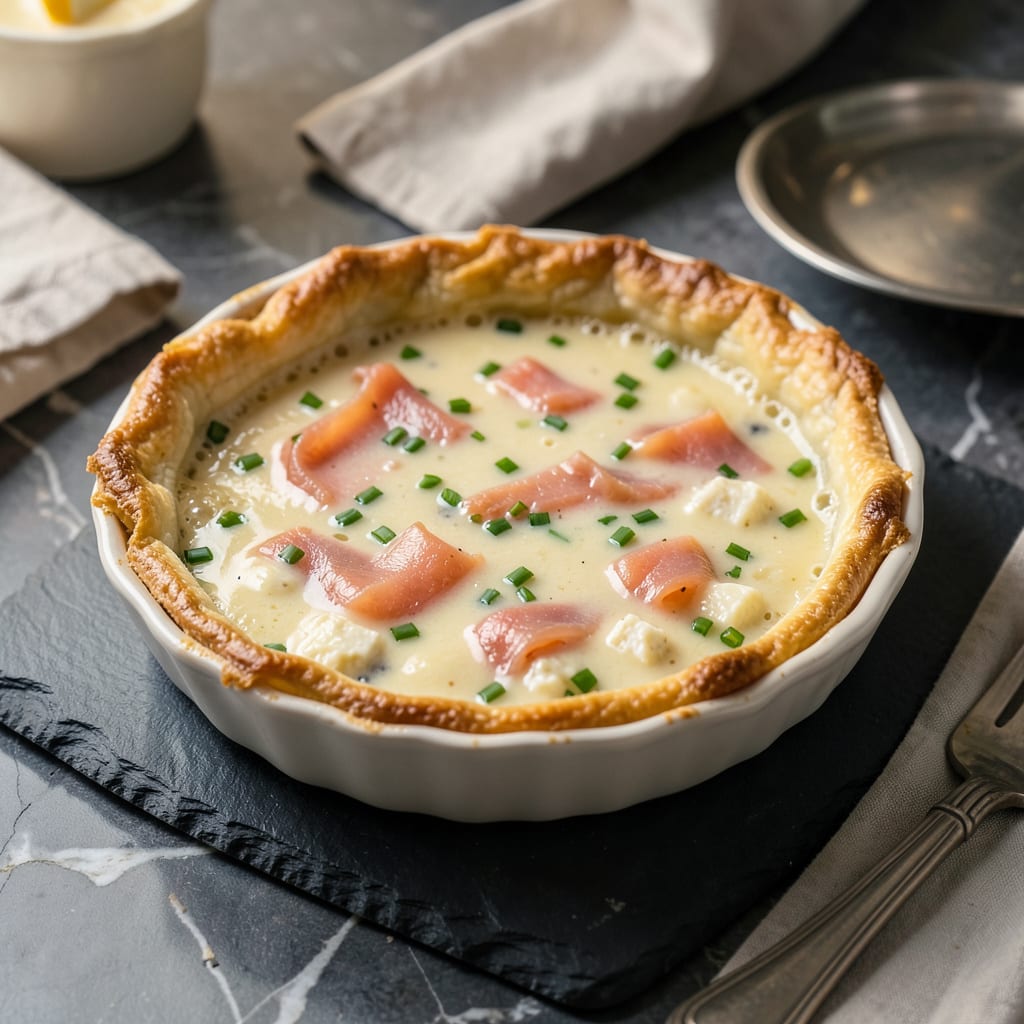
A watery quiche usually results from excess moisture in the filling (like uncooked vegetables or too much dairy), underbaking, or a cracked crust that lets liquid escape. Proper prep and baking time solve this issue.
I’ve seen this happen often in my kitchen—what looks like a perfect custard can turn soupy if the ingredients release too much liquid during baking. 🔥 Vegetables like spinach or zucchini hold surprising amounts of water, and if not pre-cooked, they’ll weep into your filling. Even dairy plays a role: heavy cream separates when overheated, creating pockets of liquid. The fix isn’t just about baking longer; it’s about managing moisture at every step, from sautéing veggies to letting the quiche rest before slicing.
💡 In This Article
- Scientific Reasons Behind a Watery Quiche Texture
- Step-by-Step Fixes for a Perfectly Firm Quiche
Scientific Reasons Behind a Watery Quiche Texture
When eggs heat up in the oven, their proteins unravel and bond together—a process called coagulation. This creates the custard’s structure. However, if the heat isn’t evenly distributed or the temperature climbs too fast, the proteins can’t form a stable network. Instead of setting firmly, the custard remains loose, allowing liquid to pool.
Think of it like building a house: if the foundation (protein bonds) isn’t solid, everything else collapses into a watery mess. 🔥
Vegetables are silent moisture bombs. Spinach, for example, contains about 91% water by weight—nearly double the moisture content of zucchini (95%). When raw veggies hit the oven’s heat, their cell walls burst, releasing trapped liquid directly into your filling. Even onions, which seem harmless, contain 89% water and will weep if not pre-cooked. The solution?
Sauté or roast vegetables first to evaporate excess moisture before they meet your custard.
Dairy plays a sneaky role too. Heavy cream contains 36-40% fat, which stabilizes the custard, but whole milk (only 3.25% fat) lacks this structure. When heated, milk proteins separate and water escapes, creating that dreaded liquid layer. Even full-fat dairy can fail if overheated—above 180°F, the emulsion breaks, causing whey to leak out.
This is why gentle, even baking at 350-375°F gives you a silky texture instead of a soupy one. ✨
The crust isn’t just a vessel—it’s a moisture barrier. A properly blind-baked crust creates a waterproof seal that prevents filling from seeping through cracks. Without this step, liquid from the custard absorbs into the raw dough, making it soggy and compromising the entire structure.
I’ve seen this happen even with store-bought crusts if they’re not pre-baked at 375°F for 8-10 minutes until lightly golden. 💫
Starch is your secret weapon against watery quiches. Just 1 tablespoon of flour or cornstarch mixed into the custard absorbs excess liquid like a sponge. The starch granules swell when heated, creating a gel that traps moisture. This is the same principle that thickens pie fillings—it’s not cheating, it’s chemistry working in your favor.
For vegetable-heavy quiches, I often use 2 tablespoons to account for the extra water content. ⚡
Here’s what most recipes don’t tell you: resting time matters. When you pull a quiche from the oven, the custard is still setting. Cutting too soon (before 15-20 minutes of resting) releases trapped steam and liquid, turning your masterpiece into a puddle.
The proteins need this time to finish bonding—think of it as letting a cake cool before frosting. Patience here makes the difference between a clean slice and a watery disappointment. 🌟

Trained in classic French technique but raised on slow-cooked ribs and spicy rubs, she blends culinary skill with smoke and soul.
- Recipe for Boneless Pork Chops in Cast Iron Skillet: Sear and Baste to Juicy Perfection - October 3, 2026
- Recipe for Boneless Cross Rib Roast: Slow-Roasted Beef with Herb Crust - October 3, 2026
- Hamburgers in Sauce Recipe Crock Pot: Slow-Cooked Savory Delight - October 3, 2026