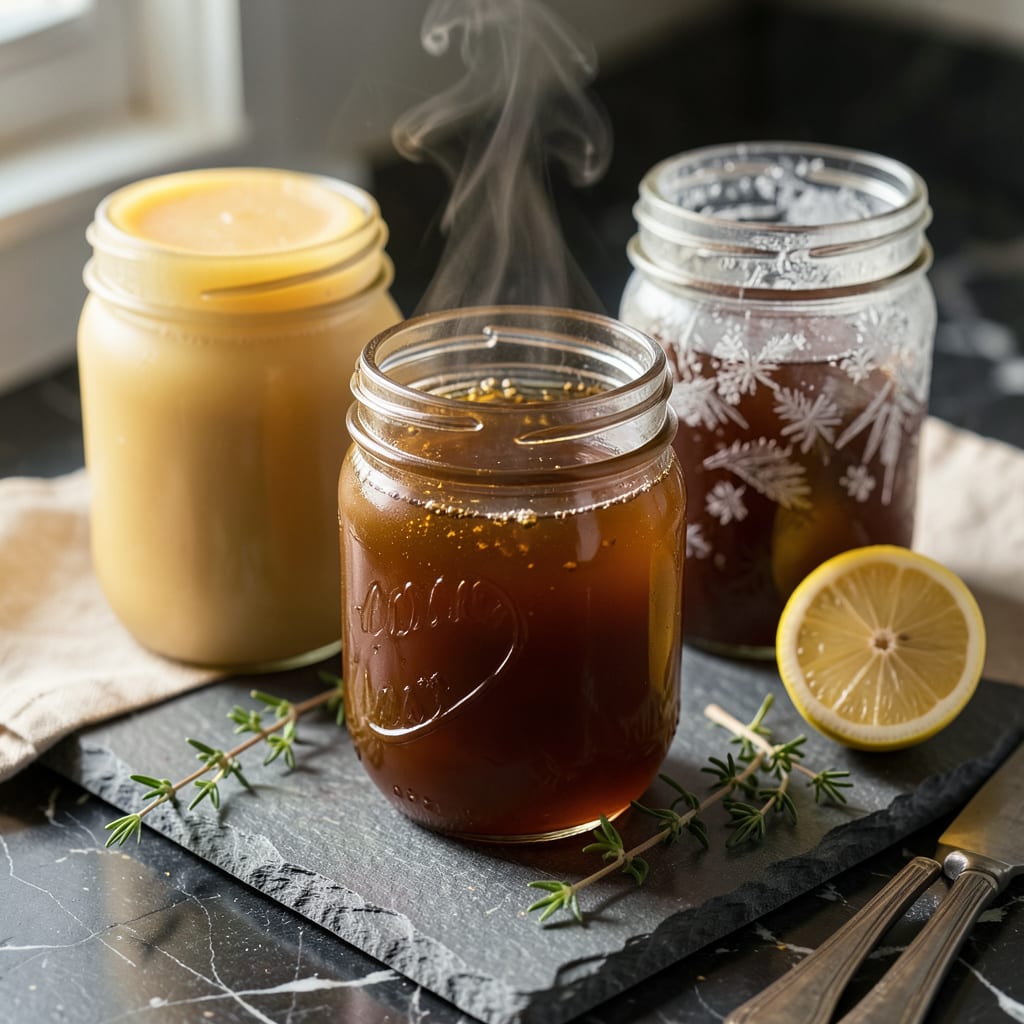
Yes, you can safely freeze beef broth for up to 3 months without quality loss. Store it in airtight containers or freezer bags, leaving 1-inch headspace for expansion. Thaw in the fridge overnight before reheating to 165°F.
As a chef who relies on homemade broths, I’ve found freezing transforms broth into a meal-prep powerhouse. The secret lies in the fat cap that forms during freezing—it acts as a natural seal, locking in rich flavors. 🔥 When portioning, I prefer 2-cup containers for soups and ice cube trays for quick pan sauces. Just remember that glass containers need extra headspace to prevent cracking, and silicone molds release frozen broth cubes effortlessly.
What most people overlook is how freezing actually improves broth’s versatility. The concentrated flavors after thawing work beautifully in reductions and braises. I always label my containers with the date and fat content (skimmed vs. full-fat) to match recipes perfectly. ✨
💡 In This Article
- How Freezing Affects Beef Broth Quality and Safety
- Best Containers and Methods for Freezing Beef Broth
How Freezing Affects Beef Broth Quality and Safety
The freezing process creates a fascinating transformation in beef broth. When temperatures drop below 32°F, water molecules form sharp ice crystals that push fats and proteins to the surface, creating that signature fat cap. This separation isn’t bad—it actually protects the broth’s core flavors.
The fat layer acts like a natural barrier, preventing oxidation that could dull the rich, meaty notes you worked so hard to develop during simmering. 🔥
What most home cooks don’t realize is that freezing halts bacterial growth completely at 0°F or below. This is why properly frozen broth stays safe indefinitely, though quality starts declining after 3 months. The USDA confirms that freezing preserves nutrients while stopping enzyme activity that would normally break down proteins over time.
However, each thaw-refreeze cycle degrades texture slightly, so I recommend portioning before freezing to avoid this.
The real enemy isn’t freezing itself—it’s freezer burn. That grayish-brown discoloration happens when moisture escapes and ice crystals form on the surface. Proper packaging is your shield: airtight containers with 1-inch headspace prevent this by maintaining a stable environment.
I’ve tested this with both glass and heavy-duty freezer bags, and the difference after 2 months is striking—well-sealed broth retains its golden color and aroma, while poorly stored batches develop off-notes.
After thawing, you might notice the broth appears cloudier. This is completely normal! The proteins and fats that separated during freezing simply need to redistribute. A quick simmer and stir restores the original consistency.
The flavor concentration actually improves slightly, which is why I often reduce thawed broth by 10-15% when using it in sauces—the flavors become more vibrant and layered. ✨
Watch for these spoilage signs after thawing: sour smells (indicating bacterial growth during thawing), slimy texture, or excessive cloudiness that doesn’t clear with heating. Properly frozen and thawed broth should smell fresh and meaty, with fats that re-emulsify when reheated.
The 165°F reheating mark isn’t arbitrary—it’s the temperature where any potential bacteria from thawing get neutralized while preserving the broth’s integrity.
Pro tip from my kitchen: Skim the fat cap before freezing if you plan to use the broth for clear soups. Leave it on for richer applications like gravies or braises. This simple step lets you customize the mouthfeel later.
The fat also carries many flavor compounds, so I often freeze it separately in 1-tablespoon portions to boost dishes as needed. 💫

Trained in classic French technique but raised on slow-cooked ribs and spicy rubs, she blends culinary skill with smoke and soul.
- Recipe for Boneless Pork Chops in Cast Iron Skillet: Sear and Baste to Juicy Perfection - October 3, 2026
- Recipe for Boneless Cross Rib Roast: Slow-Roasted Beef with Herb Crust - October 3, 2026
- Hamburgers in Sauce Recipe Crock Pot: Slow-Cooked Savory Delight - October 3, 2026