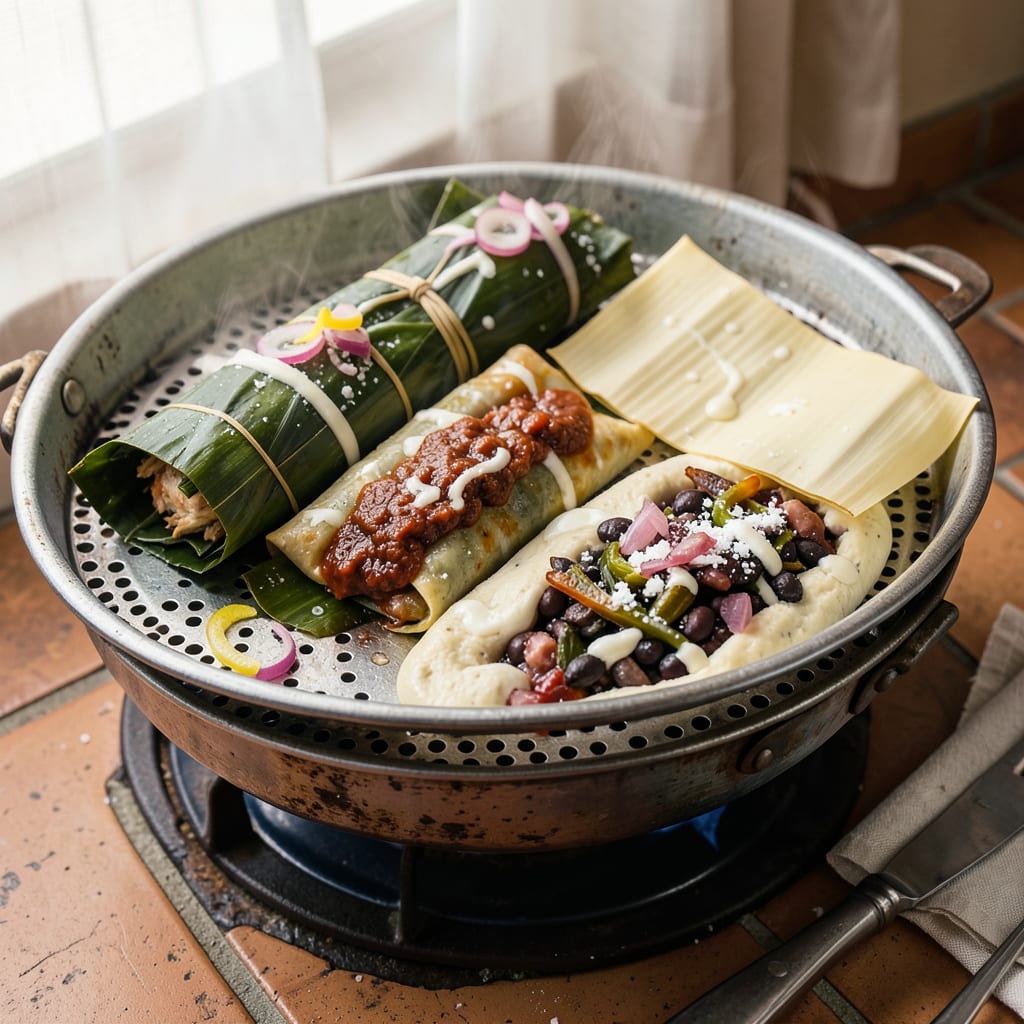
Steam tamales on the stove for 60–90 minutes over medium heat, ensuring water remains boiling but doesn’t touch the tamales. Check doneness when the masa pulls away from the husk cleanly.
I’ve found that the secret to perfect tamales lies in maintaining consistent steam circulation. 🔥 The timing depends on factors like tamale size—smaller ones may finish closer to 60 minutes, while larger batches need the full 90 minutes. What’s crucial is resisting the urge to peek early, as losing steam can add 10-15 extra minutes to your cook time. The husk test is foolproof: if it releases cleanly, you’ve nailed the texture—firm yet tender.
From my experience, using a well-sealed pot with a tight lid prevents steam escape, ensuring even cooking. I always keep extra hot water nearby to replenish if levels drop too low. This method guarantees that every bite has that ideal balance of moist masa and flavorful filling.
💡 In This Article
- Why Steaming Time Varies for Tamales
- Step-by-Step Guide to Steaming Tamales on Stove
Why Steaming Time Varies for Tamales
The cooking window for tamales isn’t one-size-fits-all because several key factors influence how quickly the masa cooks through. Fresh masa dough steams faster than frozen—typically 60-70 minutes versus 80-90 minutes—because frozen dough starts at 32°F and needs extra time to reach the ideal internal temperature of 165°F.
The size matters too: standard 4-ounce tamales cook evenly in about 75 minutes, while jumbo 6-ounce versions may require the full 90 minutes to avoid a gummy center.
Your steamer setup plays a surprising role. A bamboo steamer with tight-fitting lid traps heat more efficiently than a metal colander over a pot, potentially shaving off 10-15 minutes of cook time. Altitude dramatically affects boiling point—at 5,000 feet, water boils at just 203°F instead of 212°F, requiring 25% more steaming time.
I always add 5 extra minutes per 1,000 feet above sea level to compensate for the lower heat transfer.
The masa-to-filling ratio creates texture variations that impact doneness. Tamales with 50% filling (like shredded pork) cook faster than dense 70% masa versions because the filling acts as a heat conductor. What most people miss is that overcrowding the steamer raises the internal temperature by 10-15°F, which can lead to uneven cooking.
I leave 1-inch gaps between tamales for proper steam circulation—this prevents the dreaded “raw center” while ensuring the edges don’t dry out.
Here’s the pro test I use: When the husk peels back cleanly and the masa has a matte finish (not sticky), they’re done. Undercooked tamales will have a shiny, wet appearance and cling to the husk, while overcooked ones develop a crumbly, dry texture.
The perfect tamale should have a firm but springy consistency—like a well-set custard—that holds its shape when sliced but melts in your mouth. 🔥
Water quality affects flavor too. Using filtered or distilled water prevents mineral buildup that can create bitter notes in the steam. I add 1 tablespoon of vinegar per quart of water to soften the husks and enhance their pliability during folding.
The acidity also helps break down the masa’s starches slightly, contributing to that ideal tender-yet-structural texture we all love.
For frozen tamales, here’s my foolproof method: Thaw them in the fridge overnight, then steam for 20 minutes less than the fresh tamale time. This prevents the outer layers from overcooking while the center catches up. The key is maintaining a rolling boil—not a simmer—that produces consistent, forceful steam to penetrate every layer evenly. ✨
Remember that corn husks act as natural insulation. Soaking them for 30 minutes in warm water makes them more pliable and better steam conductors. I’ve found that husks soaked in lime-infused water (like for pozole) add a subtle citrus aroma that complements the masa beautifully without overpowering the filling flavors.

Trained in classic French technique but raised on slow-cooked ribs and spicy rubs, she blends culinary skill with smoke and soul.
- Recipe for Boneless Pork Chops in Cast Iron Skillet: Sear and Baste to Juicy Perfection - October 3, 2026
- Recipe for Boneless Cross Rib Roast: Slow-Roasted Beef with Herb Crust - October 3, 2026
- Hamburgers in Sauce Recipe Crock Pot: Slow-Cooked Savory Delight - October 3, 2026