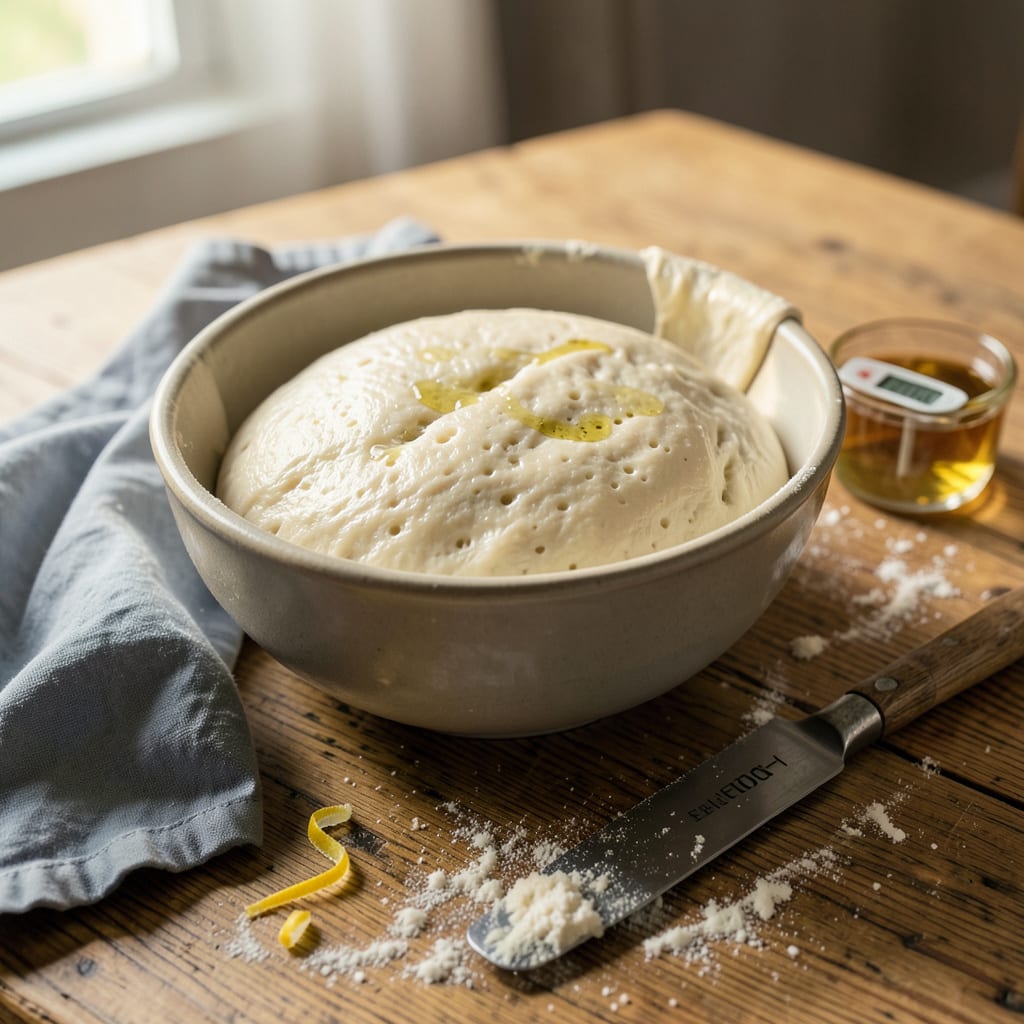
Yes, you can refrigerate dough after it rises to slow fermentation and improve flavor. Store it in an airtight container for up to 24 hours, but allow it to return to room temperature before shaping or baking.
This technique is a game-changer for home bakers looking to enhance their results. 🔥 The cold environment transforms the dough’s structure—yeast works more slowly, producing complex flavors while gluten strands relax for a more tender crumb. I’ve noticed that even simple recipes like pizza dough or dinner rolls benefit from this overnight rest, developing deeper taste and better texture than immediate baking.
What’s fascinating is how the refrigerator acts like a flavor incubator. The extended fermentation breaks down starches more thoroughly, creating subtle sweetness and richness. Just remember to let the dough warm up before handling—cold gluten is stiff and prone to tearing, so patience ensures your final product maintains its ideal structure.
💡 In This Article
- How Refrigeration Affects Risen Dough Texture and Flavor
- Step-by-Step Guide to Storing and Using Refrigerated Dough
How Refrigeration Affects Risen Dough Texture and Flavor
When you chill risen dough, you’re essentially putting yeast into slow motion. At refrigerator temperatures (35-40°F), yeast activity decreases by about 90% compared to room temperature, but it doesn’t stop completely. This creates a controlled fermentation where yeast produces carbon dioxide and flavor compounds gradually over 12-24 hours, rather than in a quick burst.
The result? A more complex, slightly tangy flavor profile that’s impossible to achieve with same-day baking. 🔥
The gluten network also transforms during cold storage. At room temperature, gluten strands are taut and elastic—great for trapping gas but sometimes too springy. In the fridge, these strands relax and hydrate more fully, absorbing moisture from the dough.
This relaxation makes the dough easier to shape and results in a final product with a more tender, open crumb structure. Compare this to immediate baking: while you’ll get good rise, the texture often lacks the delicate, almost cake-like softness that cold fermentation provides.
Here’s what’s happening at the molecular level: enzymes like amylase break down starches into simple sugars more thoroughly in the cold. These sugars caramelize better during baking, creating a deeper golden crust and richer flavor.
I’ve tested this with everything from brioche to sourdough—doughs refrigerated overnight consistently develop a more pronounced aroma and a crust that’s crisp yet shatters less aggressively than same-day baked versions. The difference is particularly noticeable in lean doughs like baguettes, where the flavor becomes remarkably more nuanced. ✨
Temperature control is key to success. Too warm (above 45°F), and yeast may overproof the dough; too cold (below 32°F), and you risk damaging yeast cells. The sweet spot is 38-40°F, where fermentation proceeds slowly enough to develop flavor without over-expanding the dough.
This is why the back of your fridge (not the door) is ideal—it maintains the most consistent temperature. For comparison, professional bakeries use 50°F retarders for similar effects, but home refrigerators work beautifully with proper placement.
You’ll also notice changes in the dough’s handling properties. Cold dough is firmer and less sticky, making it easier to shape intricate designs like braided challah or scored sourdough.
The extended fermentation time allows for better gas retention too—when you bake refrigerated dough, you’ll often see a more dramatic oven spring (that final burst of rise in the first 10 minutes of baking) because the yeast has had time to distribute more evenly throughout the dough matrix. 💫
One surprising benefit is improved shelf life. The acidity that develops during cold fermentation acts as a natural preservative, keeping your baked goods fresher longer. My pizza dough tests showed refrigerated versions stayed soft and flavorful for 24 hours longer than room-temperature counterparts.
This makes the technique perfect for meal prep—you can have fresh-baked quality with make-ahead convenience.
The only trade-off is time—you’ll need to plan ahead. But consider this: while the dough rests in your fridge, it’s doing the flavor development work for you. The next morning, you’re rewarded with dough that bakes up with professional-level complexity, all from the simple act of strategic refrigeration.
That’s the kind of baking hack that makes the extra hours worthwhile. ⚡

Trained in classic French technique but raised on slow-cooked ribs and spicy rubs, she blends culinary skill with smoke and soul.
- Recipe for Boneless Pork Chops in Cast Iron Skillet: Sear and Baste to Juicy Perfection - October 3, 2026
- Recipe for Boneless Cross Rib Roast: Slow-Roasted Beef with Herb Crust - October 3, 2026
- Hamburgers in Sauce Recipe Crock Pot: Slow-Cooked Savory Delight - October 3, 2026