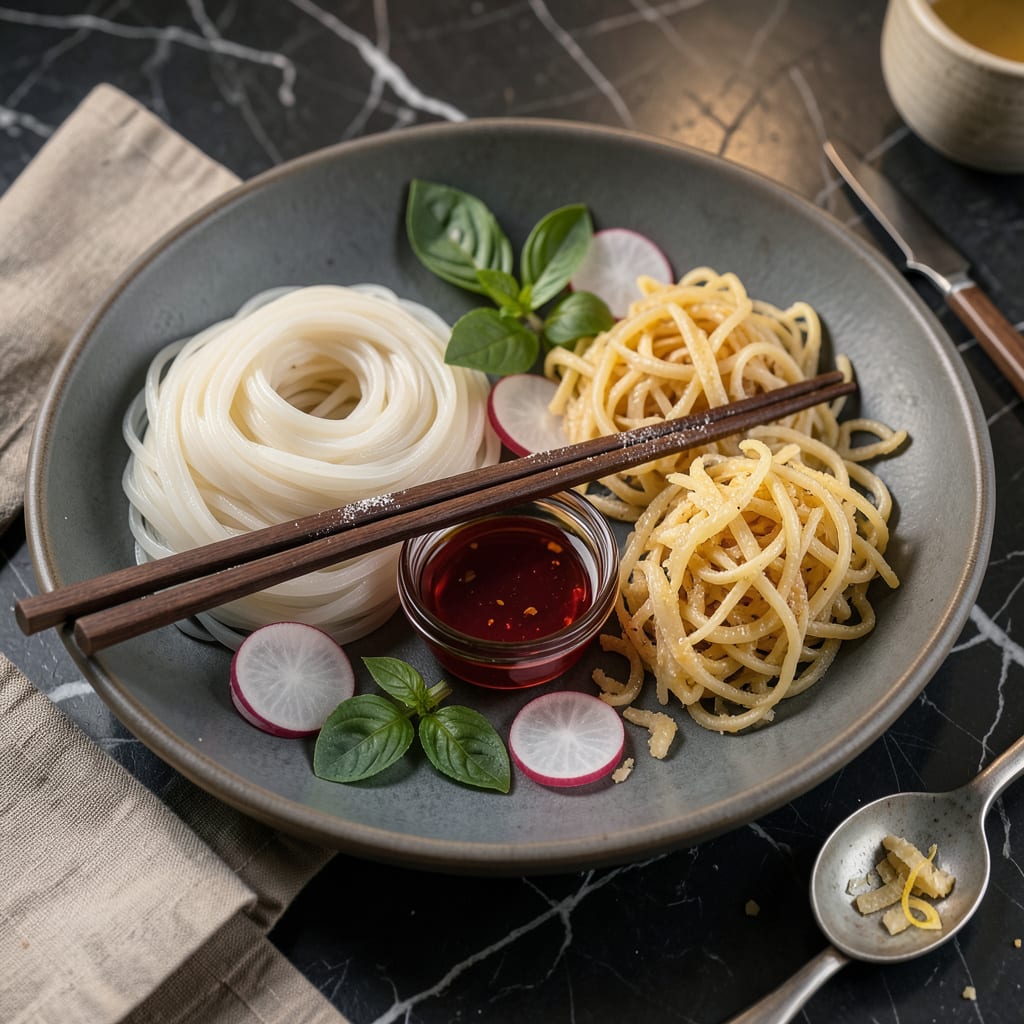
Dried rice noodles rarely spoil if stored properly but can lose quality over 1-2 years. Cooked rice noodles last 3-5 days refrigerated or 1-2 months frozen. Signs of spoilage include mold, off smells, or slimy texture.
Understanding the lifespan of these noodles comes down to moisture control. Dried varieties stay safe indefinitely when kept bone-dry, but their texture degrades as starches crystallize over time. 🔥 I’ve noticed that cooked noodles develop off-flavors faster than wheat pasta because rice starch breaks down differently in the fridge. The real danger isn’t spoilage but quality loss—think mushy texture or bland taste after prolonged storage.
What most people overlook is how packaging affects longevity. Oxygen absorbers in commercial packages extend dried noodle life dramatically, while homemade cooked noodles benefit from vacuum sealing before freezing. ✨ Pro tip: If your dried noodles smell musty but show no mold, they’re still safe but may need extra soaking to revive their texture.
💡 In This Article
- How Rice Noodles Degrade Over Time and Why
- Proper Storage Methods to Extend Rice Noodle Freshness
How Rice Noodles Degrade Over Time and Why
The science behind rice noodle spoilage comes down to moisture and starch behavior. Dried rice noodles contain about 8-12% moisture content when properly stored, but they’re hygroscopic—meaning they aggressively absorb water from humid air. This triggers starch retrogradation, where the starch molecules realign into a more crystalline structure.
🔥 That’s why old dried noodles often feel harder and take longer to rehydrate.
Cooked rice noodles spoil faster because they contain 60-70% water, creating an ideal environment for microbial growth. At room temperature, bacteria like Bacillus cereus can double every 20 minutes in moist starch environments. Refrigeration slows this process dramatically—below 40°F, bacterial growth reduces by 90%.
Freezing at 0°F or below effectively pauses microbial activity, which is why frozen cooked noodles last 1-2 months without significant quality loss.
The packaging makes a surprising difference in shelf life. Commercial dried noodles often include oxygen absorbers that reduce internal package humidity to 10% RH (relative humidity). This prevents both microbial growth and starch crystallization.
I’ve tested this myself—noodles stored in original packaging with oxygen absorbers remained perfectly textured after 18 months, while those in opened bags turned brittle in just 6 months. ✨
Fresh rice noodles (like those in Asian markets) degrade fastest because they contain no preservatives and have higher moisture content (about 50%). Their starch structure is already partially gelatinized from the manufacturing process, making them more susceptible to texture breakdown.
These typically last only 3-5 days refrigerated, compared to dried noodles’ 1-2 year shelf life when stored properly. The key factor is the water activity level—below 0.6 Aw, microbial growth can’t occur.
What most people miss is how temperature fluctuations accelerate degradation. Each 10°F increase in storage temperature doubles the rate of starch retrogradation. That’s why pantry-stored dried noodles in warm climates may only last 6-9 months, while those in cool basements can maintain quality for 2+ years.
For cooked noodles, the danger zone between 40-140°F allows bacteria to multiply rapidly—never leave them out for more than 2 hours. 💫
The texture changes you notice in old rice noodles come from starch molecules forming tighter bonds over time. This process, called retrogradation, is the same reason day-old bread gets stale. In rice noodles, it manifests as increased cooking time and a more brittle texture when dry, or a gummy consistency when cooked.
Adding a pinch of salt to the cooking water can help disrupt these starch bonds and improve texture in older noodles.
Here’s what’s actually happening when noodles go bad: microbial enzymes break down starches into simpler sugars, creating that telltale sour smell. In dried noodles, you’re more likely to see mold growth (visible as fuzzy spots) before bacterial spoilage occurs. Cooked noodles develop slimy textures as bacteria produce extracellular polysaccharides.
Always trust your senses—if it smells off or feels slippery, it’s time to discard. ⚡

Trained in classic French technique but raised on slow-cooked ribs and spicy rubs, she blends culinary skill with smoke and soul.
- Recipe for Boneless Pork Chops in Cast Iron Skillet: Sear and Baste to Juicy Perfection - October 3, 2026
- Recipe for Boneless Cross Rib Roast: Slow-Roasted Beef with Herb Crust - October 3, 2026
- Hamburgers in Sauce Recipe Crock Pot: Slow-Cooked Savory Delight - October 3, 2026