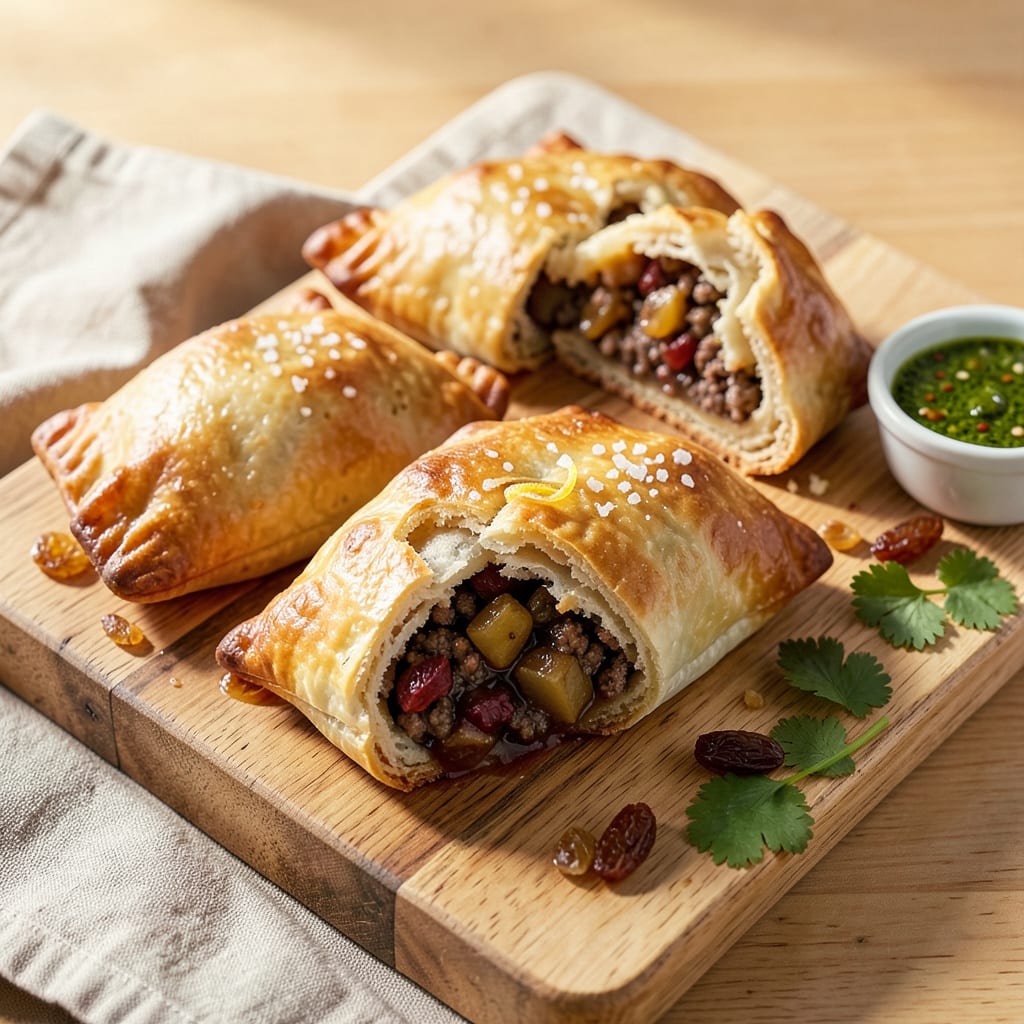
You can use pie crust for empanadas in a pinch, but it won’t hold up as well as traditional dough—expect a softer, more crumbly texture that may split when fried or baked. For best results, opt for a sturdier empanada-specific dough or puff pastry instead.
I’ve tested this swap in my own kitchen, and the biggest challenge is the structural integrity. Pie crust lacks the higher protein content of empanada dough, which means it struggles to contain juicy fillings or hold crisp edges during frying. The butter layers that make pie crust flaky also make it prone to leaking or falling apart under pressure. 🔥
That said, if you’re determined to use it, focus on dry fillings like spiced ground beef or cheese blends, and consider brushing the edges with egg wash to create a better seal. Even then, you’ll likely need to handle them more gently than traditional empanadas—think baked rather than fried for better survival rates.
💡 In This Article
- Why Traditional Empanada Dough Outperforms Pie Crust
- Best Pie Crust Workarounds for Empanadas (If You’re in a Pinch)
Why Traditional Empanada Dough Outperforms Pie Crust
The secret lies in the gluten structure. Traditional empanada dough uses higher-protein flour (11-13% protein) that develops strong gluten strands when kneaded. These elastic networks can stretch to contain fillings without tearing. Pie crust, made with lower-protein all-purpose flour (9-11%), creates a more tender, crumbly matrix that fractures under pressure. 🔥
Fat distribution plays a crucial role too. Empanada dough typically contains 20-25% fat (lard or shortening) worked evenly throughout, creating a sturdy yet pliable texture. Pie crust uses 30-40% butter in visible layers, which melt during cooking and create those prized flakes—but also structural weak points.
When folded, these butter pockets can separate the dough layers, causing leaks.
Moisture content reveals another key difference. Empanada dough includes 30-40% water by weight, allowing for proper gluten development and flexibility. Pie crust recipes often use ice water (15-25%) to inhibit gluten formation, resulting in a dough that cracks when folded around fillings.
The higher hydration in empanada dough also helps it crisp uniformly when fried or baked.
Consider the cooking process: empanadas often face 375-400°F oil for frying or 425°F oven heat for baking. Pie crust’s delicate layers can’t withstand this intense heat without the butter melting too quickly, causing the structure to collapse. Traditional empanada dough’s tighter fat integration prevents this separation, maintaining integrity even with juicy fillings. ✨
The filling challenge becomes obvious with wet ingredients. A beef empanada with 1/4 cup sauce will soak through pie crust in minutes, while proper empanada dough contains it easily. The dough’s higher protein content actually absorbs some moisture without becoming soggy—a critical feature pie crust lacks entirely.
Even the folding technique exposes differences. Empanada dough can be stretched thin (1/8 inch) and still hold a tight seal when crimped. Pie crust requires thicker rolls (1/4 inch) just to survive handling, resulting in a dough-to-filling ratio that feels unbalanced. The crimping edges on pie crust empanadas often split during cooking, releasing precious fillings.
💫
For reference, professional empanada makers use dough with 1.5-2% salt to strengthen gluten bonds, while pie crust typically contains 0.5-1%. This small difference significantly impacts the dough’s ability to maintain shape under heat and moisture stress. The salt also enhances flavor penetration, which is why store-bought empanadas taste more seasoned throughout.

Trained in classic French technique but raised on slow-cooked ribs and spicy rubs, she blends culinary skill with smoke and soul.
- Recipe for Boneless Pork Chops in Cast Iron Skillet: Sear and Baste to Juicy Perfection - October 3, 2026
- Recipe for Boneless Cross Rib Roast: Slow-Roasted Beef with Herb Crust - October 3, 2026
- Hamburgers in Sauce Recipe Crock Pot: Slow-Cooked Savory Delight - October 3, 2026