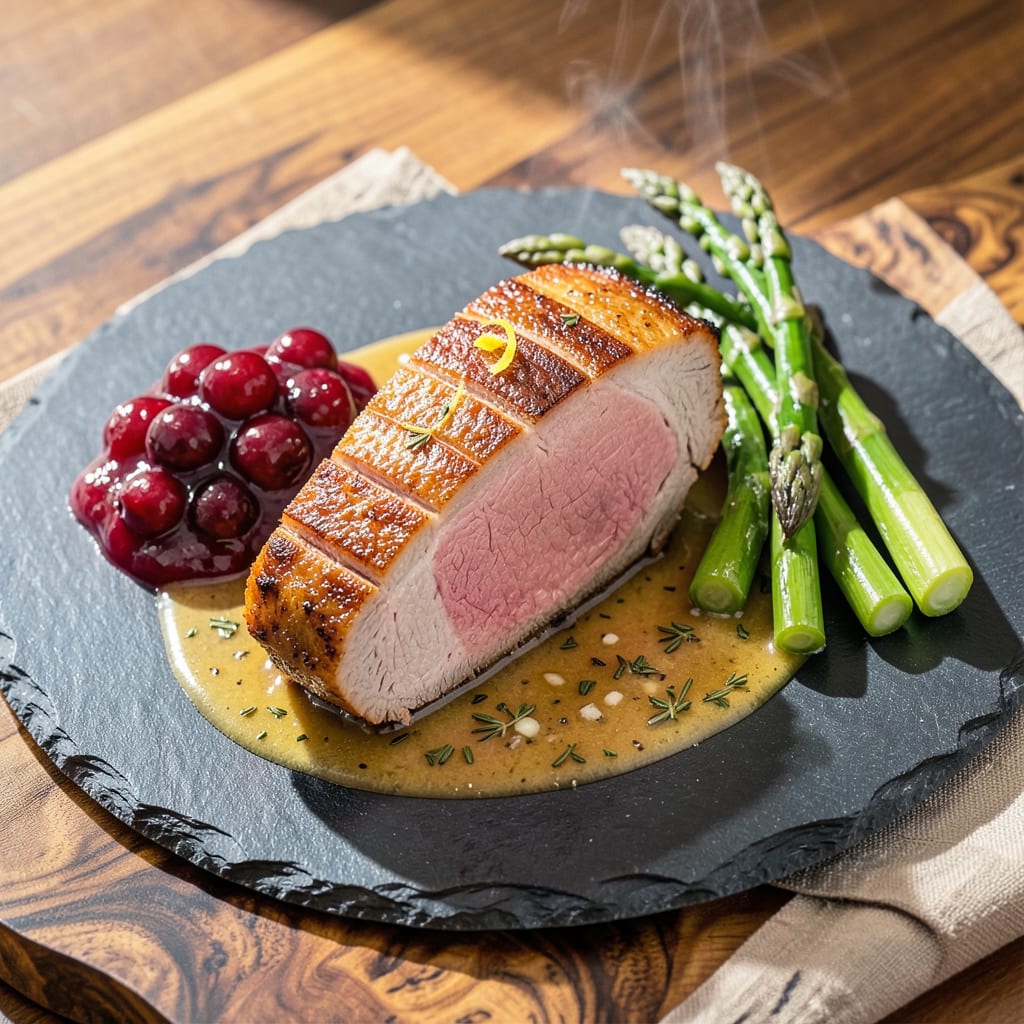
Yes, pork can be safely cooked medium rare if it reaches an internal temperature of 145°F (63°C), followed by a 3-minute rest. This applies to whole cuts like tenderloin or chops, but ground pork must be fully cooked to 160°F (71°C).
This shift in safety standards comes from decades of improved farming practices that virtually eliminated trichinella parasites. 🔥 When I first started cooking professionally, we were still taught to cook pork to 160°F—but modern science now confirms that 145°F is perfectly safe for whole-muscle cuts. The key is using a reliable meat thermometer and letting the pork rest, which allows residual heat to complete the cooking process while keeping the meat juicy.
💡 In This Article
- Why USDA Guidelines Changed for Pork Doneness
- How to Perfectly Cook Medium-Rare Pork at Home
Why USDA Guidelines Changed for Pork Doneness
The USDA’s decision to lower the safe cooking temperature for pork from 160°F to 145°F in 2011 wasn’t arbitrary—it came after decades of advancements in pig farming. Modern practices like controlled feeding environments, improved waste management, and regular parasite testing virtually eliminated trichinella, the parasite that historically made undercooked pork dangerous.
🔥 Today’s commercial pork has a trichinella infection rate of less than 0.0001%, making medium-rare preparation as safe as it is for beef.
What changed? In the 1950s, about 1 in 6 pigs carried trichinella. By 2000, that number dropped to 1 in 100,000. The USDA confirmed through extensive testing that cooking to 145°F with a 3-minute rest (which brings internal temp to about 150°F) kills any remaining pathogens.
This matches the safety standard for beef, where medium-rare has always been acceptable. The rest period is critical—it allows residual heat to distribute evenly while the juices redistribute throughout the meat.
Here’s the catch: this only applies to whole-muscle cuts like tenderloin, chops, or loin. Ground pork still requires 160°F because grinding distributes surface bacteria throughout the meat. When you grind pork, any bacteria on the outside gets mixed into the center, so higher heat is needed to kill it all.
This is why I always recommend buying whole cuts from reputable sources—you control the grinding process and can ensure proper handling.
The texture difference is remarkable. A pork tenderloin cooked to 145°F has a silky, almost buttery quality that disappears when overcooked. I remember the first time I served medium-rare pork at my pop-up dinner series—the guests were shocked by how tender it was compared to the dry, chewy pork they were used to.
The meat retains about 20% more moisture at this temperature, which you can actually see in the glistening fibers when you slice into it. ✨
Proper sourcing matters too. While commercial pork is safe, I prefer working with small farms that use deep-bedding systems and outdoor access—their pigs have lower stress levels, which translates to better marbling and flavor.
When I forage for wild herbs to pair with pork, I look for rosemary and thyme which complement the meat’s natural sweetness without overpowering it. The combination of modern safety standards and artisanal farming means we can enjoy pork at its juiciest while still being confident in its safety.
For those nervous about trying medium-rare pork, start with a reverse sear method: cook the pork slowly in a 250°F oven until it reaches 135°F internally, then sear it in a screaming-hot cast iron pan. This gives you precise temperature control and develops a beautiful crust.
The slow rise in temperature also helps break down connective tissue gently, resulting in that perfect tender bite we’re all after. 💫

Trained in classic French technique but raised on slow-cooked ribs and spicy rubs, she blends culinary skill with smoke and soul.
- Recipe for Boneless Pork Chops in Cast Iron Skillet: Sear and Baste to Juicy Perfection - October 3, 2026
- Recipe for Boneless Cross Rib Roast: Slow-Roasted Beef with Herb Crust - October 3, 2026
- Hamburgers in Sauce Recipe Crock Pot: Slow-Cooked Savory Delight - October 3, 2026