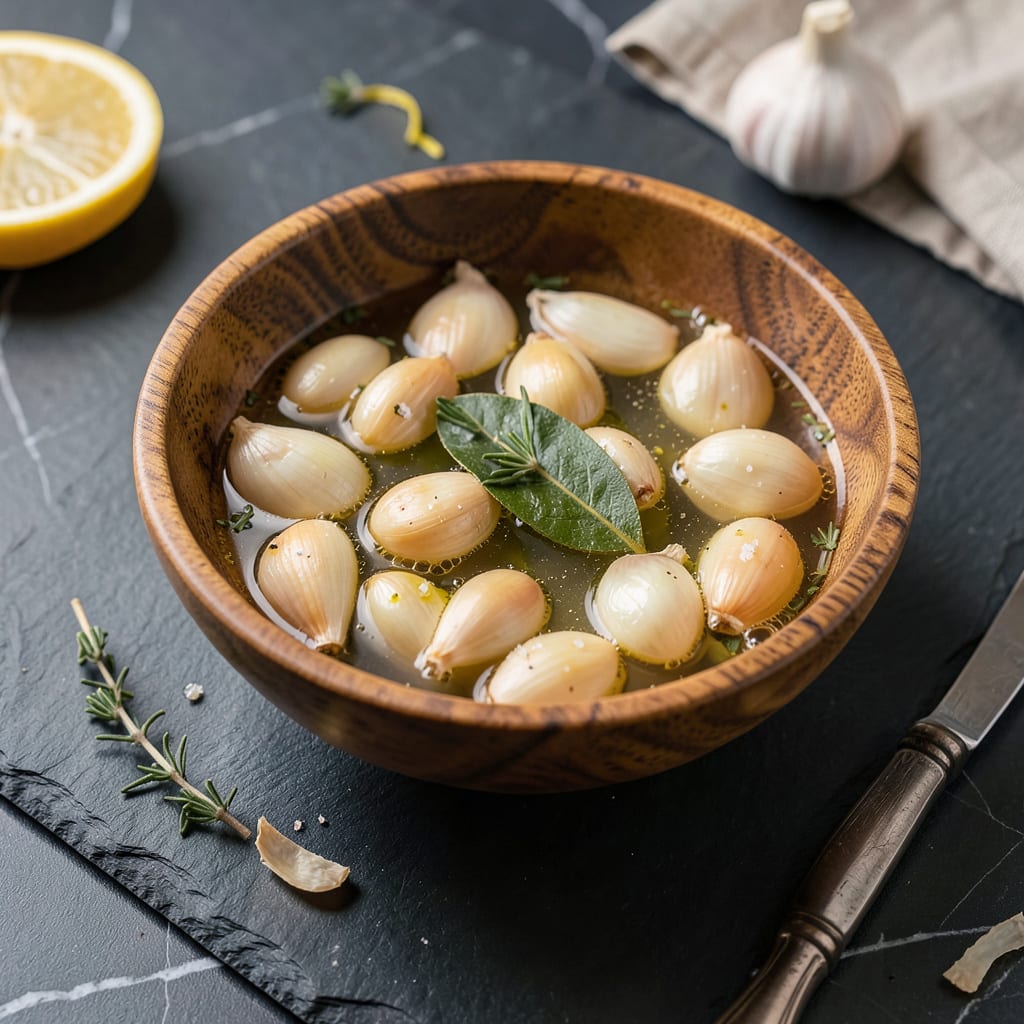
Yes, you can boil garlic to mellow its sharp flavor and create a subtly sweet, aromatic base for soups, broths, and sauces. Boiling whole cloves for 5-10 minutes softens their intensity while infusing liquid with rich, savory depth.
I’ve found this technique particularly useful when building layered flavors in dishes where raw garlic’s bite would overpower. 🔥 The transformation happens because boiling breaks down garlic’s sulfur compounds, converting harsh allicin into milder, more complex flavors. This makes it perfect for delicate recipes like creamy sauces or light broths where you want garlic’s essence without its punch.
What I love most is how versatile boiled garlic becomes—it blends seamlessly into everything from mashed potatoes to salad dressings. ✨ The cloves turn buttery-soft, almost spreadable, while the cooking liquid becomes a flavor-packed base for risottos or braising liquids. It’s my go-to method when I need garlic to play a supporting role rather than dominate the dish.
💡 In This Article
- How Boiling Transforms Garlic’s Flavor and Texture
- Best Ways to Use Boiled Garlic in Recipes
How Boiling Transforms Garlic’s Flavor and Texture
When garlic hits boiling water, the heat immediately begins breaking down its sulfur compounds. The key player here is allicin—the compound responsible for raw garlic’s sharp bite. 🔥 At temperatures above 140°F, allicin starts decomposing into milder, sweeter compounds like diallyl disulfide.
This chemical shift explains why boiled garlic loses its aggressive pungency and develops a nutty, almost caramel-like sweetness.
The cell structure changes dramatically too. Raw garlic cloves have rigid cell walls that trap volatile oils. Boiling softens these walls, allowing oils to diffuse into the cooking liquid. After 5-7 minutes, you’ll notice the cloves become translucent and jelly-like, while the water turns golden with extracted garlic essence.
This transformation is why boiled garlic works so well in delicate dishes where raw garlic would overpower.
What’s fascinating is how temperature control affects the outcome. Simmering at 180-200°F preserves more subtle aromatics, while a rolling boil at 212°F accelerates the mellowing process. I’ve found that whole cloves maintain better texture than crushed garlic, which can turn mushy and release bitter notes if overcooked.
The difference is like comparing a slow-infused oil to a quick sauté—both useful, but for different purposes.
The aroma shifts are just as dramatic as the flavor changes. Raw garlic releases sharp, eye-watering fumes from sulfur volatiles. Boiled garlic, however, emits a warm, toasty fragrance with hints of onion and butter.
This makes it ideal for dishes where you want garlic’s depth without its signature punch—think velvety soups or delicate custards where balance is everything.
For comparison, consider how raw garlic dominates a dish like pico de gallo, while boiled garlic would get lost. But in a creamy béchamel or chicken broth, that same boiled garlic provides just the right foundation. The cooking liquid itself becomes a valuable ingredient—I strain and reduce it to make garlic-infused oils or intensify sauces.
✨
One pro tip: Add a pinch of salt to the boiling water. The sodium ions help stabilize the garlic’s cell membranes during cooking, preventing them from bursting too quickly. This small step makes a noticeable difference in both texture and flavor extraction.
The result is cloves that hold their shape better while still releasing their essence into the liquid.

Trained in classic French technique but raised on slow-cooked ribs and spicy rubs, she blends culinary skill with smoke and soul.
- Recipe for Boneless Pork Chops in Cast Iron Skillet: Sear and Baste to Juicy Perfection - October 3, 2026
- Recipe for Boneless Cross Rib Roast: Slow-Roasted Beef with Herb Crust - October 3, 2026
- Hamburgers in Sauce Recipe Crock Pot: Slow-Cooked Savory Delight - October 3, 2026