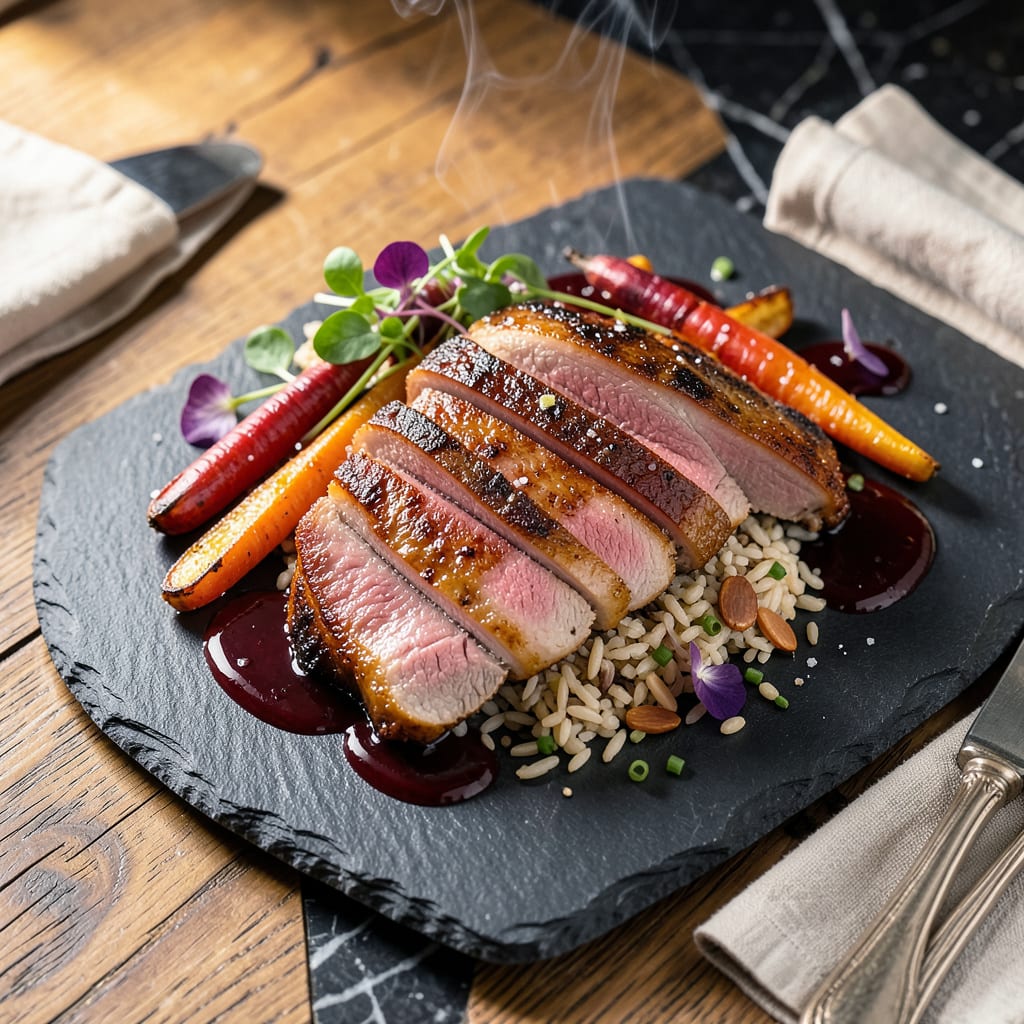
Duck can be safely eaten medium rare (130-135°F internal temperature) if properly sourced and handled, as its darker meat resists bacteria better than chicken. However, USDA recommends 165°F for poultry, so consider the risks and preparation methods carefully.
This isn’t just about preference—it’s about understanding how duck’s unique composition differs from other poultry. The higher fat content and muscle density create a natural barrier against bacteria, which is why many chefs confidently serve it at 130-135°F. I’ve found that farm-raised ducks with controlled diets offer the safest results for medium-rare preparation. ✨
What really matters is your sourcing and handling process. A duck that’s been properly chilled, never left in the danger zone, and cooked with clean tools can be served pink inside with minimal risk. That said, I always recommend using a meat thermometer to verify the exact temperature—this isn’t the time for guesswork.
💡 In This Article
- Why Duck Can Be Safely Cooked Medium Rare Unlike Chicken
- Expert Techniques for Perfect Medium-Rare Duck at Home
Why Duck Can Be Safely Cooked Medium Rare Unlike Chicken
Duck’s unique muscle composition sets it apart from chicken in terms of food safety. The dark meat contains more myoglobin—a protein that gives it that rich color—which creates a less hospitable environment for bacteria. Unlike chicken’s lean white meat that dries out quickly, duck’s high fat content (25-30%) acts as a natural protective barrier.
This fat distribution helps maintain moisture while creating an environment where harmful bacteria struggle to thrive. 🔥
The pH level of duck meat plays a crucial role too. Duck naturally has a lower pH (around 5.8-6.2) compared to chicken (6.2-6.5), making it more acidic. This acidity inhibits bacterial growth, particularly salmonella, which prefers neutral pH environments.
The muscle fibers in duck are also denser and more tightly packed than chicken’s, giving bacteria fewer entry points to penetrate deeply. When properly handled, this means the surface—where most contamination occurs—can be effectively sterilized through searing.
Farm-raised ducks offer additional safety advantages over wild game. Controlled diets and processing conditions significantly reduce exposure to pathogens. I’ve worked with heritage breed ducks that are air-chilled rather than water-chilled, which prevents cross-contamination and preserves the meat’s natural protective qualities.
The feeding process matters too—ducks raised on clean, controlled diets develop meat with more consistent pH levels and fat distribution.
Temperature control during preparation becomes even more critical with duck. The danger zone (40-140°F) still applies, but duck’s composition gives you slightly more flexibility. When cooking to 130-135°F, you’re targeting the point where harmful bacteria are eliminated while preserving the meat’s natural juiciness.
This works because duck’s fat begins rendering at about 130°F, creating an internal environment that’s less conducive to bacterial survival. ✨
What really makes the difference is how you handle the duck before cooking. Proper chilling (below 40°F), avoiding cross-contamination, and using separate cutting boards for raw and cooked products are non-negotiable.
I always recommend patting the duck dry before cooking—this allows for better browning and surface sterilization during the initial sear, which is your first line of defense against any surface bacteria.
The visual difference between properly cooked medium-rare duck and undercooked chicken is striking. Duck at 130-135°F will have a rosy pink center with clear, not red, juices—very different from the translucent appearance of undercooked chicken. The meat should feel firm but yield slightly to pressure, similar to a perfectly cooked steak.
This sensory distinction is why experienced chefs can confidently serve duck at lower temperatures while maintaining strict safety standards. 💫
Remember that these principles apply specifically to whole muscle cuts like duck breast. Ground duck or stuffing mixtures should always be cooked to 165°F because the grinding process distributes any surface bacteria throughout the meat.
The same goes for duck confit or other preparations where the meat has been handled extensively before cooking—these require full pasteurization temperatures for safety.

Trained in classic French technique but raised on slow-cooked ribs and spicy rubs, she blends culinary skill with smoke and soul.
- Recipe for Boneless Pork Chops in Cast Iron Skillet: Sear and Baste to Juicy Perfection - October 3, 2026
- Recipe for Boneless Cross Rib Roast: Slow-Roasted Beef with Herb Crust - October 3, 2026
- Hamburgers in Sauce Recipe Crock Pot: Slow-Cooked Savory Delight - October 3, 2026