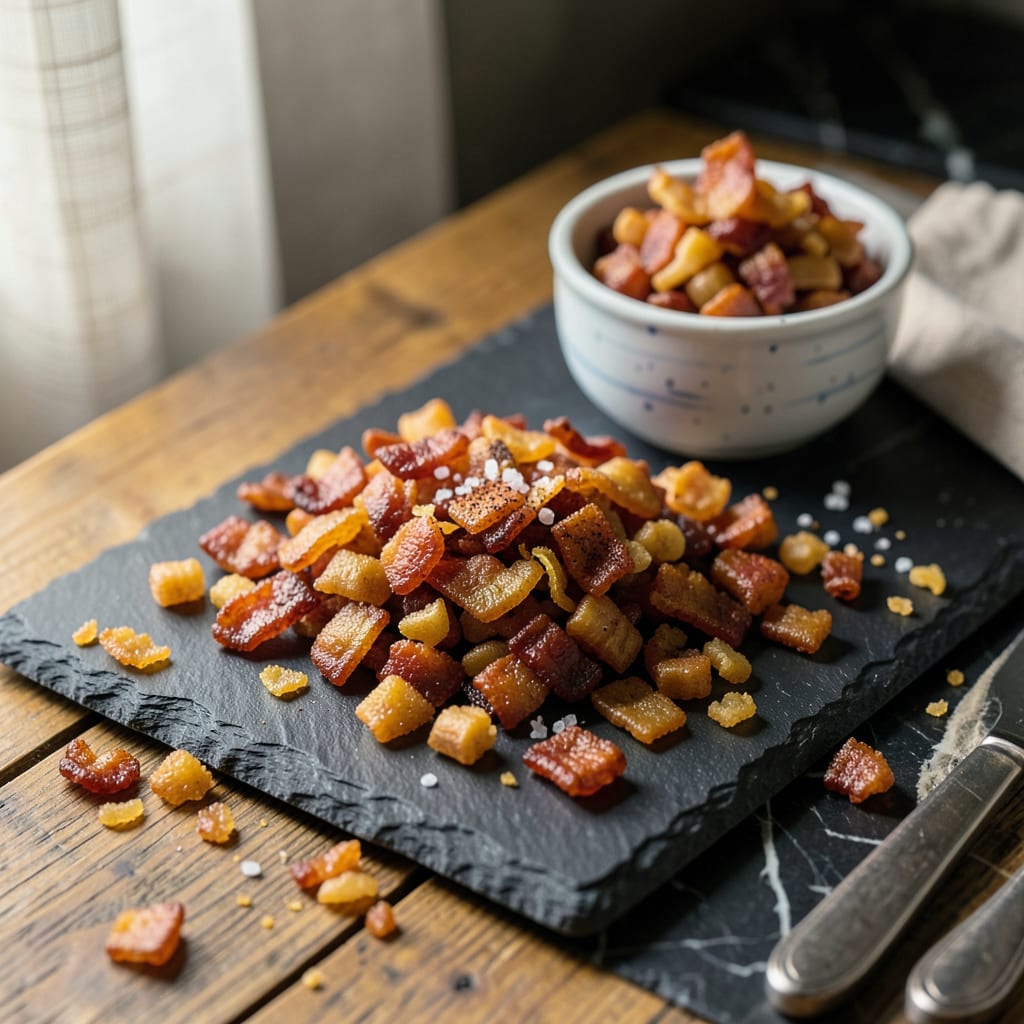
Store-bought bacon bits are typically pre-cooked and only need reheating, while raw bacon pieces should be cooked thoroughly to 165°F for safety. Avoid burning as it creates bitter flavors.
I’ve worked with both types extensively, and the key difference lies in their preparation stage. Those shelf-stable bits you buy have already been through a full cooking process—cured, smoked, and dehydrated—so they just need a quick warm-up. 🔥 When dealing with raw bacon pieces, though, you’re starting from scratch, which means watching the temperature closely to hit that perfect balance between crispy and charred. The 165°F mark isn’t arbitrary; it’s the safety threshold where harmful bacteria are eliminated while preserving that smoky, savory flavor we all love.
What many home cooks overlook is how heat affects the final texture. Pre-cooked bits can turn rubbery if overheated, while raw pieces benefit from low-and-slow cooking to render fat properly. I always recommend testing a small batch first to gauge your stove’s hot spots—this simple step prevents those disappointing batches of either soggy or burnt results. ✨
💡 In This Article
- How Bacon Bits Are Processed and Cooked Commercially
- Best Ways to Use Bacon Bits in Home Cooking
How Bacon Bits Are Processed and Cooked Commercially
Commercial bacon bits start as Pork Belly Strips Recipe: Unbelievably Tender and Crispy”>pork belly strips that undergo a multi-stage transformation. First, they’re cured with a blend of salt, sodium nitrite (for preservation), and often brown sugar or maple syrup for sweetness. This curing process typically lasts 12-24 hours before the bacon moves to the smoking chamber.
🔥 The smoke—usually hickory or applewood—penetrates at 160-180°F for 4-6 hours, developing that signature depth of flavor.
After smoking, the bacon enters the cooking phase where it’s baked at 325-350°F until fully rendered. Here’s where the magic happens: industrial dehydrators reduce the moisture content to less than 5%, creating that crispy texture. The bits are then chopped into uniform 3-5mm pieces and tumble-dried with a light coating of oil to prevent clumping.
This entire process ensures a shelf life of 12-18 months when unopened.
The food safety standards are rigorous. Commercial facilities maintain USDA-mandated temperature logs showing the bacon reaches 165°F internally during cooking. They also test for water activity levels (below 0.85) to prevent bacterial growth.
What surprises most people is that these bits contain about 30% less fat than fresh bacon because so much renders out during processing.
Preservatives play a crucial role in maintaining quality. Sodium erythorbate helps retain color, while BHA/BHT (at 0.02% concentration) prevent rancidity. The final product contains about 50% protein by weight—higher than you’d find in homemade versions.
This concentration of flavor explains why just 1 tablespoon of commercial bits can equal the impact of 2 tablespoons of freshly cooked bacon in recipes.
For home cooks, this means you’re working with an ingredient that’s already optimized for convenience. The bits rehydrate slightly when added to hot dishes, releasing their smoky essence without adding excess grease. I’ve found they work particularly well in baked applications where you want distributed flavor without sogginess—think twice-baked potatoes or quiche fillings. ✨
The commercial drying process also intensifies the umami compounds naturally present in pork. Glutamic acid levels increase by about 20% through this concentration, which is why these bits pack such a flavor punch.
When reheating, a quick 15-20 second blast in the microwave or 30 seconds in a dry skillet is all it takes to revive their aroma and texture.
What most people don’t realize is that the uniform size of commercial bits ensures even cooking when incorporated into dishes. This consistency is impossible to replicate at home without specialized equipment.
The bits also absorb liquids differently than fresh bacon—soaking up about 10% of their weight in broth or dressing, which makes them ideal for salads that need to hold up over time. 💫

Trained in classic French technique but raised on slow-cooked ribs and spicy rubs, she blends culinary skill with smoke and soul.
- Recipe for Boneless Pork Chops in Cast Iron Skillet: Sear and Baste to Juicy Perfection - October 3, 2026
- Recipe for Boneless Cross Rib Roast: Slow-Roasted Beef with Herb Crust - October 3, 2026
- Hamburgers in Sauce Recipe Crock Pot: Slow-Cooked Savory Delight - October 3, 2026