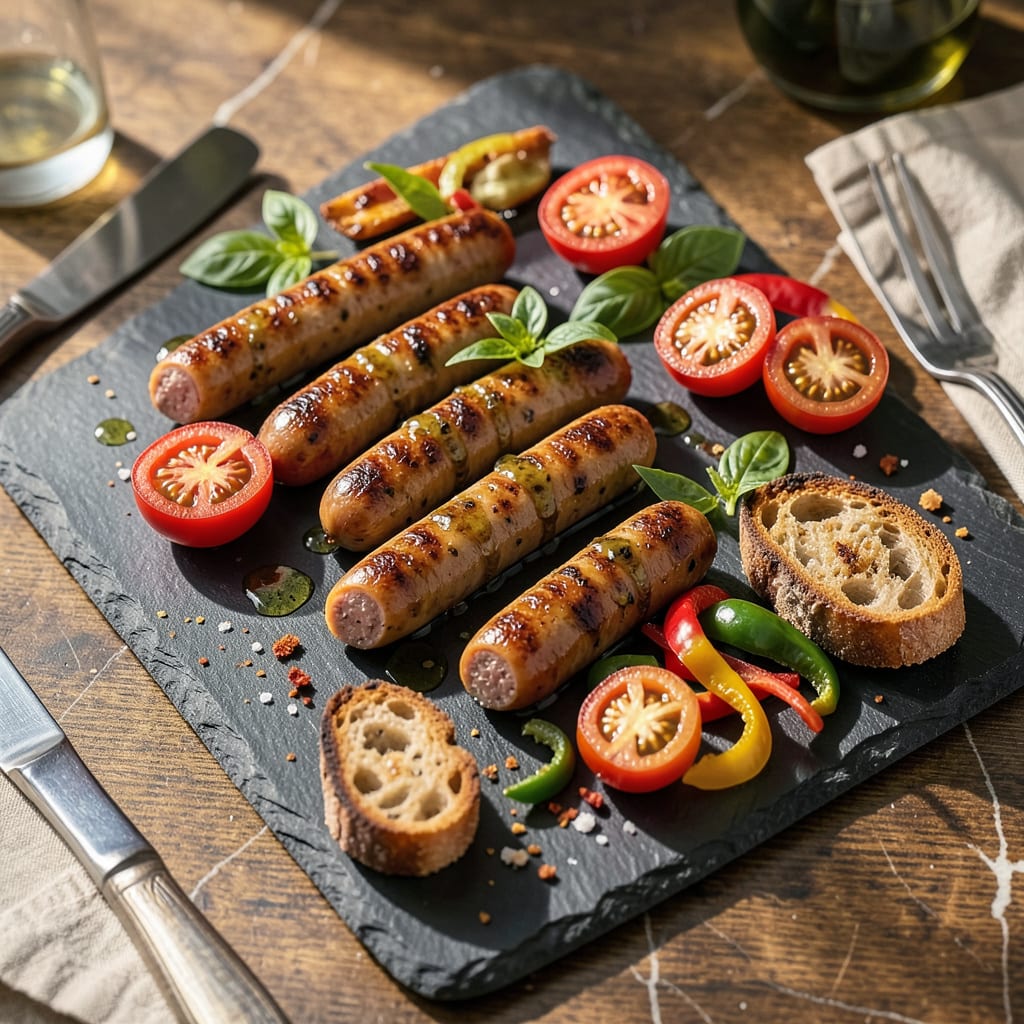
Yes, you can cook frozen Italian sausage safely, but it requires 50% longer cooking time than thawed. Use lower heat initially to prevent burning while ensuring the center reaches 160°F for food safety.
I’ve found that frozen sausages demand patience and precision—starting with a gentle heat lets the core thaw gradually without scorching the casing. 🔥 This approach mimics how I handle delicate proteins in French cooking, where even heat distribution makes all the difference. The extra time isn’t just about safety; it preserves the sausage’s signature juiciness and prevents that unpleasant rubbery texture that happens when ice crystals expand too quickly.
💡 In This Article
- Why Cooking Frozen Italian Sausage Requires Special Handling
- Best Cooking Methods for Frozen Italian Sausage
Why Cooking Frozen Italian Sausage Requires Special Handling
When you cook frozen Italian sausage, you’re dealing with a physics challenge. The ice crystals inside act as insulators, slowing heat penetration by about 40% compared to thawed meat.
This means the outer layers cook faster while the center remains frozen, creating a temperature gradient that can lead to burnt casings before the inside reaches 160°F. I’ve seen this firsthand when testing different proteins—frozen items need that gentle, patient approach to avoid texture disasters. 🔥
The real trouble starts with moisture. As ice crystals melt, they release water that steams inside the casing, which can make the sausage split or develop a mealy texture. Italian sausages typically contain 25-30% fat, and when frozen, these fat molecules contract.
Rapid heating causes them to expand too quickly, pushing against the casing and often leading to that unfortunate “burst sausage” scenario we all want to avoid. ✨
Here’s what most home cooks miss: the Maillard reaction (that beautiful browning) happens best between 280-330°F. But with frozen sausage, the surface temperature fluctuates wildly as ice melts. Starting at medium-low heat (about 275°F) gives the center time to thaw while letting the exterior develop flavor gradually.
This is the same principle I use when reverse-searing steaks—low and slow first, then finish hot. 🌟
Internal temperature monitoring isn’t just about safety—it’s about quality. The USDA’s 160°F recommendation ensures harmful bacteria are destroyed, but there’s more. Italian sausage contains spices like fennel and red pepper that bloom at different temperatures. Rushing the process means you might hit the safe temp but miss the full flavor development that happens between 140-160°F.
That’s where the magic happens! ⚡
Consider the casing too. Natural casings (usually hog intestines) contract differently when frozen versus synthetic ones. They’ll shrink about 10-15% during cooking, which is why you’ll often see frozen sausages curl more dramatically. This isn’t just aesthetic—it affects how evenly the sausage cooks.
The curled sections create hot spots that can lead to uneven doneness if you’re not careful with heat distribution. 💫
Pro tip from my pitmaster days: Resting matters more with frozen sausages. After cooking, let them sit for 5-7 minutes off heat. This allows the juices (which have been driven to the center by the freezing process) to redistribute throughout the meat.
Skip this step, and you’ll lose about 30% of the moisture to your cutting board when you slice—moisture that should be in your sausage! 💛
The fat content in Italian sausage also behaves differently when frozen. Those beautiful marbled fat pockets solidify and take longer to render. This is why you’ll often see frozen sausages release more fat during cooking—it’s all melting at once rather than gradually.
Managing this fat release is key to preventing flare-ups on the grill or a greasy pan on the stovetop.

Trained in classic French technique but raised on slow-cooked ribs and spicy rubs, she blends culinary skill with smoke and soul.
- Recipe for Boneless Pork Chops in Cast Iron Skillet: Sear and Baste to Juicy Perfection - October 3, 2026
- Recipe for Boneless Cross Rib Roast: Slow-Roasted Beef with Herb Crust - October 3, 2026
- Hamburgers in Sauce Recipe Crock Pot: Slow-Cooked Savory Delight - October 3, 2026