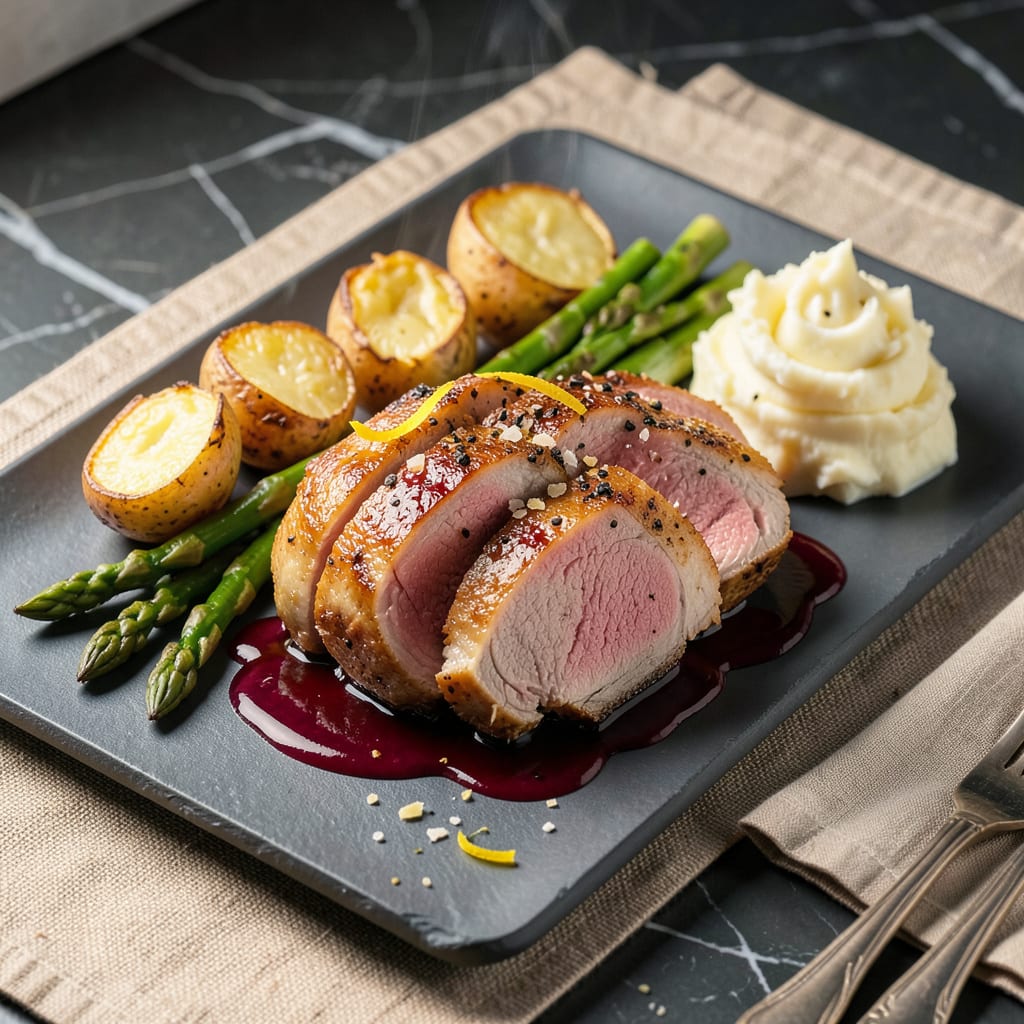
Yes, you can cook pork tenderloin from frozen, but it requires adjustments. Use lower heat and extend cooking time by about 50% to ensure it cooks evenly and reaches a safe Done Right: Perfect Internal Temperature Secrets”>internal temperature of 145°F. Avoid high-heat methods like searing until fully thawed.
I’ve cooked my fair share of frozen meats, and pork tenderloin is one of those cuts that demands patience. The ice crystals locked inside act like tiny insulators, slowing heat penetration and creating uneven cooking zones. This is why I always recommend using gentle, consistent heat—think slow roasting or braising—rather than aggressive methods that risk burning the outside while leaving the center undercooked. 🔥
What many home cooks overlook is how frozen meat loses moisture differently than thawed. The gradual temperature rise gives proteins time to relax, preserving juiciness that would otherwise escape as steam. My pro tip? Use a meat thermometer and check multiple spots—the difference between the thickest and thinnest parts can be surprising!
💡 In This Article
- Why Cooking Frozen Pork Tenderloin Requires Special Care
- Best Methods for Cooking Frozen Pork Tenderloin Safely
Why Cooking Frozen Pork Tenderloin Requires Special Care
When you cook pork tenderloin straight from the freezer, you’re dealing with a physics challenge. Those ice crystals inside the meat act like miniature heat sinks, absorbing energy as they melt before the actual cooking begins. This phase change requires about 144 BTUs per pound—energy that would normally go toward cooking the protein. The result?
A 30-50% longer cooking time compared to thawed meat, with the outer layers exposed to heat far longer than the frozen core.
The real danger lies in what happens to the muscle fibers during this uneven heating. Proteins in the outer layers begin denaturing at 120°F while the center remains below freezing. This creates a “tension gradient” where the outside contracts and squeezes out moisture before the inside even starts cooking.
I’ve seen this firsthand—tenderloins that look beautifully browned outside but release a flood of juices when sliced, leaving the center dry and stringy. 🔥
Moisture loss becomes particularly problematic because frozen meat starts with a disadvantage. Those ice crystals have already ruptured cell walls during freezing, so you’re working with meat that’s predisposed to drying out.
The key is maintaining a 250-275°F environment—hot enough to cook through but gentle enough to prevent the “squeeze effect” that pushes all those precious juices into your pan instead of staying in the meat.
Here’s what most home cooks miss: the temperature danger zone (40-140°F) lasts much longer with frozen meat. While a thawed tenderloin might spend 20-30 minutes in this range, a frozen one can linger for 60+ minutes, giving bacteria more opportunity to multiply.
This is why I always recommend using a probe thermometer and checking the coldest part—usually the geometric center—where temperatures can lag surprisingly behind the outer layers. ✨
The texture differences become obvious when you compare side-by-side samples. Frozen-cooked tenderloin often develops a more fibrous, almost “shreddable” quality in the outer third, while the center maintains a softer, almost undercooked texture.
This isn’t necessarily bad—it creates an interesting contrast—but requires careful slicing to showcase the best of both textures rather than serving uneven pieces.
What I’ve learned from years of experimenting is that frozen pork tenderloin actually benefits from a two-stage cooking approach. Start with gentle, indirect heat to melt the ice core uniformly, then finish with a brief high-heat sear if desired.
This mimics the “reverse sear” technique I use for steaks, but adapted for the unique challenges of frozen meat. The results can be surprisingly juicy when done right! 💫
Remember that carryover cooking plays a bigger role with frozen meat. While a thawed tenderloin might rise 5-10°F after removal from heat, a frozen-cooked one can climb 15-20°F as the core finally reaches equilibrium. This means pulling it at 130-135°F for perfect doneness, rather than the usual 140°F you’d use for thawed meat.
Timing this right takes practice but makes all the difference in final texture.

Trained in classic French technique but raised on slow-cooked ribs and spicy rubs, she blends culinary skill with smoke and soul.
- Recipe for Boneless Pork Chops in Cast Iron Skillet: Sear and Baste to Juicy Perfection - October 3, 2026
- Recipe for Boneless Cross Rib Roast: Slow-Roasted Beef with Herb Crust - October 3, 2026
- Hamburgers in Sauce Recipe Crock Pot: Slow-Cooked Savory Delight - October 3, 2026