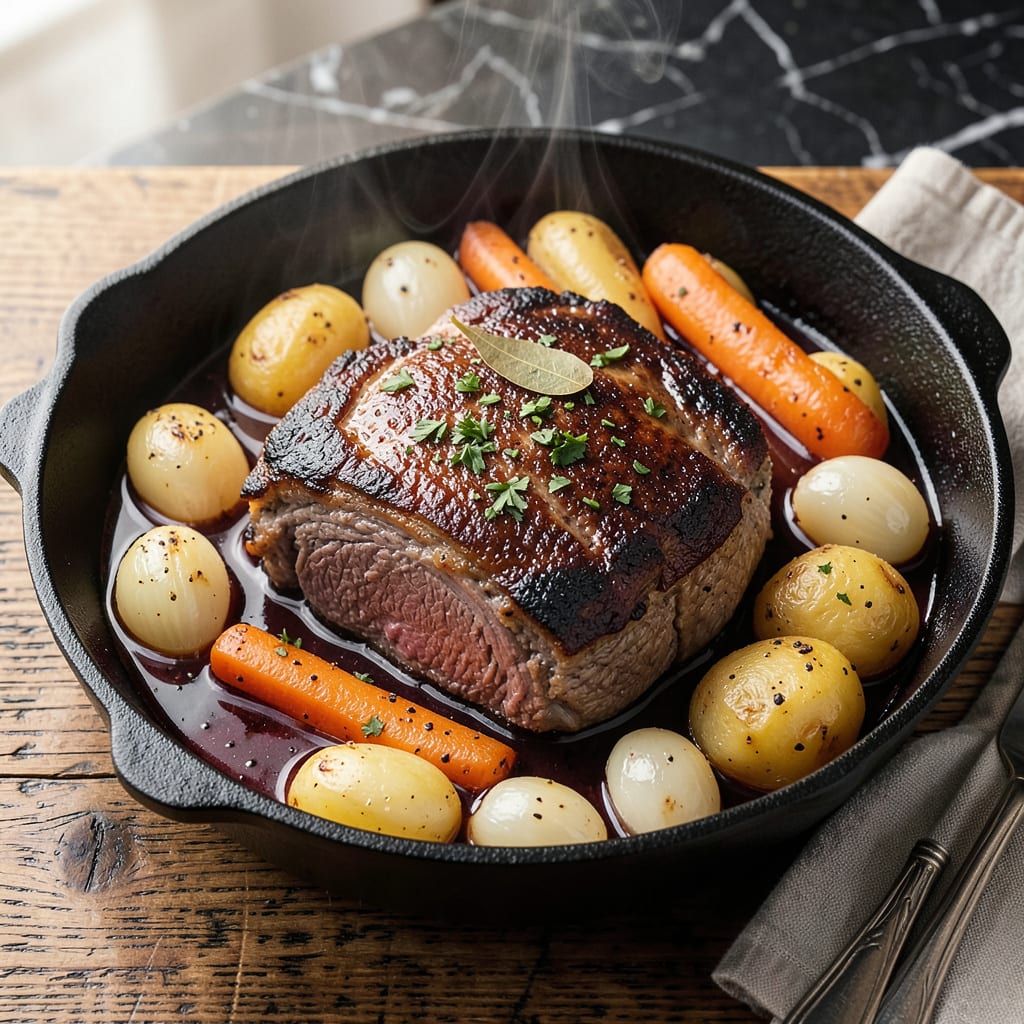
Yes, you can cook pot roast from frozen, but it requires adjustments. Use low heat, extend cooking time by 50-75%, and ensure Done Right: Perfect Internal Temperature Secrets”>internal temperature reaches 145°F for safety. Slow cookers or ovens work best for even cooking.
I’ve cooked my fair share of frozen roasts during busy weeks, and the key is patience. 🔥 When meat starts frozen, the outer layers cook while the center thaws, which can lead to uneven doneness if rushed. That’s why I always recommend adding extra liquid—like beef broth or red wine—to create steam and prevent drying. The slow, gentle heat gives those tough connective tissues time to break down properly, transforming what could be a chewy disaster into fall-apart tender perfection.
💡 In This Article
- Why Frozen Pot Roast Requires Special Cooking Techniques
- Step-by-Step Guide to Cooking Frozen Pot Roast Perfectly
Why Frozen Pot Roast Requires Special Cooking Techniques
When you start with a frozen roast, you’re dealing with a solid block of ice crystals that have formed between muscle fibers. These crystals act like tiny knives, disrupting cell walls and causing moisture loss when heated too quickly.
The science here is all about protein denaturation—frozen meat proteins contract more aggressively when exposed to sudden heat, squeezing out juices before connective tissues can properly break down. That’s why a 3-4 pound frozen chuck roast needs gentle, consistent heat to coax those fibers into submission.
The real challenge lies in heat distribution. A frozen center acts as an insulator, creating what chefs call a “temperature gradient.” While the outer 1-2 inches might reach 200°F, the core could still be thawing at 32°F. This uneven cooking explains why rushed methods produce dry edges and undercooked centers.
Slow cookers excel here by maintaining a steady 190-210°F environment, giving heat time to penetrate evenly without shocking the proteins. 🔥
Food safety adds another layer of complexity. The “danger zone” between 40-140°F is where bacteria thrive, and frozen meat spends extra time in this range as it thaws. That’s why I always recommend adding 30-50% more liquid than usual—it creates a steam bath that keeps surface temperatures rising gradually while the center thaws.
The steam also helps dissolve collagen at lower temperatures, which is crucial for tenderness.
Here’s what most home cooks overlook: frozen meat releases about 10-15% more liquid during cooking as those ice crystals melt. This extra moisture can dilute flavors, which is why I boost seasonings by 25% when starting frozen. A good rule is 1.5 tablespoons kosher salt per pound (versus 1 tablespoon for thawed meat) to compensate.
The salt also helps draw out myoglobin—the protein responsible for that rich, meaty color—even in frozen conditions. ✨
The texture transformation is fascinating to watch. At 160°F, collagen begins converting to gelatin, but with frozen meat, this process starts later and takes longer. I’ve found that frozen roasts need about 1.5 times the cooking duration to achieve the same tenderness as thawed meat. The payoff?
A pot roast with gelatinous richness that actually exceeds some thawed versions, as the extended cooking time allows more collagen breakdown.
Pro tip: Use a trivet or elevated rack in your slow cooker. This prevents the frozen roast from sitting in its own released liquid, which can create a soggy bottom layer. The slight air circulation underneath promotes even cooking and helps develop that coveted caramelized crust on the surface. 💫
Remember, the frozen state isn’t just about temperature—it’s about timing the breakdown of tough fibers. When done right, you’ll get meat that’s not just safe to eat, but transformed into something with deep, concentrated beef flavor and that perfect “pull-apart with a fork” texture we all crave.

Trained in classic French technique but raised on slow-cooked ribs and spicy rubs, she blends culinary skill with smoke and soul.
- Recipe for Boneless Pork Chops in Cast Iron Skillet: Sear and Baste to Juicy Perfection - October 3, 2026
- Recipe for Boneless Cross Rib Roast: Slow-Roasted Beef with Herb Crust - October 3, 2026
- Hamburgers in Sauce Recipe Crock Pot: Slow-Cooked Savory Delight - October 3, 2026