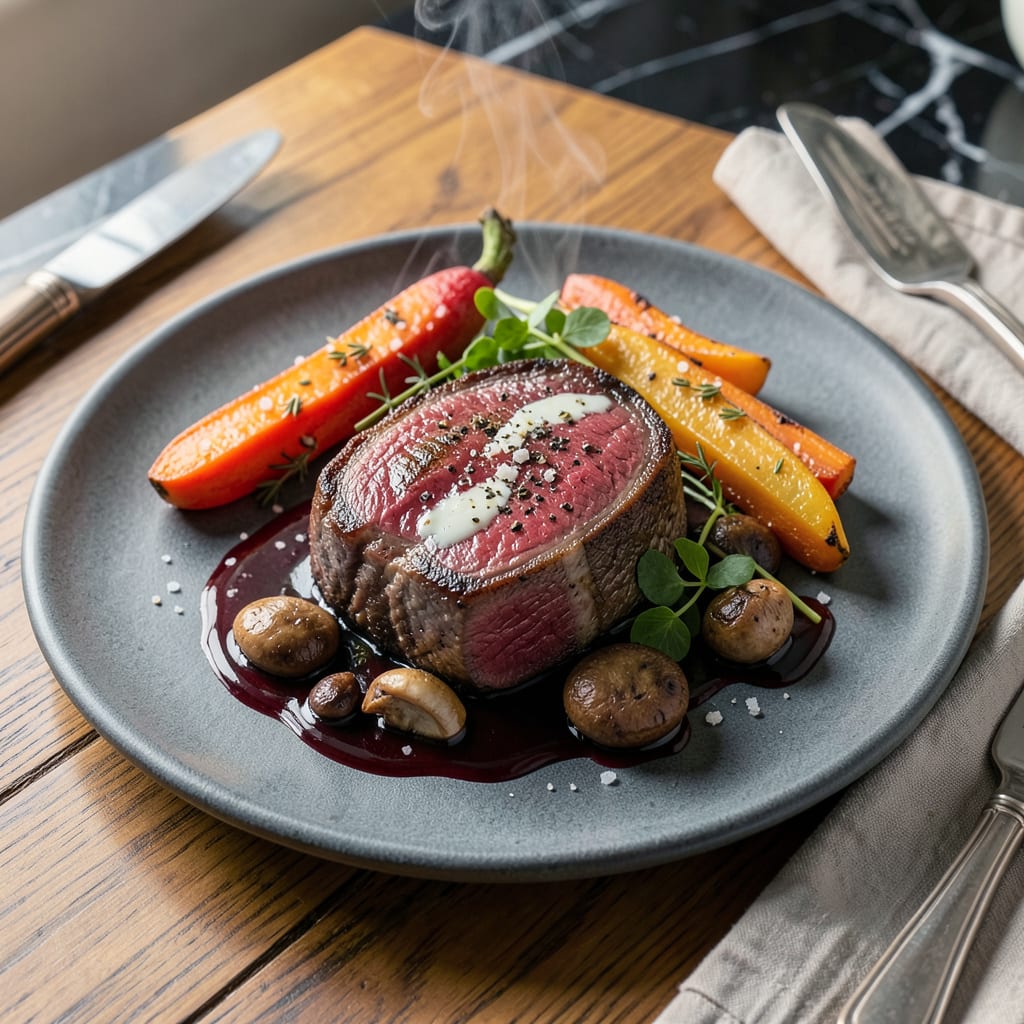
Venison can be safely eaten rare if properly sourced and handled, but it carries higher risks of parasites and bacteria than beef. USDA recommends cooking to at least 145°F for whole cuts, though many chefs serve it rare with strict quality control.
As a pitmaster with French training, I’ve worked with venison in both high-end kitchens and backyard smokers. The key difference from beef lies in its wild nature—deer aren’t raised in controlled environments, so their meat can harbor parasites like Toxoplasma or bacteria from field dressing. That’s why I always emphasize proper sourcing as your first line of defense. 🔥
When I serve venison rare at competitions, I use cuts from processors who follow USDA-inspected aging protocols and maintain unbroken cold chains. Even then, I recommend searing the exterior at high heat to kill surface bacteria while keeping the interior at 120-130°F for that perfect rare finish. The tenderloin is my go-to cut for this method—its lean nature benefits from quick cooking. ✨
💡 In This Article
- Food Safety Risks of Eating Rare Venison
- How to Safely Prepare and Serve Rare Venison
Food Safety Risks of Eating Rare Venison
The wild environment where deer live exposes them to parasites and bacteria that farm-raised cattle rarely encounter. The most concerning parasite is Toxoplasma gondii, which can survive in undercooked meat and cause serious illness.
Unlike cattle that are grain-fed in controlled environments, deer graze on wild vegetation and may consume contaminated water sources, increasing their exposure to pathogens like E. coli and Listeria monocytogenes. 🔥
Field dressing presents another critical risk factor. When hunters process deer in the field without proper sanitation, bacteria from the animal’s hide, intestines, or surrounding environment can contaminate the meat. Studies show that improper field dressing can increase bacterial counts by 100-1000 times compared to professionally processed meat.
The USDA’s 145°F recommendation accounts for these variables, though high-end restaurants often serve venison rare by using USDA-inspected, aged cuts from controlled sources.
What many don’t realize is that venison’s lean nature makes it more susceptible to bacterial growth than fatty meats. With only about 2-3% fat content (compared to beef’s 15-20%), venison lacks the natural protective barrier that fat provides against microbial growth.
This is why I always recommend dry-aging venison for at least 7-10 days under controlled conditions—it allows natural enzymes to break down connective tissue while reducing surface bacteria through dehydration.
The muscle structure of deer also differs significantly from cattle. Deer muscles are designed for endurance rather than strength, resulting in finer muscle fibers that can harbor microscopic parasites more easily.
When I worked in French kitchens, we used specialized meat inspectors to examine each venison cut for signs of Trichinella spiralis (a parasitic worm) before serving it rare. This level of inspection simply isn’t available for most home cooks, which is why I’m cautious about recommending rare preparation without professional oversight. ✨
Temperature abuse during storage compounds these risks. Venison should be kept at 32-36°F consistently—just a few hours above 40°F can allow bacteria to multiply exponentially. I’ve seen competition teams lose entire venison shipments because coolers weren’t properly monitored during transport.
The difference between safe and unsafe rare venison often comes down to these invisible factors in the supply chain.
For those determined to try rare venison, I recommend starting with farmed venison from New Zealand or Scotland, where animals are raised in controlled environments similar to cattle. These operations follow strict feeding and processing protocols that significantly reduce parasite risks.
Even then, I suggest searing the exterior at 450°F for 90 seconds per side to create a protective crust while maintaining a rare interior. 💫
The sensory payoff can be remarkable when done correctly—properly handled rare venison has a velvety texture and clean, mineral-rich flavor that’s closer to elite beef than most people realize. But the margin for error is razor-thin compared to steak.
That’s why I always say: if you wouldn’t eat raw oysters from questionable waters, don’t eat rare venison from unknown sources. ⚡

Trained in classic French technique but raised on slow-cooked ribs and spicy rubs, she blends culinary skill with smoke and soul.
- Recipe for Boneless Pork Chops in Cast Iron Skillet: Sear and Baste to Juicy Perfection - October 3, 2026
- Recipe for Boneless Cross Rib Roast: Slow-Roasted Beef with Herb Crust - October 3, 2026
- Hamburgers in Sauce Recipe Crock Pot: Slow-Cooked Savory Delight - October 3, 2026