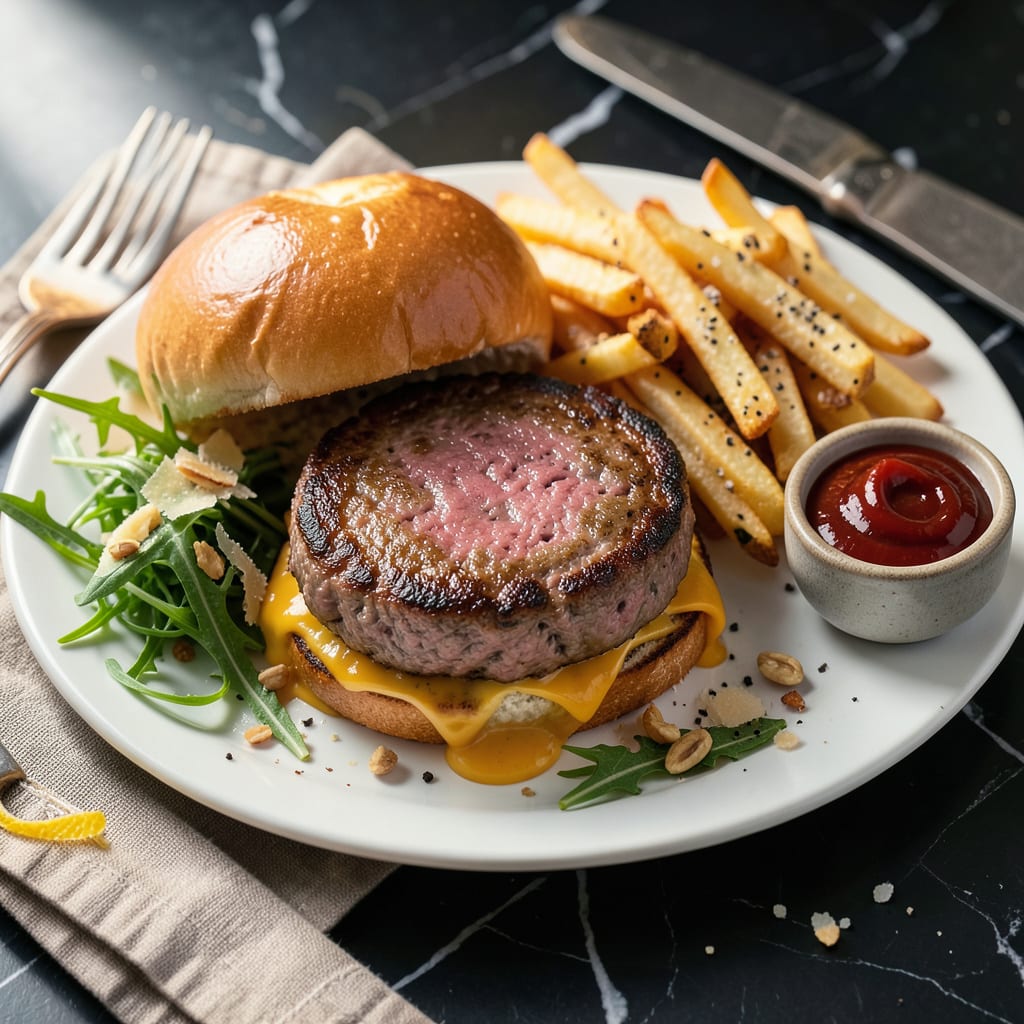
Pink ground beef can be safe to eat if it reaches an internal temperature of 160°F (71°C) to kill harmful bacteria like E. coli and salmonella. Color alone isn’t a reliable indicator—always use a meat thermometer to confirm doneness.
I’ve seen many home cooks panic when their burgers stay pink inside, but here’s the key: grinding exposes more surface area to bacteria, making temperature the only foolproof safety check. 🔥 That rosy hue often comes from myoglobin (a protein in muscle tissue), not undercooking—especially with grass-fed beef, which tends to stay pinker even when fully cooked. What matters most is hitting that 160°F mark in the thickest part, since bacteria lurk on the surface and get mixed throughout during grinding.
Pro tip from my pitmaster days: let your patties rest 3-5 minutes after cooking. This allows juices to redistribute and the temperature to stabilize—often rising another 5°F off the heat. ✨ Skip the color test and invest in a good instant-read thermometer; it’s the only way to guarantee both safety and juiciness in every bite.
💡 In This Article
- Why Ground Beef Color Doesn’t Always Indicate Doneness
- Safe Cooking and Handling Tips for Ground Beef
Why Ground Beef Color Doesn’t Always Indicate Doneness
The pink hue in cooked ground beef often comes from myoglobin, a protein that stores oxygen in muscle tissues. When exposed to heat, myoglobin changes color—turning brown only after reaching 140°F (60°C) or higher.
But here’s the catch: grinding meat exposes more surface area to oxygen, which can keep myoglobin in its pink state even at safe temperatures. 🔥 This is why grass-fed beef often stays pinker than grain-fed; its higher pH levels (around 5.8 vs. 5.4) slow down this color change.
What complicates things further is that ground beef’s color can shift dramatically based on storage conditions. Meat exposed to oxygen for several days develops a bright red surface layer (oxymyoglobin), while vacuum-sealed packages turn purple (deoxymyoglobin). When cooked, both can leave pink tones—even when the internal temperature hits 160°F (71°C).
I’ve seen this firsthand with burgers made from freshly ground chuck versus pre-packaged blends; the former often retains more pinkness despite being fully cooked.
The grinding process itself dramatically changes the safety equation. Whole cuts like steaks can be safely eaten rare because bacteria only contaminate the surface. But when meat is ground, those surface bacteria get mixed throughout. This means color becomes an unreliable indicator—what looks “medium-rare” might actually contain dangerous pathogens in the center.
The USDA recommends 160°F (71°C) for ground beef specifically because this temperature destroys E. coli O157:H7 and salmonella, which can survive at lower temps.
Here’s a practical example from my kitchen: I once cooked two identical patties—one from a local butcher’s fresh grind, one from store-bought pre-ground beef. Both reached 160°F (71°C) internally, but the fresh-ground patty remained noticeably pink while the pre-ground turned uniformly brown. ✨ The difference?
Freshly ground meat retains more moisture and myoglobin, creating that persistent pink color despite being perfectly safe to eat.
Even the cooking method affects color perception. Grilled burgers develop a darker crust from Maillard reactions, making the interior appear pinker by contrast. Pan-seared patties, with their even browning, often look more uniformly cooked.
I always recommend using a thermometer’s thin probe inserted sideways into the patty’s center for the most accurate reading—this avoids the common mistake of hitting the pan or grill grates.
Remember that certain additives can also influence color. Some commercial ground beef contains carbon monoxide to preserve that “fresh” red appearance, which can persist through cooking. Others may include salt or phosphates that affect protein structure and color retention.
When in doubt, trust the thermometer over your eyes—it’s the only tool that accounts for all these variables. 💫
The takeaway? That pink center might just be well-cooked myoglobin, not underdone meat. But since you can’t see bacteria, the thermometer remains your best defense against foodborne illness.
I’ve learned through years of cooking that perfect burgers come from precise temperature control, not color judgment—whether you prefer them juicy and pinkish or well-done and brown throughout.

Trained in classic French technique but raised on slow-cooked ribs and spicy rubs, she blends culinary skill with smoke and soul.
- Recipe for Boneless Pork Chops in Cast Iron Skillet: Sear and Baste to Juicy Perfection - October 3, 2026
- Recipe for Boneless Cross Rib Roast: Slow-Roasted Beef with Herb Crust - October 3, 2026
- Hamburgers in Sauce Recipe Crock Pot: Slow-Cooked Savory Delight - October 3, 2026