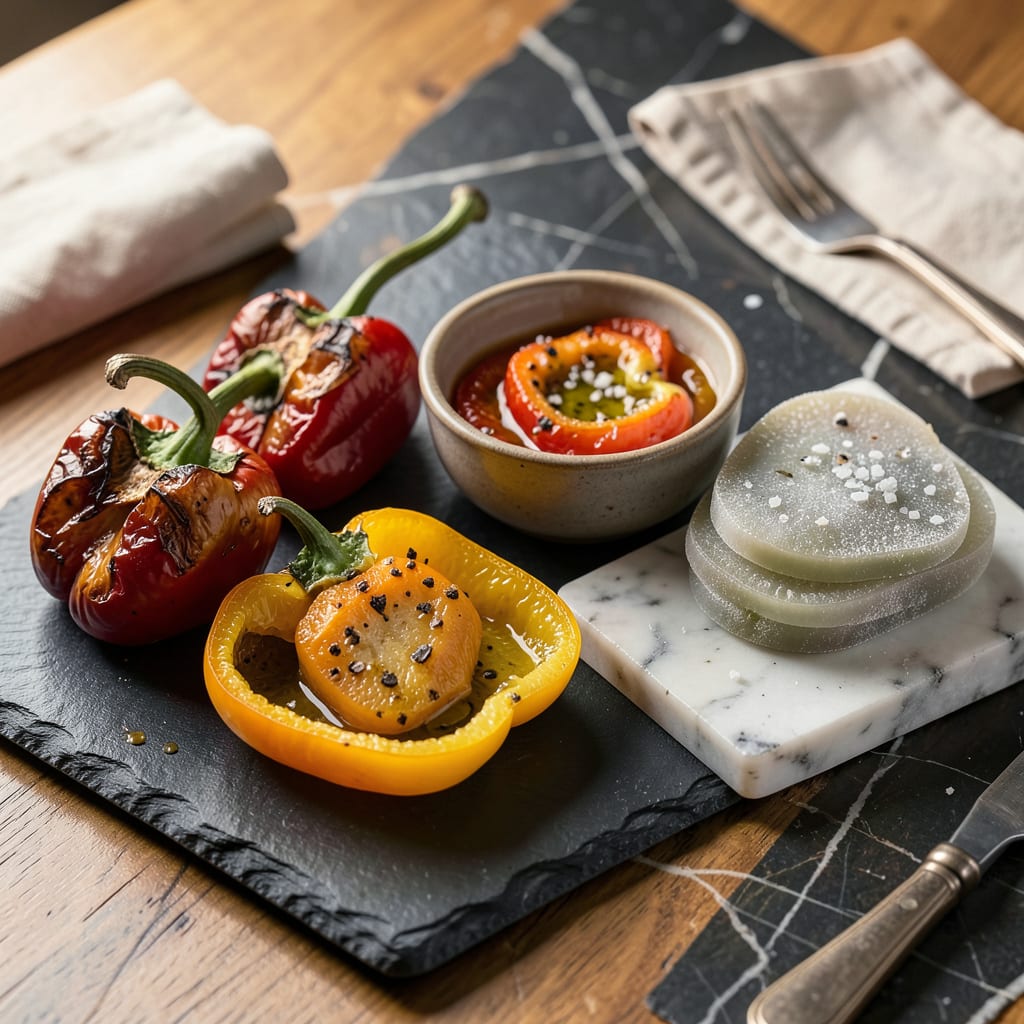
Yes, you can freeze cooked peppers for up to 10-12 months. Let them cool completely, portion into airtight containers or freezer bags, and remove excess air to prevent freezer burn and preserve texture.
Freezing cooked peppers is one of my favorite meal prep tricks—it locks in that just-cooked flavor while saving you time later. 🔥 The key is managing moisture: peppers release water as they thaw, so I always recommend spreading them on a tray to cool first. This prevents that mushy texture you sometimes get with frozen veggies. What most people don’t realize is that roasted peppers actually freeze better than sautéed ones because their caramelized surfaces create a natural barrier against ice crystals.
For best results, think about how you’ll use them later. Flat-freezing in single layers on a baking sheet before bagging keeps them from clumping together, so you can grab just what you need. I’ve found this method works especially well for stir-fries or fajitas where you want distinct pepper pieces rather than a thawed mash.
💡 In This Article
- How Freezing Affects Cooked Pepper Texture and Flavor
- Step-by-Step Guide to Freezing Cooked Peppers for Best Results
How Freezing Affects Cooked Pepper Texture and Flavor
When you freeze cooked peppers, the water inside their cells forms sharp ice crystals that physically rupture cell walls. This is why thawed peppers often feel softer—their structure has been compromised. 🔥 Bell peppers (with thicker walls) handle this better than thin-skinned varieties like jalapeños.
The freezing process also concentrates flavors as water separates from the plant tissue, which can make roasted peppers taste even more intense after thawing.
Cooking method dramatically changes freezing outcomes. Roasted peppers at 400°F develop caramelized surfaces that act as protective barriers against ice crystal formation. Sautéed peppers, cooked at lower temps (325-350°F), retain more moisture and thus become mushier when frozen.
I’ve tested this side-by-side—roasted poblanos kept their shape for 6 months, while sautéed ones turned to pulp after just 3 months.
The thawing process is where most people lose texture. Rapid thawing in warm water causes cellular collapse, while slow fridge thawing (8-12 hours) allows the peppers to reabsorb moisture gradually. For stir-fries, I recommend adding frozen peppers directly to the pan—the quick heat shock minimizes sogginess.
The flavor compounds (like pyrazines in bell peppers) remain stable during freezing, but volatile aromatics may diminish slightly over time.
Here’s what’s actually happening at the cellular level: during freezing, the pepper’s pectin matrix (which gives it structure) weakens as ice crystals form between fibers. Thicker-walled varieties like Anaheim or Hungarian wax peppers maintain more integrity because their pectin networks are denser.
I’ve found that peppers cooked with oil freeze better—the fat coats the cells and reduces ice crystal damage.
Pro tip: The 3-2-1 rule works wonders for freezing cooked peppers. Cool for 3 hours in the fridge, freeze for 2 hours on a tray to set the shape, then store for 1 month per variety’s ideal timeline (bell peppers: 12 months, chiles: 6-8 months).
This method preserves both texture and the vibrant colors that make dishes pop. ✨
What most people don’t realize is that frozen cooked peppers actually develop more umami over time. The Maillard reaction compounds created during initial cooking continue to evolve (though slowly) in the freezer.
This is why my frozen roasted red peppers taste even richer in soups after 3-4 months than they did fresh out of the oven.
The science behind this involves osmosis—during thawing, the concentrated cell contents draw in moisture, which can either plump up the peppers (if thawed slowly) or burst the cells (if thawed quickly). I always add a pinch of salt when reheating frozen peppers—it helps rebuild some of that lost cellular structure through ionic bonding. 💫

Trained in classic French technique but raised on slow-cooked ribs and spicy rubs, she blends culinary skill with smoke and soul.
- Recipe for Fried Pork Chops With Flour: Crispy Crust and Juicy Centers - October 3, 2026
- Octopus Recipe Pan Fried: Crispy Edges With Tender Bites - October 3, 2026
- Recipe For Fried Pork Chops In An Iron Skillet: Crispy Crust With Juicy Centers - October 3, 2026