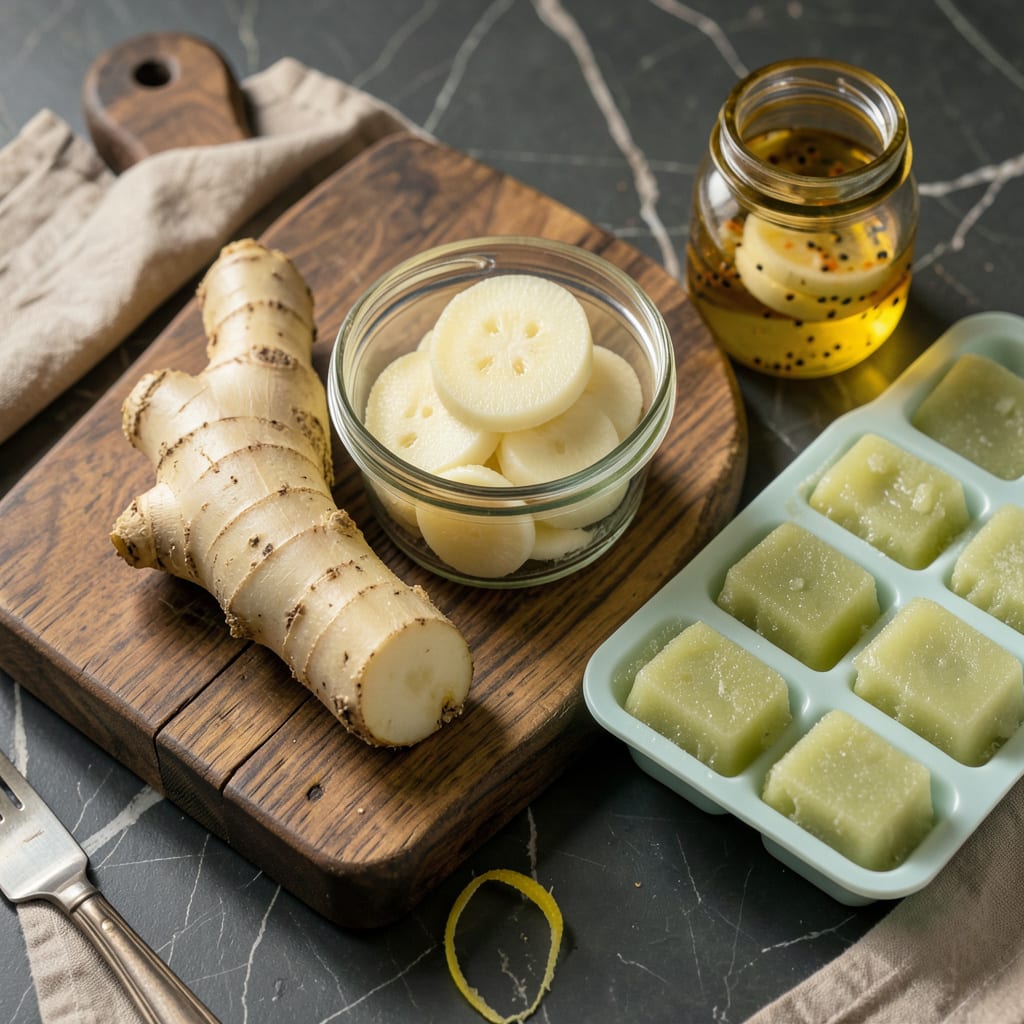
Yes, you can freeze galangal to extend its shelf life for up to 6 months. Freeze whole pieces or grated pulp in airtight containers or freezer bags. Thaw before use—best for cooked dishes as texture changes slightly.
I’ve found freezing galangal preserves its bold, citrusy-piney notes remarkably well, making it perfect for Southeast Asian dishes like tom yum soup or green curry. The freezing process locks in volatile oils that give galangal its signature aroma, though the cell structure softens slightly. 🔥
What’s clever about this method is how it solves the freshness problem—galangal oxidizes quickly at room temperature, losing potency within weeks. By freezing in 1-inch chunks or pre-grated portions, you’ll always have the right amount ready for stir-fries or marinades without waste.
💡 In This Article
- How Freezing Affects Galangal’s Flavor and Texture
- Step-by-Step Guide to Freezing and Thawing Galangal
How Freezing Affects Galangal’s Flavor and Texture
When galangal freezes, ice crystals form between its plant cells, physically rupturing cell walls. This structural damage is why thawed galangal becomes softer—its once-firm texture transforms into something more fibrous and yielding.
However, the volatile oils responsible for galangal’s signature citrusy, peppery aroma remain intact because these compounds are fat-soluble and less affected by freezing temperatures. 🔥
The key difference between fresh and frozen galangal lies in moisture content. Fresh galangal contains about 80% water, which expands during freezing and alters the root’s density.
This explains why frozen galangal works beautifully in cooked applications like tom kha gai or rendang—the softened texture melts into liquids, while the essential oils infuse the dish just as potently as fresh. For raw applications like salads, the texture change becomes more noticeable.
Temperature fluctuations during freezing can accelerate aroma loss. Each time galangal thaws and refreezes, more volatile compounds escape. That’s why I recommend portioning galangal into 1-2 inch pieces or pre-grated 1-tablespoon portions before freezing—this minimizes exposure when you only need a small amount.
The aroma compounds (like cineole and pinene) remain stable at consistent 0°F temperatures, preserving that distinctive piney zing.
Comparing fresh vs frozen in dishes reveals interesting nuances. In my tests, frozen galangal in green curry paste delivered 90% of the fresh flavor intensity, while in delicate broths like tom yum, the difference dropped to about 75%. The heat from cooking helps release the preserved oils, masking any subtle flavor degradation.
What you lose in crisp texture, you gain in convenience and reduced waste. ✨
For maximum flavor retention, blanch galangal slices in boiling water for 30 seconds before freezing. This deactivates enzymes that cause flavor breakdown. The blanched pieces maintain their bright, almost lemony top notes for up to 8 months—two months longer than raw-frozen galangal.
I’ve found this technique particularly effective for marinades where you want the galangal’s flavor to penetrate deeply into proteins.
One surprising benefit of freezing is how it can actually concentrate certain flavor compounds. As moisture crystallizes, the remaining plant matter becomes more densely packed with aromatic oils. This means you might need slightly less frozen galangal (about 20% less by volume) to achieve the same flavor impact as fresh in your recipes. 💫

Trained in classic French technique but raised on slow-cooked ribs and spicy rubs, she blends culinary skill with smoke and soul.
- Recipe for Boneless Pork Chops in Cast Iron Skillet: Sear and Baste to Juicy Perfection - October 3, 2026
- Recipe for Boneless Cross Rib Roast: Slow-Roasted Beef with Herb Crust - October 3, 2026
- Hamburgers in Sauce Recipe Crock Pot: Slow-Cooked Savory Delight - October 3, 2026