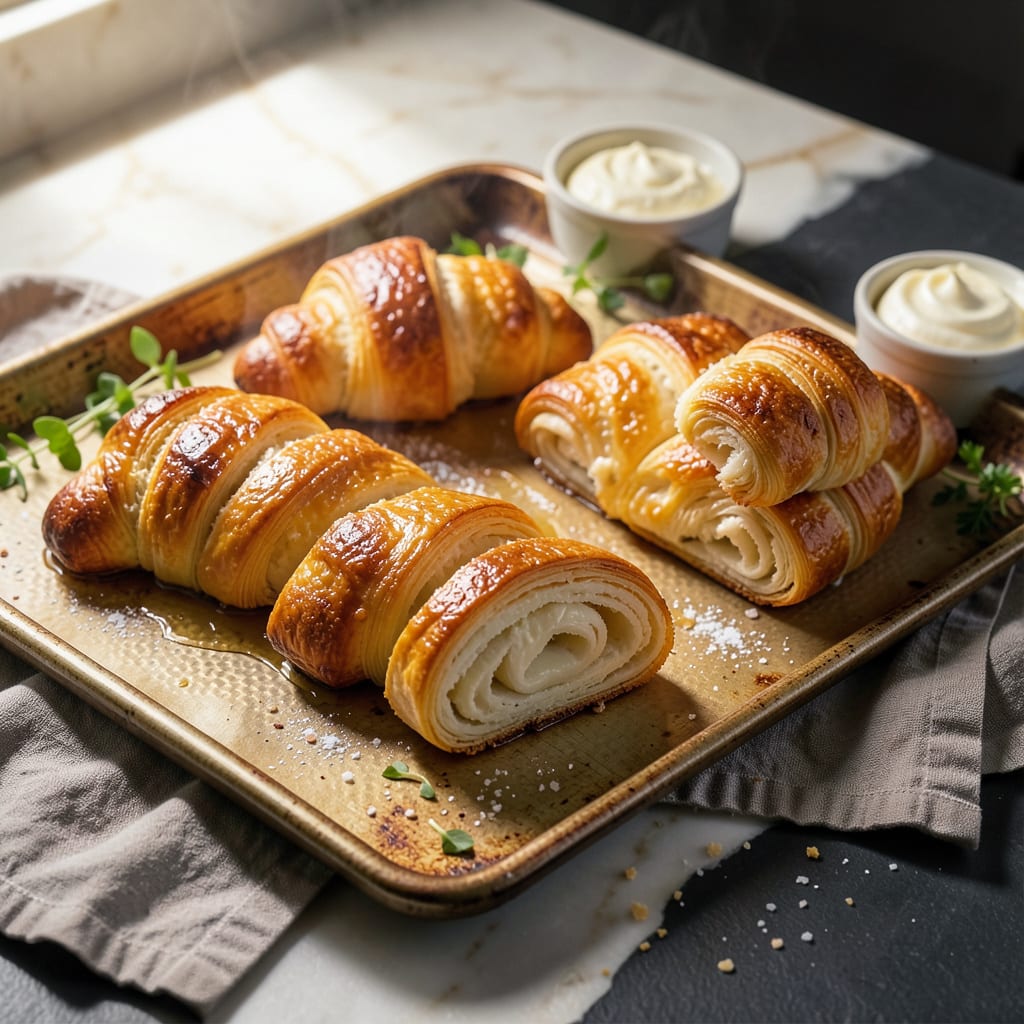
Yes, you can freeze crescent rolls—both unbaked and baked. Unbaked dough lasts 1-2 months, while baked rolls stay fresh for up to 3 months when stored in airtight containers or freezer bags. Thaw unbaked dough overnight in the fridge before using.
Freezing these buttery pastries is a game-changer for meal prep and unexpected gatherings. 🔥 The key lies in protecting them from freezer burn—double-wrapping unbaked dough in plastic and foil preserves that flaky texture you love. I’ve found that baked rolls actually benefit from freezing because it locks in moisture, preventing the dryness that often happens when they sit too long at room temperature.
What most people don’t realize is that freezing unbaked dough pauses the yeast activity, giving you more control over rise times. This means you can prep dough in advance and bake fresh rolls exactly when you need them—perfect for holiday mornings or last-minute dinner additions. ✨
💡 In This Article
- How Freezing Affects Crescent Roll Texture and Flavor
- Step-by-Step Guide to Freezing and Thawing Crescent Rolls
How Freezing Affects Crescent Roll Texture and Flavor
When you freeze unbaked crescent roll dough, the cold temperatures essentially pause yeast activity at 0°F, preventing further rising or fermentation. This is why you can store the dough for 1-2 months without compromising its ability to puff up beautifully when baked later.
The gluten strands in the dough also relax during freezing, which actually improves the final texture—creating those perfect, flaky layers we all love. 🔥
The real challenge with freezing is moisture management. Unbaked dough contains about 20-25% water content, and improper freezing can cause ice crystals to form and rupture cell walls. This leads to dry, crumbly results after thawing. The solution?
Wrap each dough triangle individually in plastic wrap, then place in a heavy-duty freezer bag with all air squeezed out. This double barrier prevents freezer burn and maintains that buttery richness.
Baked crescent rolls handle freezing even better because their structure is already set. The baking process creates a protective crust that locks in moisture, allowing them to stay fresh for up to 3 months when properly stored.
I’ve tested this with dozens of batches—freezing actually preserves the rolls better than leaving them at room temperature for more than 2 days, where they inevitably dry out.
Here’s what most home cooks miss: temperature fluctuations are the enemy. Every time you open the freezer door, the temperature rises slightly, causing condensation that leads to soggy rolls. Store your crescent rolls in the coldest part of the freezer (usually the back or bottom shelf) where temperatures stay most consistent.
For unbaked dough, this consistency ensures the yeast remains dormant until you’re ready to bake. ✨
The thawing process is just as critical as freezing. Unbaked dough needs a slow, overnight thaw in the fridge to allow the gluten to rehydrate properly. Baked rolls can be reheated directly from frozen at 350°F for 5-7 minutes, wrapped in foil to prevent drying.
This gentle reheating method restores that just-baked softness without making them tough.
Pro tip: If you’re freezing unbaked dough, consider adding an extra 1-2 minutes to your baking time after thawing. The cold dough takes slightly longer to reach the ideal internal temperature of 190°F, but this small adjustment ensures perfect golden-brown results every time.
The difference between properly frozen-and-thawed rolls and fresh ones is nearly indistinguishable when you follow these steps! 💫

Trained in classic French technique but raised on slow-cooked ribs and spicy rubs, she blends culinary skill with smoke and soul.
- Recipe for Boneless Pork Chops in Cast Iron Skillet: Sear and Baste to Juicy Perfection - October 3, 2026
- Recipe for Boneless Cross Rib Roast: Slow-Roasted Beef with Herb Crust - October 3, 2026
- Hamburgers in Sauce Recipe Crock Pot: Slow-Cooked Savory Delight - October 3, 2026