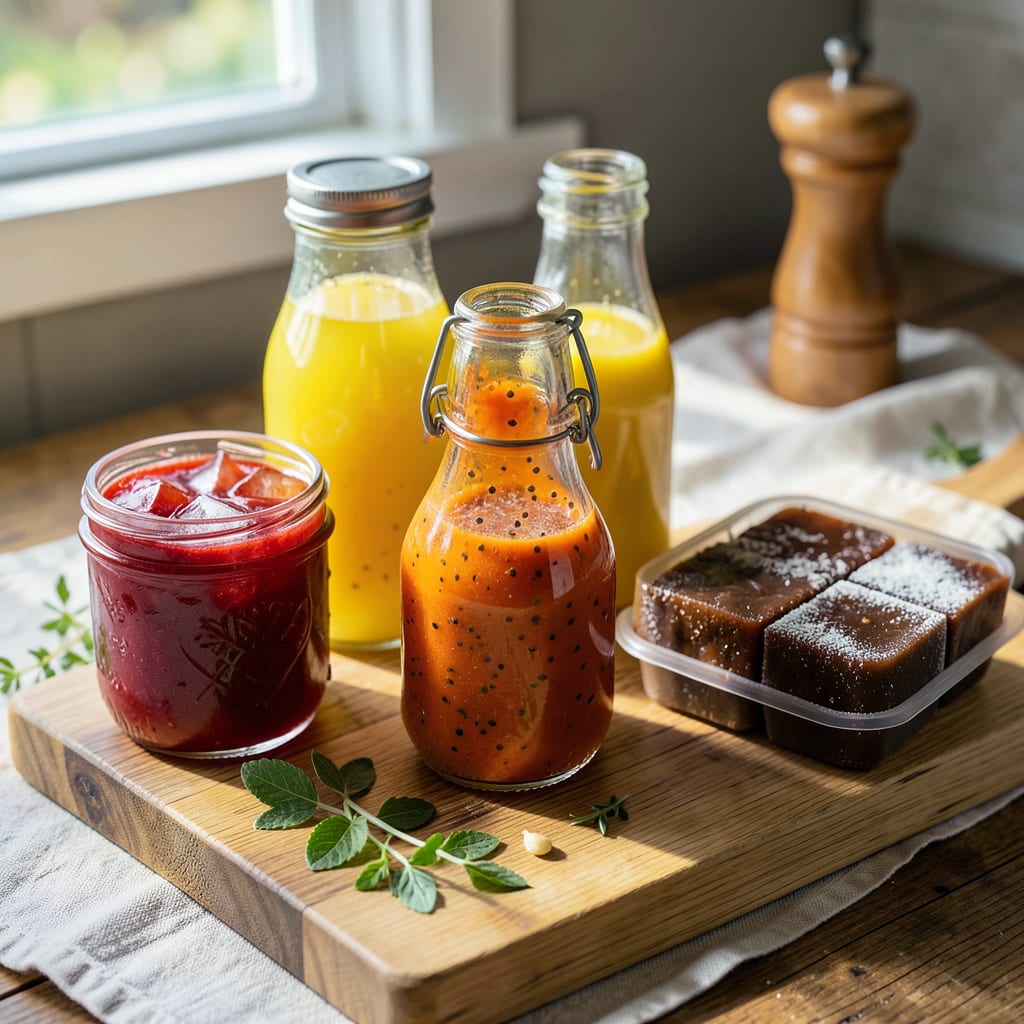
Yes, you can safely freeze homemade hot sauce for up to 6 months without losing significant flavor or heat. Use airtight containers or ice cube trays, leaving ½-inch headspace for expansion. Thaw in the fridge before use for best texture and quality.
Freezing works surprisingly well for preserving that fiery kick you’ve crafted, but the secret lies in the ingredients. 🔥 Sauces with higher vinegar content tend to hold up better because the acidity acts as a natural preservative. I’ve tested this with everything from smoky chipotle blends to fruity habanero concoctions—what matters most is minimizing air exposure to prevent freezer burn. The cold actually mellows some of the harshest capsaicin notes while keeping the complex flavors intact, which is why I always recommend tasting after thawing to adjust seasoning if needed.
What many don’t realize is that freezing can actually enhance certain flavors over time, similar to how chili develops more depth after a day in the fridge. ✨ The process breaks down cell walls in peppers and aromatics, releasing more of their essential oils. Just remember that emulsified sauces (like creamy or oil-based versions) may separate slightly—this is normal and easily fixed with a quick shake or blend after thawing.
💡 In This Article
- How Freezing Affects Hot Sauce Texture and Flavor
- Step-by-Step Guide to Freezing and Thawing Hot Sauce
How Freezing Affects Hot Sauce Texture and Flavor
When you freeze homemade hot sauce, the cold temperatures cause water molecules in the peppers and vinegar to form ice crystals. These crystals disrupt cell structures, which can make the sauce slightly thinner after thawing.
🔥 The capsaicin—the compound responsible for heat—remains stable in freezing conditions, but the perception of spiciness might feel slightly muted because cold temperatures temporarily dull our taste buds‘ sensitivity to capsaicin.
Vinegar-based sauces handle freezing better than oil-based ones because acetic acid (vinegar’s main component) has a lower freezing point (-17°C/1°F) than water. This means the vinegar stays liquid while water freezes, preventing complete solidification. Oil-based sauces, however, may separate because oils and water freeze at different rates.
A quick shake or blend after thawing usually restores the emulsion. Sauces with natural emulsifiers like mustard or xanthan gum maintain their texture better during freezing.
The pH level plays a crucial role in preservation. Most hot sauces fall between pH 3.0-4.0, which is acidic enough to inhibit bacterial growth even after thawing. I’ve noticed that sauces with citrus juice (pH around 2.0-3.0) maintain brighter flavors, while those with tomatoes (pH around 4.0-4.5) may develop slightly muted notes over time.
The acidity also helps preserve the vibrant colors of peppers and herbs.
Here’s what happens to specific ingredients: Chili peppers retain most of their heat but may lose some of their fresh, grassy notes. Garlic and onions can develop slightly stronger flavors after freezing—almost like they’ve been lightly caramelized. Herbs like cilantro or basil might darken but keep their aromatic qualities.
The freezing process actually concentrates some flavors by breaking down cell walls, which is why thawed sauces sometimes taste more complex than fresh ones.
For best results, consider your sauce’s composition. Thin, vinegar-heavy sauces freeze almost perfectly, while thick, chunky salsas might need a quick pulse in the blender after thawing. Sauces with dairy (like creamy habanero) don’t freeze well—the proteins separate irreparably.
I always test a small batch first to see how the texture holds up, especially with experimental ingredients like fruit purees or unusual spices. ✨
The container matters too. Glass jars can crack if filled too full (leave that ½-inch headspace!), while plastic may absorb odors over time. Silicone ice cube trays work beautifully for portion control and minimize air exposure.
For long-term storage beyond 6 months, the quality starts declining noticeably—flavors become flatter and colors fade, though the sauce remains safe to eat.
Pro tip: If your thawed sauce seems watery, simmer it gently for 5-10 minutes to evaporate excess moisture and reconcentrate flavors. This works particularly well for fermented hot sauces, where the flavors actually improve with a brief reheat.
The heat helps reintegrate any separated components while reviving the aromatic compounds that might have dulled during freezing. 💫

Trained in classic French technique but raised on slow-cooked ribs and spicy rubs, she blends culinary skill with smoke and soul.
- Recipe for Boneless Pork Chops in Cast Iron Skillet: Sear and Baste to Juicy Perfection - October 3, 2026
- Recipe for Boneless Cross Rib Roast: Slow-Roasted Beef with Herb Crust - October 3, 2026
- Hamburgers in Sauce Recipe Crock Pot: Slow-Cooked Savory Delight - October 3, 2026