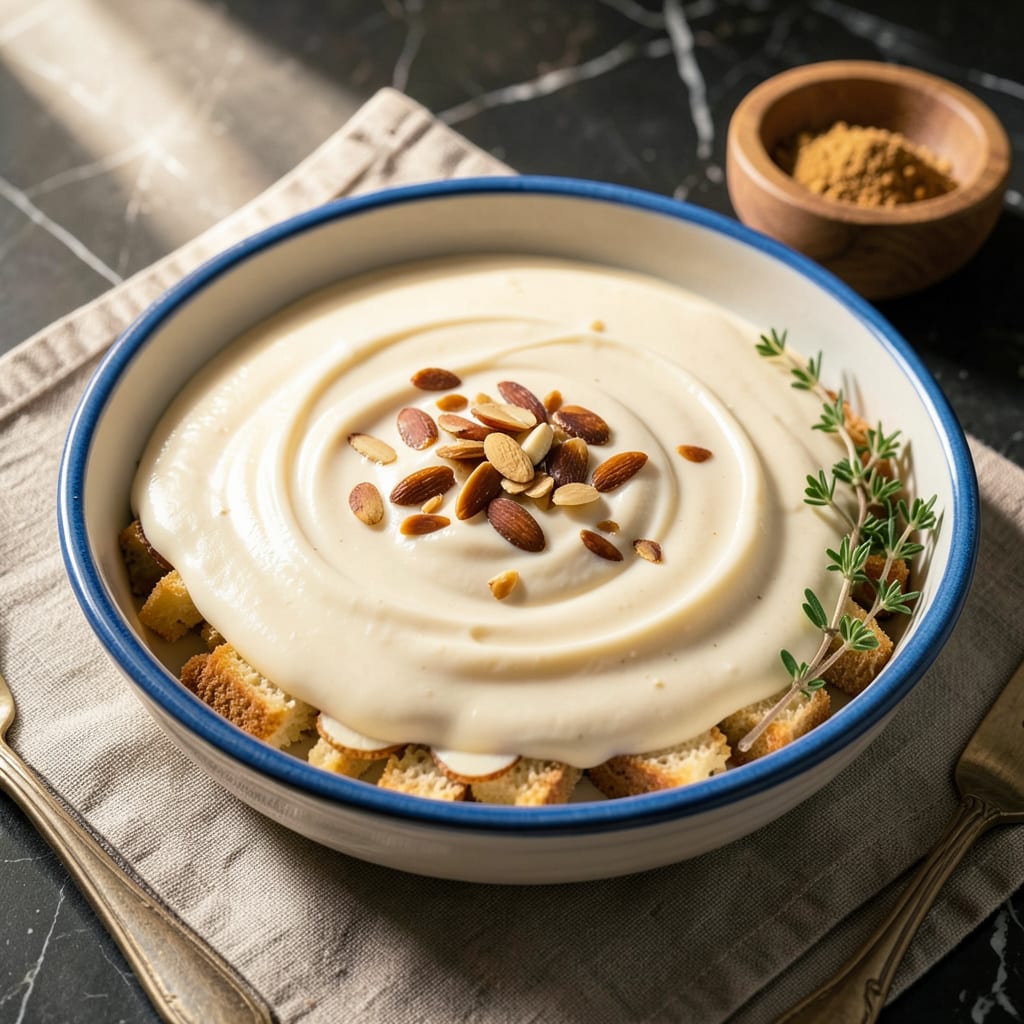
Yes, you can make béchamel with almond milk, but it requires careful heat control to prevent curdling. The result will be lighter in flavor and texture than traditional dairy versions, with a subtle nutty undertone.
I’ve experimented with this substitution extensively in my kitchen, and the key lies in understanding almond milk’s lower protein content. Without dairy‘s natural emulsifiers, you’ll need to whisk constantly over medium-low heat to maintain a smooth consistency. What’s fascinating is how the nutty essence actually enhances delicate dishes like lasagna or croque monsieur, adding a modern twist to classic French technique. ✨
The real game-changer comes when you adjust your expectations about thickness. Almond milk’s thinner viscosity means you might need to increase your roux slightly or add a pinch of cornstarch for that perfect velvety texture. I always recommend unsweetened varieties to avoid any unwanted sweetness in your savory sauces. 🔥
💡 In This Article
- Why Almond Milk Behaves Differently in Béchamel Sauce
- Step-by-Step Guide to Perfect Almond Milk Béchamel
Why Almond Milk Behaves Differently in Béchamel Sauce
Almond milk’s composition is fundamentally different from dairy milk, which directly impacts béchamel’s structure. Dairy contains about 8 grams of protein per cup (mostly casein), which helps stabilize the sauce through protein coagulation. Almond milk typically has only 1 gram of protein per cup, meaning it lacks the natural emulsifiers that keep traditional béchamel smooth.
The fat content also differs—dairy milk is about 4% fat, while almond milk usually contains 2.5-3% fat, often from added oils rather than natural dairy fats.
Heat sensitivity becomes the biggest challenge when working with almond milk. Dairy proteins can withstand temperatures up to 180°F before curdling, but almond milk begins breaking down at just 140-150°F. This lower threshold means you must maintain a strict medium-low heat (around 120-130°F) and whisk constantly.
The lack of casein also means almond milk can’t form the same stable emulsion with butter and flour, which is why many recipes benefit from adding 1/2 teaspoon of cornstarch or arrowroot powder per cup of milk as insurance against separation.
The flavor transformation is where almond milk truly shines. Traditional béchamel has a rich, creamy base with buttery notes, while almond milk versions develop a delicate nuttiness that pairs beautifully with herbs like thyme or nutmeg.
I’ve found this subtle almond undertone works particularly well in dishes with mushrooms or roasted vegetables, where it adds complexity without overpowering. The lighter body also makes it ideal for delicate applications like soufflés or crepes, where heavy dairy might weigh down the texture.
What most home cooks don’t realize is that almond milk’s thinner consistency actually requires more roux to achieve the same thickness. A standard béchamel uses a 2:2:1 ratio (2 cups milk to 2 tablespoons each butter and flour), but with almond milk, I recommend increasing to 3 tablespoons of flour for the same volume.
This adjustment compensates for the reduced protein content while maintaining that signature velvety mouthfeel. The tradeoff is a slightly paler color, as almond milk lacks dairy’s natural yellow hue from beta-carotene.
Another critical factor is the almond milk’s processing method. Homemade versions with higher almond content (about 20% almonds) perform better than commercial brands that are often just 2% almonds with added thickeners.
These store-bought versions may contain gums like carrageenan or gellan, which can actually help stabilize your sauce but may introduce a slightly gummy texture if overheated. Always check the ingredient list—versions with fewer additives tend to yield cleaner flavors in your final sauce.
The science behind this substitution reveals why patience is key. Without dairy’s natural emulsifiers, you’re relying entirely on the starch from your roux to thicken the sauce. This means the cooking process takes about 2-3 minutes longer as you wait for the starch granules to fully absorb the liquid and swell.
I’ve found that letting the sauce rest off-heat for 5 minutes before final adjustments gives the starches time to fully hydrate, resulting in a smoother consistency.
One unexpected benefit I’ve discovered is that almond milk béchamel reheats more gracefully than dairy versions. The lack of dairy proteins means it’s less prone to that unpleasant skin formation when cooled and reheated. Simply whisk in a splash of warm almond milk when reheating to restore the perfect consistency.
This makes it an excellent make-ahead option for meal prep or catering applications where you need reliable performance. ✨

Trained in classic French technique but raised on slow-cooked ribs and spicy rubs, she blends culinary skill with smoke and soul.
- Recipe for Boneless Pork Chops in Cast Iron Skillet: Sear and Baste to Juicy Perfection - October 3, 2026
- Recipe for Boneless Cross Rib Roast: Slow-Roasted Beef with Herb Crust - October 3, 2026
- Hamburgers in Sauce Recipe Crock Pot: Slow-Cooked Savory Delight - October 3, 2026