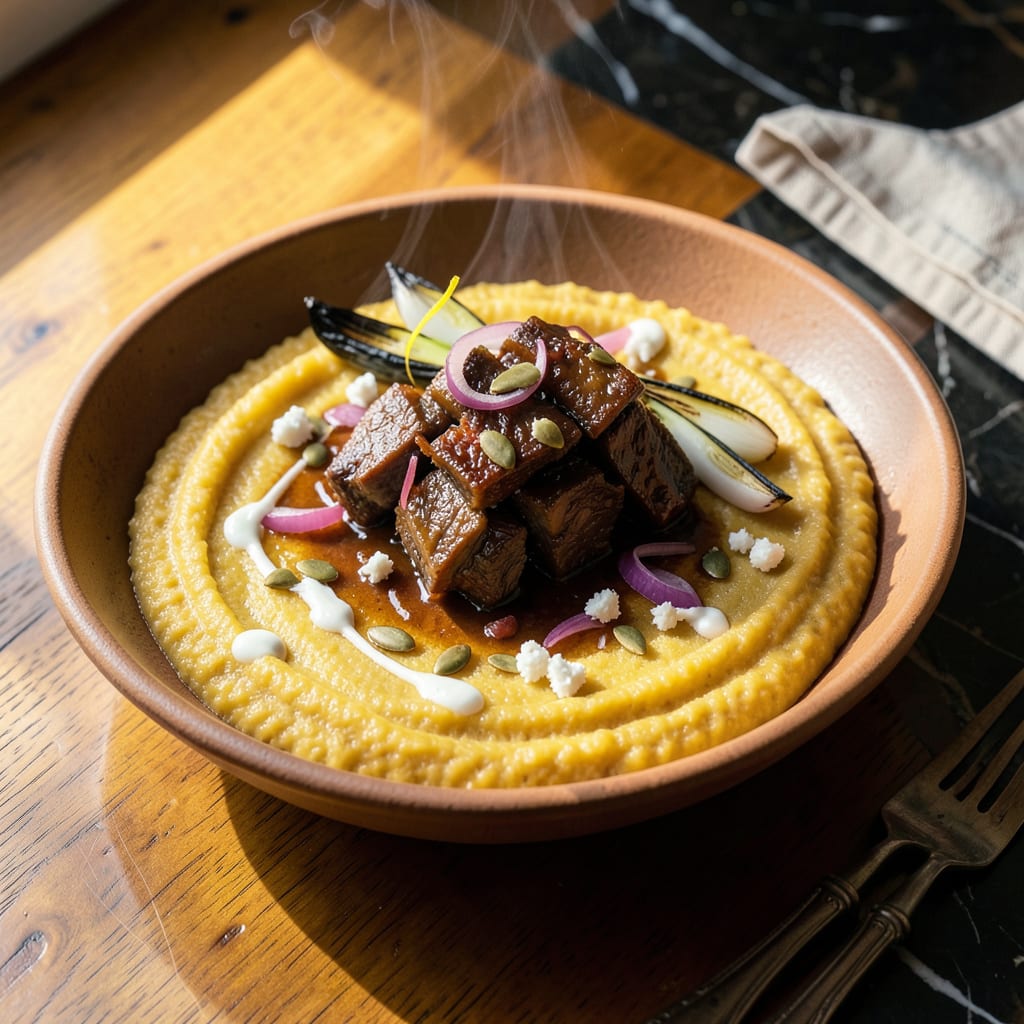
Yes, you can substitute masa harina for polenta, but expect a softer, finer texture and slightly sweeter, corn-forward flavor. The cooking process remains similar, though liquid ratios may need adjustment for desired consistency.
I’ve experimented with this swap in my own kitchen, and what fascinates me is how masa’s nixtamalized corn base creates a more delicate mouthfeel compared to polenta’s coarser grind. 🔥 The flavor shift comes from masa’s natural sweetness and finer particles, which absorb liquids differently than traditional cornmeal. You’ll want to start with a 4:1 liquid-to-masa ratio and adjust as it cooks, since masa tends to thicken more quickly. This makes it perfect for creamy applications where you want a velvety finish rather than polenta’s signature bite.
💡 In This Article
- How Masa Harina Differs From Traditional Polenta Cornmeal
- Best Techniques for Cooking Polenta With Masa Harina
How Masa Harina Differs From Traditional Polenta Cornmeal
The magic starts with how masa harina is made. Unlike regular cornmeal, masa undergoes nixtamalization—a process where dried corn kernels are cooked in limewater (calcium hydroxide), then ground into fine flour. This transforms the corn’s structure, breaking down cell walls and altering starch properties. The result?
A softer, more pliable texture that absorbs liquids differently than polenta’s coarser grind. 🔥
Grind size makes a dramatic difference. Traditional polenta uses medium-to-coarse cornmeal (about 0.5-1mm particles), giving that signature toothsome bite. Masa harina is ground to a powdery 0.1-0.3mm consistency—closer to cake flour than cornmeal.
This finer texture means more surface area for liquid absorption, which is why you’ll need 20-30% less liquid compared to standard polenta recipes. The starch granules in masa are also more damaged from processing, leading to quicker thickening.
Flavor profiles diverge significantly. Polenta’s straightforward corn taste comes from untreated cornmeal, while masa carries subtle lime undertones from nixtamalization. You’ll notice a slightly sweeter, more rounded corn flavor with masa, plus a faint mineral note that pairs beautifully with cheese or chili spices.
The pH shift from lime processing (raising corn’s natural pH from ~6 to ~8) also enhances masa’s ability to bind with fats, creating an almost creamy mouthfeel without dairy. ✨
Starch behavior changes everything during cooking. Polenta’s intact starch granules swell gradually when heated, creating that classic porridge-like consistency. Masa’s pre-gelatinized starches (from nixtamalization) thicken almost immediately when hydrated, which is why your “polenta” will set up faster. I’ve found maintaining a gentle simmer at 180-190°F prevents scorching while allowing the flavors to develop fully.
The final texture lands somewhere between Italian polenta and Mexican atole—a revelation for creamy side dishes!
Here’s what most home cooks overlook: masa’s calcium content (from the lime treatment) affects how it interacts with acids. When using tomato-based broths or wine in your polenta, the calcium helps stabilize the mixture, preventing the separation you might get with regular cornmeal. This makes masa-based polenta particularly forgiving for beginners.
The calcium also enhances nutrient absorption, giving your dish a subtle nutritional boost compared to traditional versions. 💫
For visual comparison, imagine polenta as coarse beach sand and masa as fine powdered sugar. When cooked, polenta maintains distinct grains you can see and feel, while masa becomes uniformly smooth—almost like a corn-flavored pudding.
This makes masa polenta ideal for applications where you want a silky base, like under braised meats or as a creamy bed for roasted vegetables. The color also shifts from polenta’s pale yellow to masa’s warmer, golden hue.
The protein matrix differs too. Masa’s nixtamalization process denatures some proteins, making them more soluble. This creates a more cohesive final product that holds its shape better when cooled—perfect if you want to slice and grill your polenta later.
Traditional polenta often requires chilling to firm up sufficiently for slicing, while masa versions can be handled sooner. This protein shift also means masa polenta reheats more gracefully without separating. 🌟

Trained in classic French technique but raised on slow-cooked ribs and spicy rubs, she blends culinary skill with smoke and soul.
- Recipe for Boneless Pork Chops in Cast Iron Skillet: Sear and Baste to Juicy Perfection - October 3, 2026
- Recipe for Boneless Cross Rib Roast: Slow-Roasted Beef with Herb Crust - October 3, 2026
- Hamburgers in Sauce Recipe Crock Pot: Slow-Cooked Savory Delight - October 3, 2026