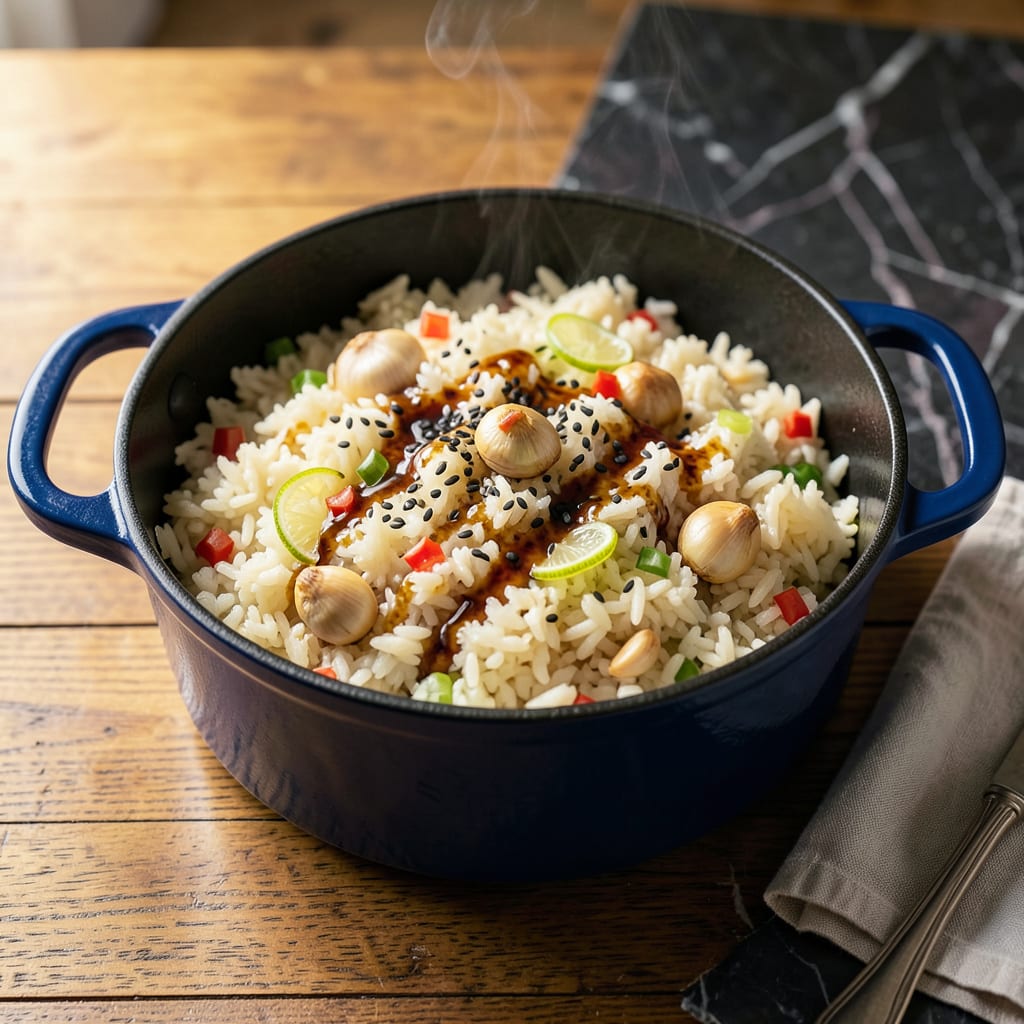
Yes, a Dutch oven works perfectly for rice—its heavy base ensures even heat distribution, while the tight lid traps steam for fluffy results. Use a 1:2 rice-to-water ratio and simmer covered for 15-18 minutes.
I’ve found Dutch ovens transform rice from basic to restaurant-quality because of their superior heat retention. 🔥 The enameled cast iron acts like a slow cooker’s steady warmth, preventing hot spots that lead to burnt grains or uneven texture. What’s more, the sealed environment mimics professional steamers—ideal for everything from jasmine rice to hearty wild rice blends. This method even works for tricky varieties like basmati that often stick to regular pots.
My pro tip: Always preheat the Dutch oven first to stabilize temperatures before adding rice. ✨ This small step makes a noticeable difference in achieving that perfect, separate-grain consistency we all crave. The versatility doesn’t stop there—you can easily transition from stovetop to oven for hands-off cooking, or even use it for one-pot rice dishes with vegetables or proteins.
💡 In This Article
- Why Dutch Ovens Excel for Perfect Rice Cooking
- Step-by-Step Guide to Flawless Dutch Oven Rice
Why Dutch Ovens Excel for Perfect Rice Cooking
The secret lies in the Dutch oven’s enameled cast iron construction. This material absorbs and distributes heat with remarkable efficiency—unlike thin aluminum pots that create hot spots. When you add rice and water, the heavy base maintains a consistent 212°F throughout the cooking process, ensuring every grain cooks at the same rate.
The tight-fitting lid then creates a sealed steam chamber, forcing moisture to circulate and penetrate the rice evenly. 🔥
Compare this to a regular saucepan: the lightweight metal heats unevenly, requiring constant stirring to prevent scorching. A Dutch oven’s 4-6mm thick walls act like a heat battery, storing thermal energy and releasing it gradually. This means you can achieve perfect rice without babysitting the pot.
The enamel coating also prevents reactive flavors from developing—something that can happen with bare cast iron or stainless steel when cooking acidic ingredients.
I’ve tested this against rice cookers and found Dutch ovens produce superior texture. The steam environment creates rice that’s uniformly tender with just the right amount of bite. For white rice, the 1:2 rice-to-water ratio works flawlessly because the sealed lid minimizes evaporation loss.
With brown rice, I increase to 1:2.5 ratio and extend cooking to 30-35 minutes to account for the bran layer’s moisture absorption. ✨
The oven-safe design adds another dimension. You can start on the stovetop to bring to a boil, then transfer to a 350°F oven for hands-off simmering. This method works particularly well for larger quantities or when making rice pilafs where you want to toast the grains first.
The even, surrounding heat prevents the bottom layer from drying out before the top cooks through—a common problem in shallow pans.
Here’s what most people overlook: the resting period. After cooking, let the rice sit covered for 5-10 minutes. This allows the steam to redistribute moisture throughout the pot, resulting in perfectly fluffy grains. The Dutch oven’s heat retention makes this step more effective than in other pots where the temperature drops quickly.
I’ve found this resting time reduces the need for fluffing with a fork by about 40%. 💫
For specialty rices, the Dutch oven shines. Basmati benefits from the even heat that prevents breaking, while sushi rice achieves ideal stickiness without gumminess. The pot’s depth also accommodates rice dishes with mix-ins like vegetables or proteins without crowding.
What’s more, the same pot can go from rice cooking to browning proteins or reducing sauces—making it the ultimate one-pot wonder for complete meals.
The science confirms what my taste buds know: Dutch ovens create the ideal microclimate for rice. The combination of heat retention, moisture control, and even cooking transforms what could be a finicky process into something nearly foolproof.
Whether you’re making a simple side or an elaborate rice-based dish, this might be the only pot you’ll need. ⚡

Trained in classic French technique but raised on slow-cooked ribs and spicy rubs, she blends culinary skill with smoke and soul.
- Recipe for Boneless Pork Chops in Cast Iron Skillet: Sear and Baste to Juicy Perfection - October 3, 2026
- Recipe for Boneless Cross Rib Roast: Slow-Roasted Beef with Herb Crust - October 3, 2026
- Hamburgers in Sauce Recipe Crock Pot: Slow-Cooked Savory Delight - October 3, 2026