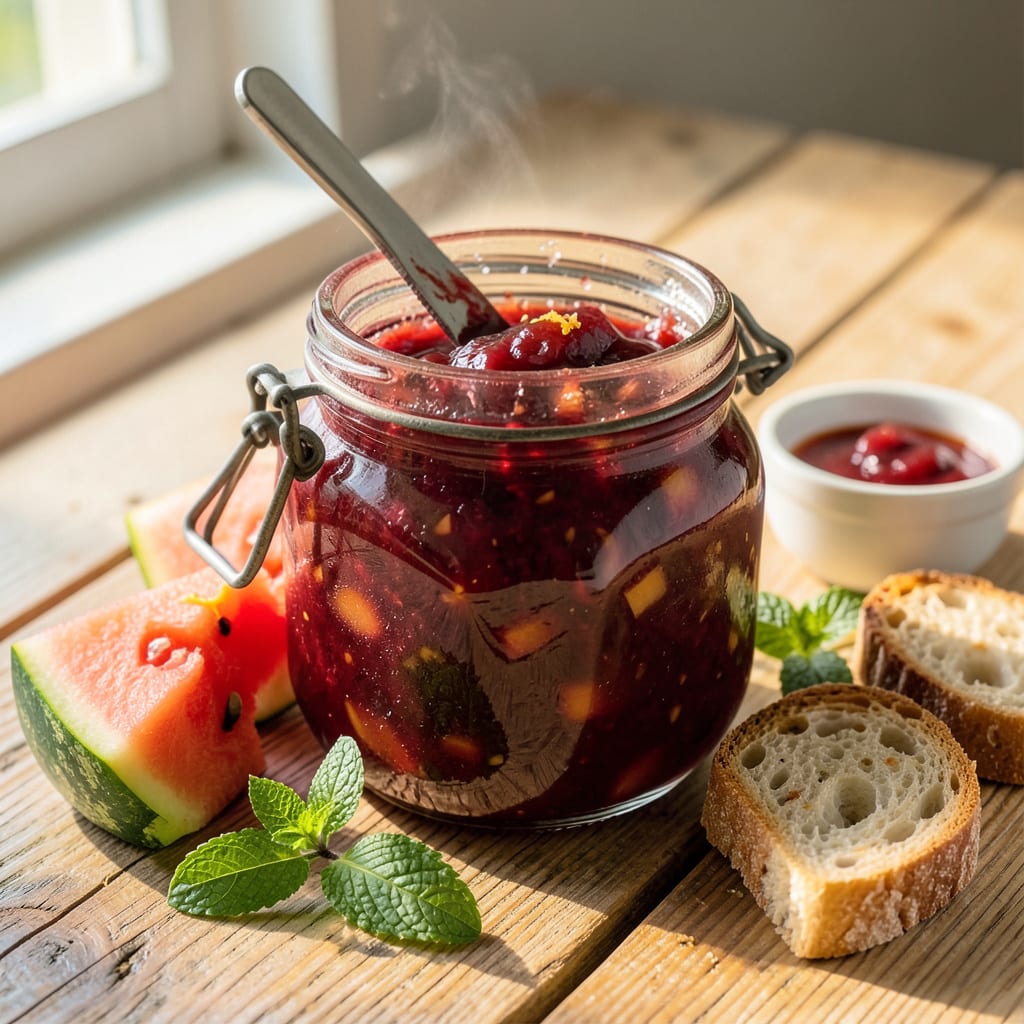
Yes, you can make watermelon jam by cooking down the fruit’s juice with sugar, pectin, and citrus for a sweet-spreadable result. The high water content means longer cooking times, but the unique floral-sweet flavor makes it worth the effort.
I love transforming watermelon into jam because it captures summer in a jar. 🔥 The secret lies in balancing the fruit’s natural sweetness with acidity—lemon or lime juice isn’t just for flavor, it’s essential for proper gelling. Unlike berry jams that set quickly, watermelon requires patience as the excess liquid evaporates. Think of it as reducing a sauce: low and slow yields the best texture and concentrated taste.
What surprises most people is how versatile this jam becomes. ✨ It’s not just for toast—try swirling it into yogurt, glazing grilled meats, or even pairing with sharp cheeses. The floral notes from the rind (if included) add complexity that store-bought jams can’t match.
💡 In This Article
- Why Watermelon Works for Jam (And Its Unique Challenges)
- Step-by-Step Watermelon Jam Recipe with Pro Tips
Why Watermelon Works for Jam (And Its Unique Challenges)
Watermelon transforms into jam through a delicate balance of science and technique. The fruit’s natural composition—92% water and only 0.1% pectin—means you’re essentially working with flavored liquid. Unlike berries that gel naturally, watermelon relies on added pectin and prolonged cooking to achieve the right consistency.
The process involves reducing the water content while caramelizing the fruit’s natural sugars (6-8% fructose), which creates that signature sweetness with subtle floral undertones.
Here’s what’s actually happening during cooking: As the mixture simmers at 220-225°F, water evaporates and sugar concentration increases. This triggers the Maillard reaction, where amino acids and reducing sugars interact to develop deeper flavors.
The acidity from citrus juice (typically 1-2 tablespoons per 4 cups of fruit) isn’t just for taste—it lowers the pH, which helps pectin molecules bond and form that perfect gel structure. Without enough acid, you’ll end up with syrup instead of spreadable jam.
Compare this to strawberry jam, which contains 0.5% pectin and 7% sugar naturally. Strawberries gel faster because their pectin content is five times higher than watermelon’s. That’s why watermelon jam requires 30-50% more cooking time—often 45-60 minutes of simmering compared to 20-30 minutes for berry jams. The payoff?
A uniquely light, honey-like texture with bright, refreshing notes that commercial jams can’t replicate.
The rind plays a surprising role too. While most recipes discard it, I’ve found that including 1/4 cup finely grated white rind (per 6 cups fruit) adds a subtle vegetal complexity. The rind contains more pectin than the flesh, plus compounds like cucurbitacin that contribute to that elusive “summer garden” aroma.
Just be sure to remove all green skin first—it’s bitter and tough, even after hours of cooking.
Temperature control makes or breaks your batch. Too high, and the sugars burn before the liquid reduces. Too low, and you’ll wait forever for evaporation. I use a candy thermometer and aim for 220°F—the point where sugar syrup reaches the “thread” stage.
At this temperature, the jam will coat the back of a spoon and wrinkle slightly when pushed with your finger. That’s your cue it’s ready for jarring.
What most people don’t realize is that watermelon jam’s flavor evolves over time. Fresh out of the pot, it tastes intensely sweet with bright citrus notes. After 24 hours in the fridge, the flavors mellow and blend, revealing hints of honeydew and cucumber.
This maturation is why I recommend waiting at least a day before tasting your final product. The texture also improves, becoming more cohesive as the pectin network fully develops.
Pro tip: If your jam refuses to set, don’t despair. 💫 A 5-minute boil with 1 teaspoon powdered pectin (dissolved in 1 tablespoon sugar) can salvage most runny batches. The key is adding it to the hot jam while stirring constantly—this prevents clumping and ensures even distribution before the mixture re-gels as it cools.

Trained in classic French technique but raised on slow-cooked ribs and spicy rubs, she blends culinary skill with smoke and soul.
- Recipe for Boneless Pork Chops in Cast Iron Skillet: Sear and Baste to Juicy Perfection - October 3, 2026
- Recipe for Boneless Cross Rib Roast: Slow-Roasted Beef with Herb Crust - October 3, 2026
- Hamburgers in Sauce Recipe Crock Pot: Slow-Cooked Savory Delight - October 3, 2026