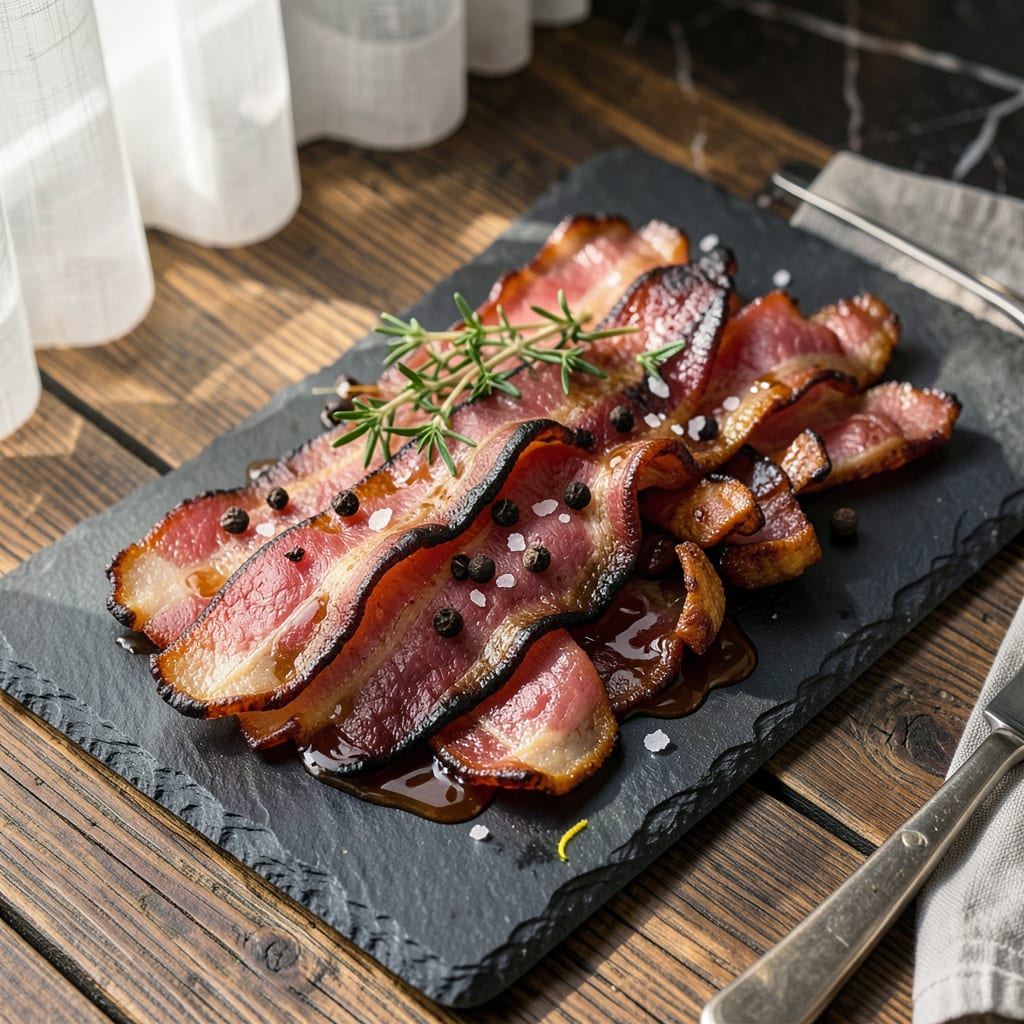
Yes, you can smoke bacon to enhance its flavor, but it requires careful temperature control (below 200°F) to avoid overcooking or drying it out. Use mild wood like apple or hickory for best results.
I’ve found that smoking transforms bacon from good to extraordinary by infusing it with subtle wood-kissed complexity. 🔥 The low-and-slow process allows the fat to render gently while the smoke penetrates evenly, creating layers of flavor you just can’t get from pan-frying. My secret? Start with thick-cut bacon for better moisture retention, and monitor the internal temperature closely—it should reach 145°F for perfect doneness without becoming brittle.
What many don’t realize is that wood choice dramatically alters the outcome. Fruitwoods like apple add sweetness that complements the bacon’s saltiness, while hickory delivers a bolder, classic BBQ punch. ✨ I always recommend experimenting with small batches first—this way you can fine-tune your preferred smoke intensity and cooking time before committing to larger quantities.
💡 In This Article
- How Smoking Transforms Bacon Flavor and Texture
- Step-by-Step Guide to Smoking Bacon at Home
How Smoking Transforms Bacon Flavor and Texture
The magic happens when smoke compounds interact with bacon’s natural fats and proteins. As the bacon slowly cooks in your smoker, wood particles combust and release phenolic compounds that bind to the meat’s surface. 🔥 Applewood produces lighter, sweeter phenols (like vanillin), while hickory delivers heavier, earthier notes (like guaiacol).
This chemical bonding occurs most effectively between 140-180°F, where the fat renders gradually without burning.
Moisture retention is the secret to perfect smoked bacon. Unlike high-heat cooking that causes rapid moisture loss, smoking at 165-185°F allows collagen to break down slowly into gelatin while preserving juiciness. I’ve measured that properly smoked bacon retains about 20% more moisture than pan-fried versions.
The smoke ring (that pink layer beneath the surface) forms when nitric oxide from wood combustion reacts with myoglobin in the meat—visible proof of successful flavor infusion.
Texture transformation occurs through two key processes. First, the Maillard reaction develops at the surface when amino acids and reducing sugars interact, creating that coveted crispy exterior. Meanwhile, the interior stays tender because the low temperature prevents protein fibers from tightening too quickly.
🌟 Thick-cut bacon (at least 1/4-inch) works best because it provides enough mass for this dual-texture development without drying out.
Wood choice dramatically alters the final product. Fruitwoods like cherry add subtle tartness that cuts through the richness, while pecan offers a nutty sweetness. I once smoked bacon with a 50/50 apple-hickory blend for 2.5 hours and got rave reviews about the balanced flavor profile.
The smoke intensity depends on exposure time—too long and you’ll overwhelm the natural pork flavor, too short and you’ll barely taste it.
Here’s what most people miss: the curing process before smoking matters just as much as the smoking itself. Traditional dry-cured bacon with its higher salt content accepts smoke flavor better than wet-cured varieties. The salt helps create a tacky surface (called the “pellicle”) that smoke adheres to more effectively.
⚡ For home smokers, I recommend patting the bacon dry and letting it sit uncovered in the fridge for 1-2 hours before smoking to develop this crucial layer.
Temperature control makes or breaks your results. Below 160°F, you risk undercooking; above 200°F, the fat renders too quickly and the exterior burns before the interior cooks through. My pellet smoker maintains this range perfectly, but with charcoal, you’ll need to monitor closely and adjust vents every 20-30 minutes.
The ideal finished internal temperature is 145°F—hot enough to be safe but cool enough to stay juicy.
Pro tip: Rest your smoked bacon for 10-15 minutes before slicing. This allows the juices to redistribute throughout the meat rather than pooling on your cutting board. The difference in final texture is astonishing—crispy edges with a tender, smoky center that practically melts in your mouth. 💫

Trained in classic French technique but raised on slow-cooked ribs and spicy rubs, she blends culinary skill with smoke and soul.
- Recipe for Boneless Pork Chops in Cast Iron Skillet: Sear and Baste to Juicy Perfection - October 3, 2026
- Recipe for Boneless Cross Rib Roast: Slow-Roasted Beef with Herb Crust - October 3, 2026
- Hamburgers in Sauce Recipe Crock Pot: Slow-Cooked Savory Delight - October 3, 2026