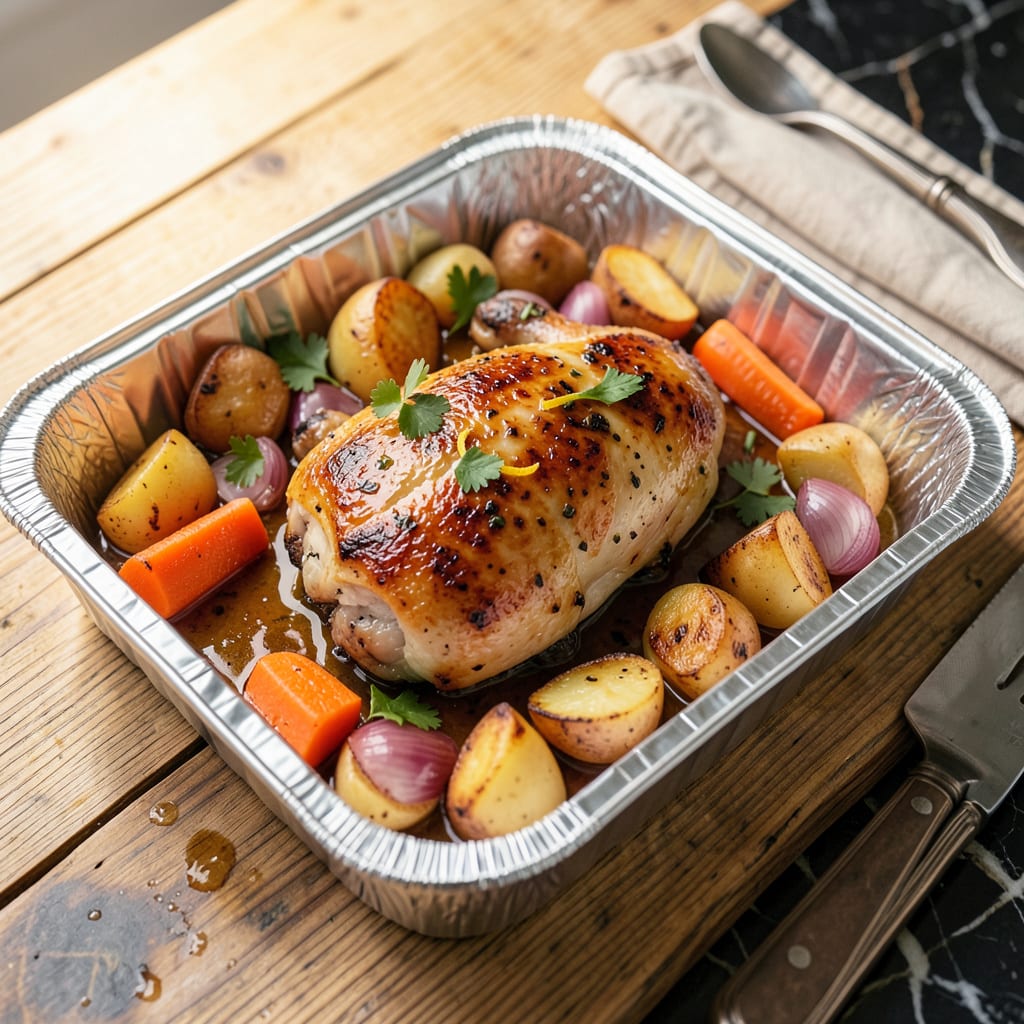
Yes, you can safely put foil trays in the oven as long as they’re labeled oven-safe and not damaged. Most disposable aluminum trays handle temperatures up to 450°F (232°C), but avoid broiling or exceeding manufacturer limits to prevent warping or melting.
I’ve tested countless foil trays in my kitchen, and the key to success lies in understanding their construction. 🔥 Thicker aluminum pans distribute heat more evenly and resist warping better than flimsy disposable versions. Always inspect for dents or cracks before use—these weak spots can lead to uneven cooking or even leaks. For high-heat recipes like roasting vegetables or baking casseroles, I prefer heavy-duty foil trays or double-layering standard ones for extra stability.
💡 In This Article
- How Oven Heat Affects Aluminum Foil Trays
- Safety Tips for Cooking with Foil Trays in the Oven
How Oven Heat Affects Aluminum Foil Trays
Aluminum conducts heat 3-5 times faster than stainless steel, which is why foil trays heat up almost instantly when placed in a 350°F oven. The metal’s high thermal conductivity (205 W/m·K) means it distributes heat evenly across the tray’s surface, preventing hot spots that could burn food.
However, this same property makes aluminum sensitive to rapid temperature changes—placing a cold tray directly into a hot oven can cause temporary warping until the metal stabilizes. 🔥
The thickness of your foil tray determines its maximum safe temperature. Standard disposable trays (about 0.001 inches thick) typically max out at 400-450°F, while heavy-duty versions (0.003-0.005 inches) can handle up to 500°F. Beyond these thresholds, aluminum loses structural integrity—the metal softens and can’t maintain its shape.
I’ve seen flimsy trays collapse under the weight of a 5-pound roast at 475°F, creating a messy cleanup situation. ✨
What most people don’t realize is that aluminum begins to oxidize at temperatures above 482°F, forming that dull gray coating you sometimes see on overused trays. This oxidation layer actually protects the metal from further degradation, but it can transfer a faint metallic taste to acidic foods like tomato sauces.
For comparison, stainless steel remains stable up to 1200°F, while ceramic can handle 2000°F+ before showing stress. 💫
The tray’s design matters too. Deep foil pans with reinforced rims distribute weight better than shallow ones, preventing sagging when filled with liquids. I always check for embossed patterns on the bottom—these create air pockets that improve heat circulation.
For recipes requiring precise temperature control (like custards or delicate fish), I recommend nesting your foil tray inside a sturdier metal pan as insurance against warping. ⚡
Here’s what’s actually happening at the molecular level: When aluminum heats, its atoms vibrate more vigorously, causing the metal to expand. A 12-inch tray can grow by 0.02 inches when heated from room temperature to 400°F.
This expansion is why you should never overfill foil trays—leave at least 1/2-inch headspace to accommodate both food expansion and the tray’s physical changes. The contraction during cooling is equally important, which is why I let trays rest 5-10 minutes before handling to prevent sudden shape changes. 🌟
For high-heat applications like broiling, aluminum simply can’t compete with other materials. The intense radiant heat from broilers (often 550°F+) causes aluminum to warp dramatically within minutes. I once attempted broiling chicken thighs in a foil tray—within 3 minutes, the edges curled upward like potato chips, nearly spilling the rendering fat onto my oven floor.
Ceramic or cast iron are far better choices for broiling scenarios. 💛
The takeaway? Aluminum foil trays excel for moderate-temperature baking and roasting thanks to their superior heat conduction, but they have clear physical limits. Understanding these thermal properties lets you choose the right tray for your recipe—and know when to reach for something more heat-resistant instead. 🔥

Trained in classic French technique but raised on slow-cooked ribs and spicy rubs, she blends culinary skill with smoke and soul.
- Recipe for Boneless Pork Chops in Cast Iron Skillet: Sear and Baste to Juicy Perfection - October 3, 2026
- Recipe for Boneless Cross Rib Roast: Slow-Roasted Beef with Herb Crust - October 3, 2026
- Hamburgers in Sauce Recipe Crock Pot: Slow-Cooked Savory Delight - October 3, 2026