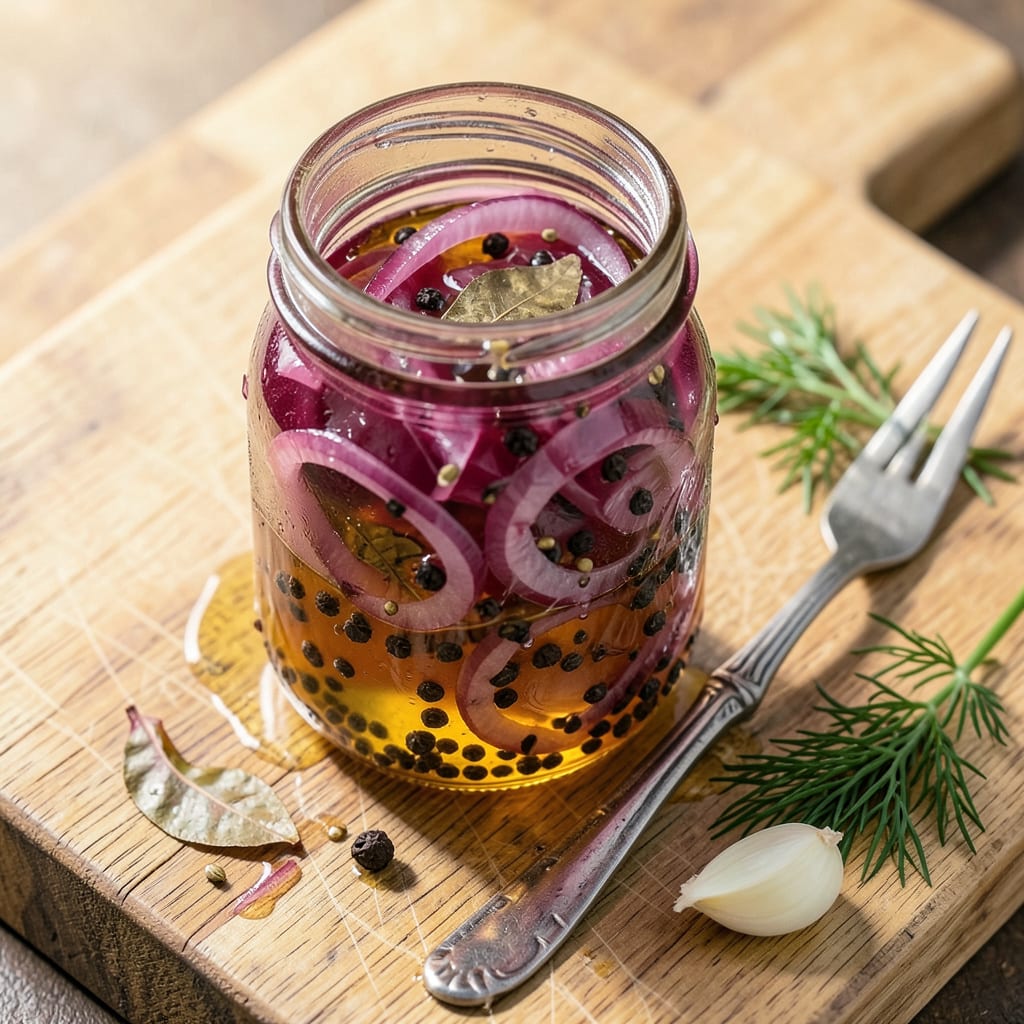
Pickled onions can last 1-2 months refrigerated in a sealed jar, but they eventually spoil. Look for mold, foul odors, or slimy texture as clear signs they’ve gone bad. Unopened store-bought versions stay fresh longer—check the label for exact timelines.
The magic of pickling lies in the vinegar’s acidity and salt’s preservative power, which create an environment where harmful bacteria can’t thrive. 🔥 However, this protection isn’t infinite—once oxygen sneaks in through a compromised seal or frequent opening, the clock starts ticking faster. I’ve noticed that homemade batches tend to degrade quicker than commercial ones because they lack industrial-grade preservatives and precise pH control. The flavor actually evolves over time, becoming more mellow as the acidity softens the onions’ bite.
💡 In This Article
- How Pickling Extends Onion Shelf Life (And Its Limits)
- Storing Pickled Onions: Fridge vs. Pantry Best Practices
How Pickling Extends Onion Shelf Life (And Its Limits)
The science behind pickling is all about creating a hostile environment for bacteria. Vinegar’s acetic acid lowers the pH below 4.6, a critical threshold where most harmful microorganisms can’t survive. This acidic bath essentially “denatures” bacterial proteins, unraveling their structure like an egg white in hot water.
Salt plays double duty—it draws moisture out of the onions through osmosis while further dehydrating any potential spoilage organisms.
Commercial pickling takes this further with precise pH monitoring (often targeting 3.8-4.2) and sometimes added preservatives like sodium benzoate. 🔥 My homemade batches typically last 4-6 weeks because I rely solely on vinegar strength (5% acidity) and salt concentration (3-5% brine). The difference?
Industrial processes use heat pasteurization to kill existing microbes before sealing, while home pickling depends entirely on the acid/salt barrier.
Oxygen is the silent spoiler. Each time you open the jar, you introduce fresh air that can support mold growth on the surface. The brine itself remains protected, but floating onions become vulnerable. I’ve seen jars develop fuzzy white spots after 3 weeks when left half-empty, while properly topped-off jars stayed clean for 2+ months.
The key is minimizing air pockets—always use jars sized for your batch.
Temperature fluctuations accelerate degradation. Refrigeration at 35-40°F slows chemical reactions that break down texture and color. ✨ Left at room temperature, the same batch might last only 1-2 weeks before turning mushy. Commercial unopened jars leverage this principle—they’re shelf-stable until opened because the sealed environment maintains consistent acidity levels without oxygen intrusion.
The onions themselves change over time. Initially crisp from pectin in their cell walls, they gradually soften as the acid breaks down these structures. After 6 weeks, you’ll notice the texture shifts from snappy to silky. This isn’t spoilage—it’s just the pickling process progressing.
The flavor mellows too, with the sharp vinegar edge rounding out into a more balanced tang.
Here’s what most people miss: the brine tells the story. Cloudy liquid signals potential bacterial growth, while a slimy film on top means yeasts or molds have taken hold. A properly preserved jar maintains crystal-clear brine with onions suspended evenly.
When in doubt, trust your nose—off odors develop from lactic acid bacteria or mold metabolites long before visual signs appear. 💫

Trained in classic French technique but raised on slow-cooked ribs and spicy rubs, she blends culinary skill with smoke and soul.
- Recipe for Boneless Pork Chops in Cast Iron Skillet: Sear and Baste to Juicy Perfection - October 3, 2026
- Recipe for Boneless Cross Rib Roast: Slow-Roasted Beef with Herb Crust - October 3, 2026
- Hamburgers in Sauce Recipe Crock Pot: Slow-Cooked Savory Delight - October 3, 2026