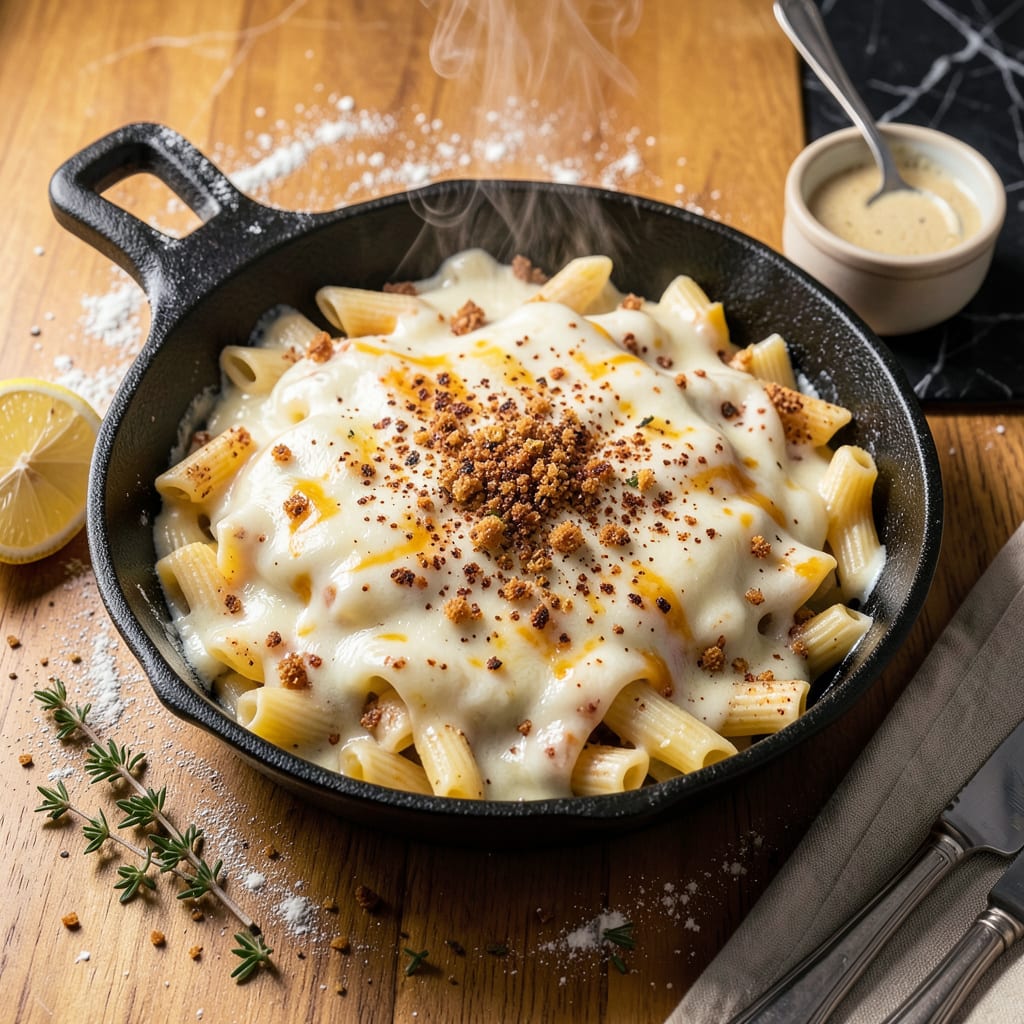
Yes, you can reheat cheese sauce safely, but use gentle heat and stir constantly to prevent separation or graininess. Low heat on the stovetop or short microwave bursts work best—avoid boiling to maintain smooth texture.
I’ve found that the secret to perfect reheated cheese sauce lies in understanding its delicate emulsion. 🔥 The proteins and fats in cheese are sensitive to temperature changes, which is why sudden or high heat causes them to break apart. When I reheat it in my kitchen, I treat it like a custard—patient, controlled warmth with constant movement to keep everything harmonious.
What most people don’t realize is that the base ingredients matter too. Sauces made with aged cheddar or blue cheese are more prone to graininess than those with processed cheeses or stabilizers like sodium citrate. I always recommend adding a splash of warm milk or cream during reheating to help rebuild that creamy consistency you want.
💡 In This Article
- Why Cheese Sauce Separates When Reheated
- Best Ways to Reheat Cheese Sauce Without Ruining It
Why Cheese Sauce Separates When Reheated
Cheese sauce is fundamentally an emulsion—a delicate balance of fat, water, and protein molecules suspended together. When you heat it, the proteins (primarily casein) begin to unravel and clump, while the fat globules lose their protective coating. This is why you’ll often see oil pooling on top or a grainy texture developing.
The magic happens around 140-160°F, where proteins start denaturing and fats begin separating from the water phase.
The stabilizers in your sauce play a crucial role here. Flour or cornstarch (typically 1-2 tablespoons per cup of liquid) create a physical barrier that helps prevent separation by absorbing water and thickening the mixture. Without these, the emulsion breaks faster—think of it like removing the glue holding everything together.
Processed cheeses contain sodium citrate, which acts as an emulsifier and makes them more reheat-friendly than natural cheeses.
Heat intensity is the silent killer of smooth cheese sauce. Direct high heat causes rapid protein coagulation and fat separation, while gentle heat (low-medium on stovetop or 50% power in microwave) gives the emulsion time to adjust.
I’ve found that sauces with higher fat content (like those made with heavy cream) tolerate reheating better than leaner versions because the extra fat helps maintain the emulsion structure.
Acidity matters too—cheeses with lower pH (like aged cheddar) are more prone to breaking because their proteins are already partially destabilized. Adding a pinch of baking soda (1/8 teaspoon per cup) can help neutralize acidity and improve stability.
The texture changes you experience aren’t just about temperature; they’re a complex dance of protein chemistry, fat behavior, and pH balance that happens every time you reheat.
What surprises most people is that time plays as big a role as temperature. Prolonged heating—even at low temperatures—eventually causes the same separation issues as high heat.
This is why professional kitchens often use double boilers or sous vide for cheese sauces: they provide precise, even heat without the risk of hot spots that destroy the emulsion. 🔥
The liquid content when reheating makes all the difference. Evaporation during initial cooking concentrates the sauce, so adding 1-2 tablespoons of warm liquid (milk, cream, or even water) per cup of sauce when reheating helps restore the original balance. This isn’t just about thinning—it’s about rebuilding the water phase that holds the emulsion together.
Here’s what’s actually happening at the microscopic level: As heat increases, the casein proteins that originally wrapped around fat globules begin to unfold and stick together. Meanwhile, the fat—no longer properly emulsified—starts coalescing into larger droplets.
The starches from your thickener try to hold everything together, but without proper technique, they can’t compensate for the protein and fat changes occurring simultaneously.

Trained in classic French technique but raised on slow-cooked ribs and spicy rubs, she blends culinary skill with smoke and soul.
- Recipe for Boneless Pork Chops in Cast Iron Skillet: Sear and Baste to Juicy Perfection - October 3, 2026
- Recipe for Boneless Cross Rib Roast: Slow-Roasted Beef with Herb Crust - October 3, 2026
- Hamburgers in Sauce Recipe Crock Pot: Slow-Cooked Savory Delight - October 3, 2026