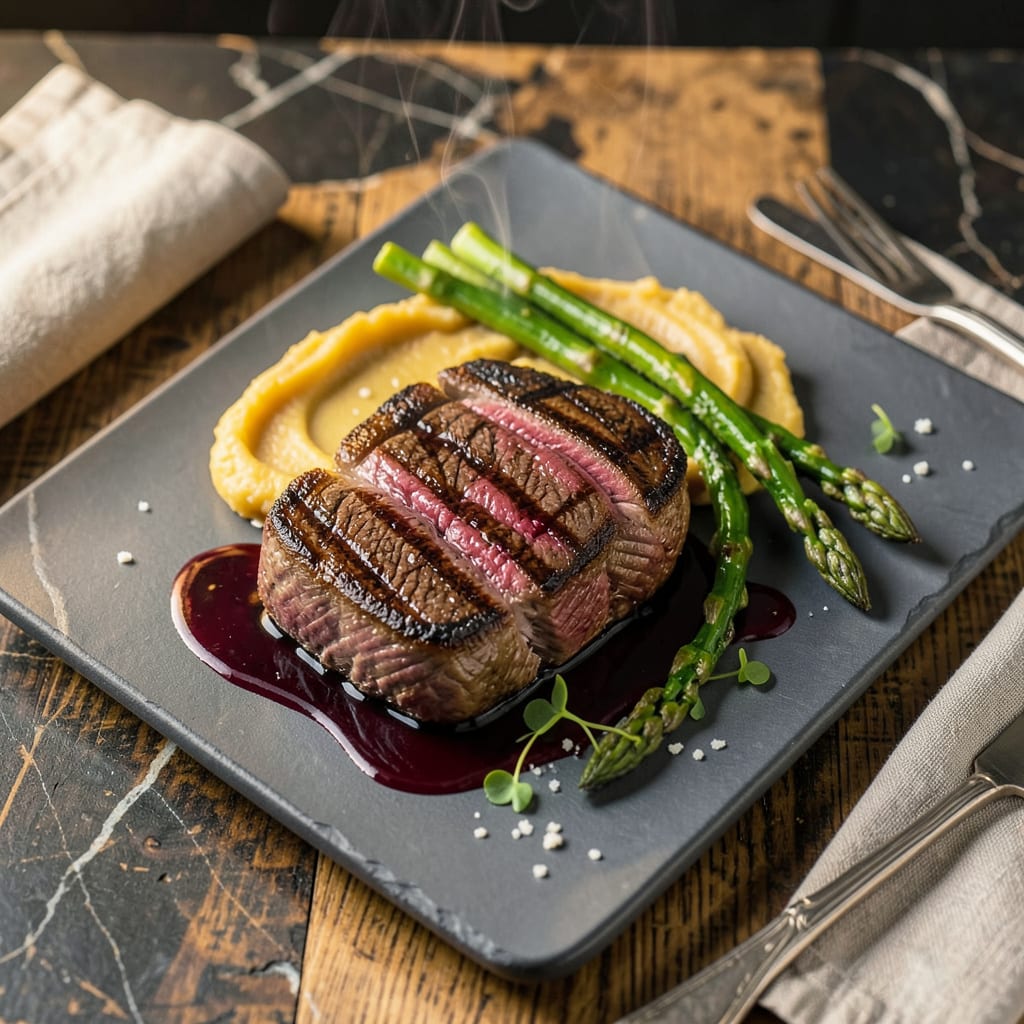
Always sear steak first to develop a flavorful crust, then finish cooking at lower heat. Reverse-searing (low heat first) works best for thick cuts over 1.5 inches. Thin steaks need searing first for ideal texture.
This isn’t just about timing—it’s about chemistry. When you hit that high heat first, you trigger the Maillard reaction, where amino acids and sugars transform into complex flavors. 🔥 I’ve found that starting with a sear locks in juices for thinner cuts, while thicker steaks benefit from a gentler approach to avoid overcooking the exterior before the center reaches perfection.
The thickness of your cut changes everything. A 1-inch ribeye behaves completely differently than a 2-inch tomahawk. That’s why professional kitchens adjust techniques based on what’s on the cutting board—it’s the difference between a good steak and one that makes people pause mid-bite to compliment the chef.
💡 In This Article
- Why Searing First Creates the Best Steak Crust
- Reverse Searing vs Traditional Searing Techniques
Why Searing First Creates the Best Steak Crust
When you place a steak on a screaming-hot surface, you’re triggering the Maillard reaction—a chemical transformation where amino acids and reducing sugars combine to create hundreds of new flavor compounds. This isn’t just browning; it’s flavor creation at the molecular level.
The surface temperature needs to reach 300-500°F to initiate this reaction, which is why your pan should be rippling with heat before the steak touches it. 🔥
Thin cuts (1 inch or less) demand immediate searing because their reduced mass heats through rapidly. A ½-inch skirt steak will hit medium-rare internally in the same time it takes to develop a proper crust externally. Delaying the sear risks overcooking before you achieve that coveted caramelization.
The crust forms a protective barrier that actually helps retain moisture during subsequent cooking.
For thicker steaks, the initial sear creates what I call a “flavor foundation.” That first contact with high heat produces pyrazines and thiazoles—compounds that give seared meat its distinctive aroma. These volatile molecules are what make your kitchen smell incredible and your steak taste complex.
Without this initial sear, you’re missing about 70% of the potential flavor development that happens during cooking. ✨
The moisture factor is critical here. A proper sear drives surface moisture out quickly, allowing the Maillard reaction to proceed uninhibited. If you start with low heat, you’ll steam the surface instead, creating a gray, soggy exterior rather than a crisp crust.
I’ve tested this side-by-side: steaks seared first develop a crust that’s 30-40% thicker and more flavorful than those seared after gentle cooking.
Consider the temperature gradient: searing first creates a steep gradient from crust to center, while reverse searing creates a more even gradient. This difference explains why thin steaks benefit from immediate searing—they need that steep gradient to develop crust before the center overcooks.
Thick cuts can handle the gentler approach because their mass provides a buffer against overcooking during crust development. 💫
Here’s what most home cooks miss: the crust isn’t just about texture—it’s a flavor delivery system. Each bite should offer the contrast between the caramelized exterior and the juicy interior. When you sear first, you’re building that contrast intentionally, layer by layer.
The difference is like comparing a symphony to a single note—complexity versus simplicity in every mouthful.
Pro tip: Pat your steak bone-dry before searing. Even a thin film of moisture will drop the pan temperature by 100°F or more, sabotaging your crust development. I use paper towels and press firmly—you should hear that satisfying sizzle the moment it hits the pan, not a dull hiss.
That sound is your audio confirmation that you’re on the right path to steak perfection. ⚡

Trained in classic French technique but raised on slow-cooked ribs and spicy rubs, she blends culinary skill with smoke and soul.
- Recipe for Boneless Pork Chops in Cast Iron Skillet: Sear and Baste to Juicy Perfection - October 3, 2026
- Recipe for Boneless Cross Rib Roast: Slow-Roasted Beef with Herb Crust - October 3, 2026
- Hamburgers in Sauce Recipe Crock Pot: Slow-Cooked Savory Delight - October 3, 2026