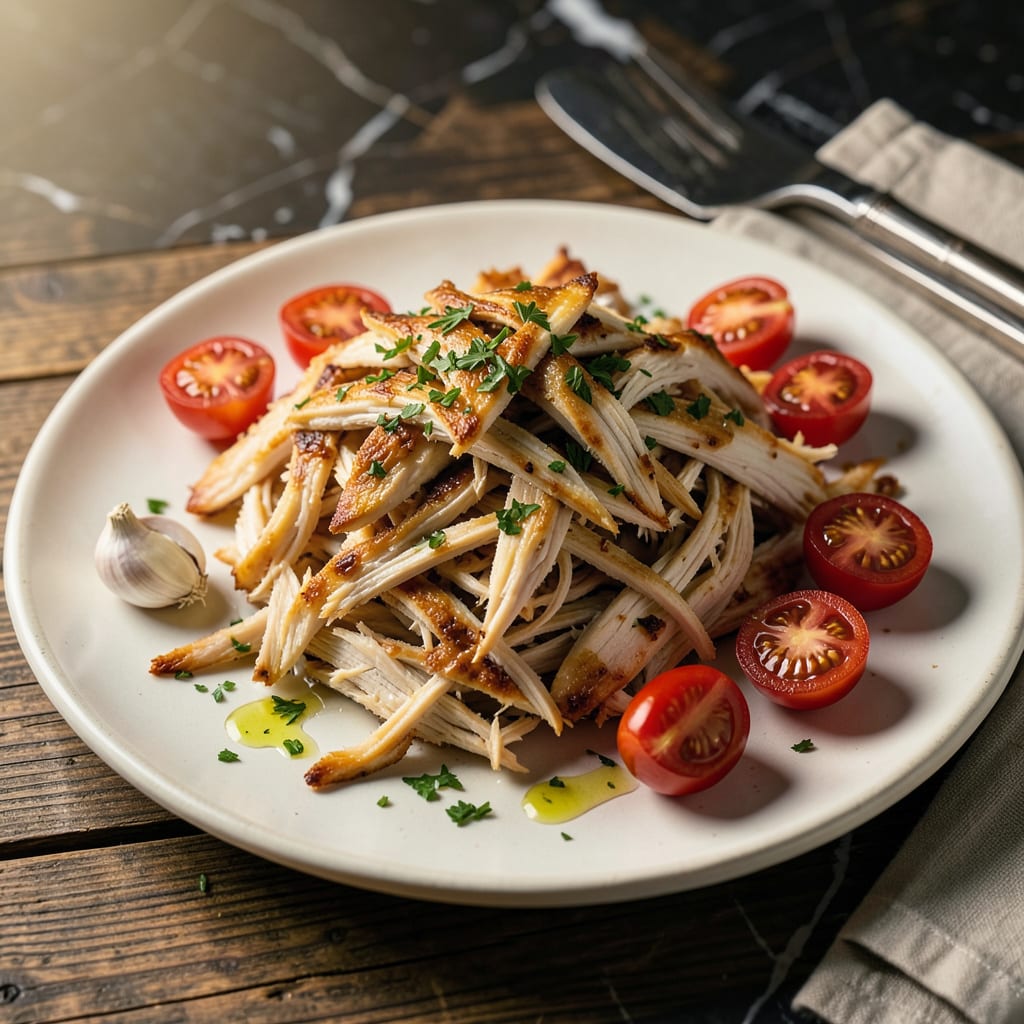
Yes, baked chicken can be easily shredded when cooked to the proper internal temperature (165°F). The key is letting it rest briefly after baking to retain moisture, making the meat tender enough to pull apart with forks or a hand mixer.
Perfectly shredded chicken starts with understanding how baking transforms the meat’s structure. 🔥 The gentle, even heat breaks down collagen gradually while keeping fibers intact—unlike frying, which can dry out the exterior before the center reaches ideal doneness. I’ve found that 10-15 minutes of resting time makes all the difference, allowing juices to redistribute throughout the meat rather than spilling out when cut.
What most home cooks don’t realize is that the shredding method matters just as much as the cooking process. Using two forks in opposite directions creates those perfect, uniform strands, while a stand mixer with the paddle attachment can handle 5-6 pounds in under a minute. The secret? Work with warm (not piping hot) chicken to prevent stringy texture while maintaining maximum moisture. ✨
💡 In This Article
- Why Baked Chicken Shreds Better Than Other Cooking Methods
- Best Tools and Techniques for Shredding Baked Chicken
Why Baked Chicken Shreds Better Than Other Cooking Methods
The magic happens in how baking’s gentle, dry heat transforms chicken’s connective tissues. Unlike boiling (which leaches flavor into water) or frying (which creates a moisture barrier), baking at 350-375°F allows collagen to melt into gelatin at just the right pace.
This process takes about 20-30 minutes for boneless breasts, giving you tender meat that holds together until you’re ready to shred it. 🔥
What sets baking apart is the even temperature distribution. While frying creates hot spots that can dry out portions before the center cooks through, baking maintains a consistent environment.
The ideal internal temperature range for shredding is actually 160-165°F—just below the USDA’s safe minimum of 165°F—because carryover cooking will bring it to perfection during the 10-15 minute rest. This resting period lets muscle fibers relax and reabsorb juices that would otherwise spill out during shredding.
The science behind this texture transformation involves protein denaturation. As chicken heats, the muscle proteins (actin and myosin) unravel and then re-bond in a way that makes them more susceptible to separation.
Baking achieves this at a slower rate than grilling or pan-searing, which is why baked chicken maintains better moisture content—typically 75% water retention compared to 65% in fried chicken. ✨
Compare this to poached chicken, which often becomes too soft and loses structural integrity, or grilled chicken that develops a chewy exterior. Baked chicken strikes the perfect balance: firm enough to hold shape when sliced but tender enough to pull into perfect strands.
The Maillard reaction that occurs at 300°F+ also adds subtle flavor complexity without drying out the meat.
For best results, I recommend baking bone-in, skin-on chicken at 375°F until the internal temperature reaches 160°F at the thickest part. The bones act as heat conductors, cooking the meat more evenly from the inside out, while the skin helps seal in moisture.
This method consistently produces chicken that shreds into long, uniform fibers rather than crumbly bits. 💫
Pro tip: If you’re working with previously frozen chicken, thaw it in the refrigerator for 24 hours before baking. The slow thaw preserves cell structure better than microwave or cold water methods, resulting in meat that shreds more cleanly. The difference in texture is noticeable—frozen-thawed chicken often requires 20% more shredding effort than fresh.

Trained in classic French technique but raised on slow-cooked ribs and spicy rubs, she blends culinary skill with smoke and soul.
- Recipe for Boneless Pork Chops in Cast Iron Skillet: Sear and Baste to Juicy Perfection - October 3, 2026
- Recipe for Boneless Cross Rib Roast: Slow-Roasted Beef with Herb Crust - October 3, 2026
- Hamburgers in Sauce Recipe Crock Pot: Slow-Cooked Savory Delight - October 3, 2026