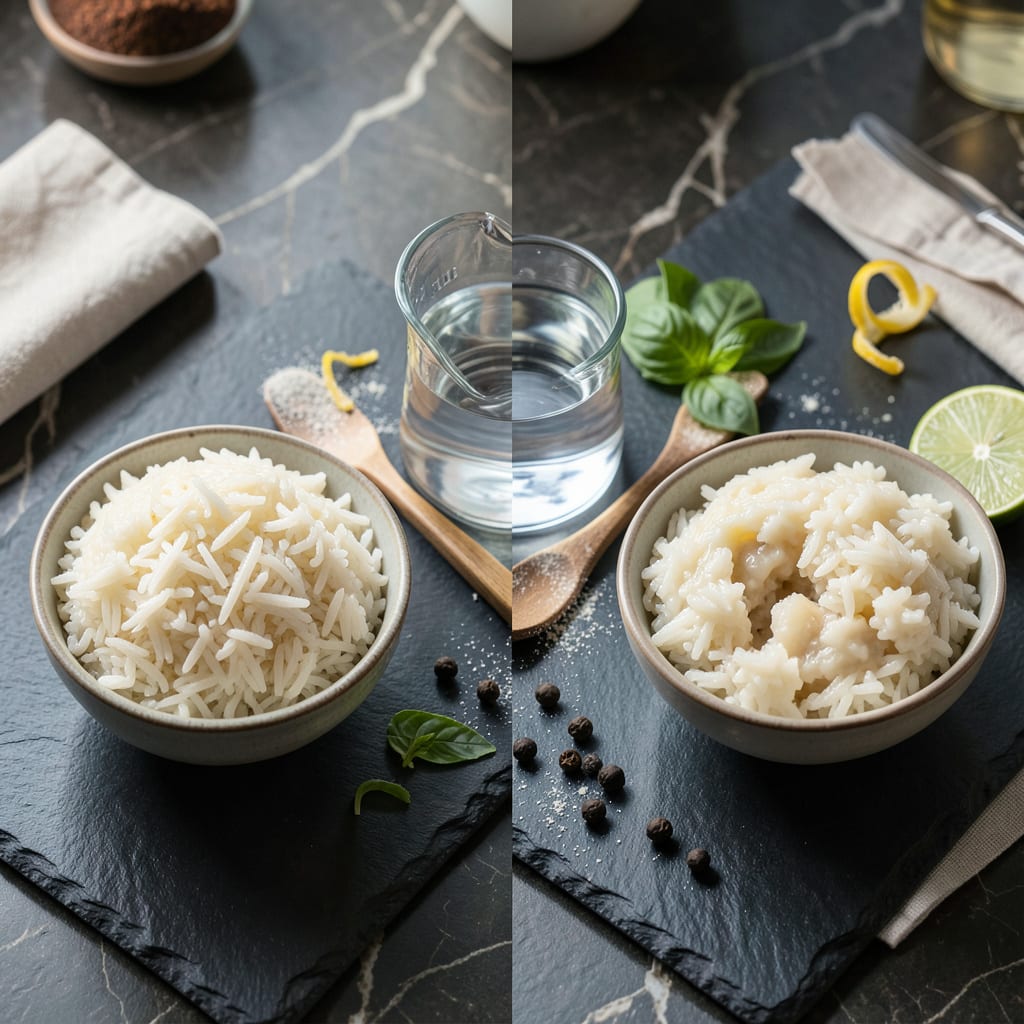
Yes, soaking rice too long can make it mushy, fermented, or nutrient-depleted. Most varieties need 30 minutes to 4 hours maximum—longer soaks risk texture loss and bacterial growth.
I’ve seen firsthand how delicate rice can be when prepped improperly. The starches break down faster than you’d expect, turning what should be fluffy grains into a gummy mess. 🔥 This isn’t just about texture—over-soaking can also strip away key nutrients like B vitamins and iron, especially in brown rice. Even worse, warm water creates a breeding ground for bacteria if left too long, which is why I always set a timer and stick to the 30-minute to 4-hour window depending on the variety.
What surprises most home cooks is how quickly the damage happens. Basmati might hold up slightly longer than jasmine, but neither forgives neglect. ✨ The fix? Drain immediately if you’ve overshot the mark, then adjust your cooking water by 20-30% to compensate for the extra absorption. Trust me—this small tweak can save a batch from becoming porridge.
💡 In This Article
- What Happens When Rice Soaks Too Long?
- How to Fix Over-Soaked Rice Before Cooking
What Happens When Rice Soaks Too Long?
When rice sits in water beyond its ideal window, the starch granules begin to absorb excessive moisture and swell uncontrollably. This process, called gelatinization, normally happens during cooking—but when it starts too early, the grains lose their structure.
White rice varieties like jasmine or basmati can turn to mush in as little as 6-8 hours at room temperature, while brown rice (with its protective bran layer) might hold up slightly longer. The longer it soaks, the more the starches break down into simpler sugars, creating that dreaded gummy texture. 🔥
The water temperature plays a huge role in how quickly things go wrong. Warm water (above 70°F) accelerates starch breakdown by 30-40% compared to cold water. I’ve seen basmati rice left in warm water for 12 hours turn into a paste before cooking even began.
Even worse, the water becomes a nutrient-leaching bath—studies show brown rice can lose up to 15% of its B vitamins and 10% of its iron after prolonged soaking. The bran layer that makes brown rice nutritious? It’s porous and lets those goodies escape. ✨
Then there’s the fermentation factor. After about 4 hours at room temperature, natural yeasts and bacteria on the rice start multiplying. You might notice a faint sour smell—that’s lactic acid forming as the rice begins to ferment. In tropical climates (where I’ve cooked in outdoor kitchens), this can happen in half that time.
The risk isn’t just texture—it’s food safety. While fermented rice has its place in dishes like Japanese amazake, uncontrolled fermentation in your soaking bowl can lead to unwanted bacterial growth. 💫
Different rice types handle over-soaking differently. Sushi rice, with its high amylopectin content, turns sticky fastest—I’ve ruined batches by soaking just 2 hours too long. Basmati’s longer grains hold their shape better but still collapse after 6-8 hours.
Brown rice’s bran layer buys you a little more time (up to 10-12 hours in cold water), but you’ll pay for it with nutrient loss. The key is watching the water: if it turns cloudy white, you’ve crossed into over-soaked territory. That cloudiness? It’s your rice’s starch and nutrients dissolving away. ⚡
Here’s what most people miss: even refrigerated soaking has limits. Cold slows but doesn’t stop starch breakdown. I once left basmati in the fridge for 24 hours thinking I was safe—it still cooked up gluey. The maximum I’d recommend for any rice in the fridge is 12 hours, and even then, expect slightly softer grains.
For perfect texture every time, stick to the 30-minute to 4-hour rule (shorter for white rice, longer for brown) and always use cold water. Your grains will thank you with that ideal fluffy-yet-tender bite. 🌟
The fix for mildly over-soaked rice? Drain immediately and rinse under cold water to halt starch breakdown. For severely over-soaked batches (where grains split when pressed), consider repurposing into rice pudding or congee—sometimes the best rescue is embracing a different dish entirely.
I’ve turned many a mushy batch into creamy arroz caldo with ginger and chicken stock. Waste not, want not! 💛

Trained in classic French technique but raised on slow-cooked ribs and spicy rubs, she blends culinary skill with smoke and soul.
- Recipe for Pan Fried: Golden Crust with Savory Depth - October 3, 2026
- Recipe For Fried Chicken In A Pressure Cooker: Crispy Golden Bites in Half the Time - October 3, 2026
- Recipe For Leftover Fried Fish: Crunchy Leftovers Transformed - October 3, 2026