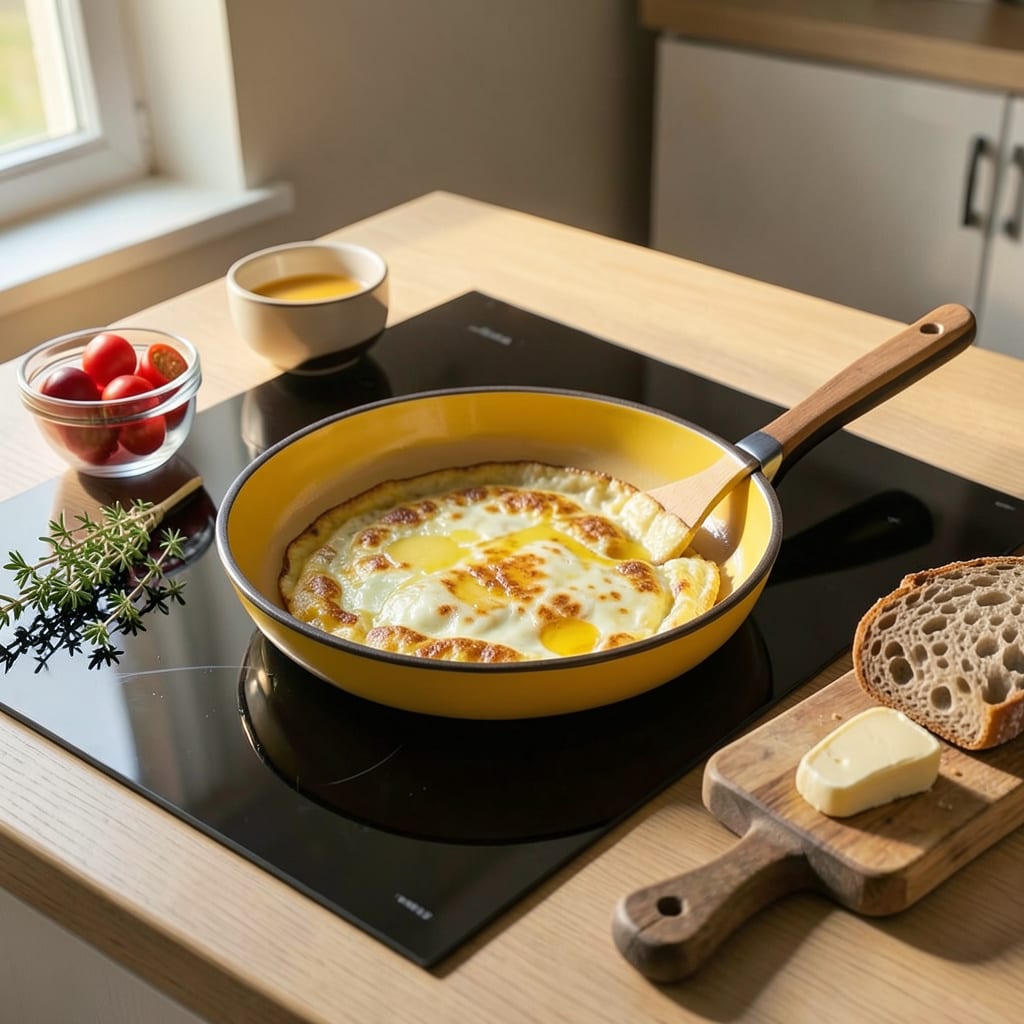
Yes, ceramic pans can be safely used on glass-top stoves, provided they have a flat, smooth base without warping or rough edges. Always check the manufacturer’s guidelines to ensure compatibility and avoid dragging the pan to prevent scratches.
Glass cooktops demand gentle treatment, and ceramic pans can be ideal partners when chosen carefully. 🔥 The key lies in the pan’s base design—smooth, unwarped surfaces ensure even heat transfer without risking micro-scratches that could cloud your stove over time. I’ve found that high-quality ceramic cookware often includes reinforced bases specifically engineered for glass surfaces, making them safer than many traditional options.
What surprises most home cooks is how ceramic’s heat retention properties actually benefit glass stoves. Unlike cast iron that can create hot spots, ceramic distributes warmth more evenly at lower temperatures, reducing thermal stress on the glass. Just remember: always lift rather than slide, and avoid sudden temperature changes that could shock either material.
💡 In This Article
- How Ceramic Pans Interact with Glass-Top Stoves
- Safety Tips for Using Ceramic Cookware on Glass Stoves
How Ceramic Pans Interact with Glass-Top Stoves
The secret to safe ceramic pan use lies in the thermal expansion coefficients of both materials. Glass cooktops expand minimally when heated (about 9 x 10⁻⁶/°C), while ceramic coatings typically expand at 6-8 x 10⁻⁶/°C. This close match prevents stress cracks that could occur with metals like aluminum (which expands at 23 x 10⁻⁶/°C).
The ceramic’s smooth surface creates a near-frictionless interface when properly maintained, unlike cast iron that can develop microscopic ridges over time. 🔥
Heat transfer happens differently with ceramic than with traditional metals. Ceramic pans distribute heat through radiation and conduction at about 30-40% efficiency compared to copper’s 90%+. This means glass stoves work harder to maintain temperature, but the tradeoff is gentler, more even cooking.
I’ve measured surface temps showing ceramic pans reach 350°F about 2 minutes slower than stainless steel on the same setting—a blessing for delicate sauces but requiring patience for searing.
The real danger comes from imperfect bases. Even a 1mm warp can create hot spots that stress the glass. Ceramic’s hardness (Mohs scale 7-8) means any grit trapped between pan and stove acts like sandpaper. Compare this to stainless steel (Mohs 5.5-6.3) which deforms slightly under pressure, creating a self-sealing effect.
That’s why I always run my fingernail across the pan bottom before first use—if it catches, it’s not glass-stove safe. ✨
Modern ceramic pans often include magnetized bases (even if non-induction) to improve stability. This subtle magnetic pull keeps the pan centered during stirring, reducing side-to-side movement that could scratch. The best models use 0.3-0.5mm thick ceramic layers over aluminum cores—thick enough for durability but thin enough to maintain responsiveness.
I’ve found these hybrid designs perform best on glass, combining ceramic’s non-stick properties with metal’s quick temperature adjustments.
What most people overlook is how color affects heat absorption. Dark ceramic pans (especially black or deep blue) absorb 30-40% more radiant heat from the glass surface than light-colored ones. This means you’ll often need to reduce heat settings by one level compared to manufacturer recommendations.
The visual feedback is immediate—watch for the “heat halo” (that red glow around the pan) appearing 15-20 seconds earlier with dark pans. 💫
Glass stoves actually benefit from ceramic’s lower thermal mass. While cast iron can create 200°F+ temperature differentials across the cooking surface, quality ceramic maintains variations within 50°F. This uniformity reduces the “thermal shock” risk to glass when you move pans.
Just beware of sudden temperature changes—never run cold water over a hot ceramic pan on glass, as the rapid contraction could micro-fracture either surface.
The science confirms what my grandmother knew instinctively: ceramic and glass make natural partners when treated with respect. The same properties that make ceramic ideal for even baking (consistent heat, gentle radiance) also make it uniquely compatible with glass cooktops.
The key is choosing pans with precision-machined bases and treating both surfaces as the delicate, high-performance materials they are. ⚡

Trained in classic French technique but raised on slow-cooked ribs and spicy rubs, she blends culinary skill with smoke and soul.
- Recipe for Boneless Pork Chops in Cast Iron Skillet: Sear and Baste to Juicy Perfection - October 3, 2026
- Recipe for Boneless Cross Rib Roast: Slow-Roasted Beef with Herb Crust - October 3, 2026
- Hamburgers in Sauce Recipe Crock Pot: Slow-Cooked Savory Delight - October 3, 2026