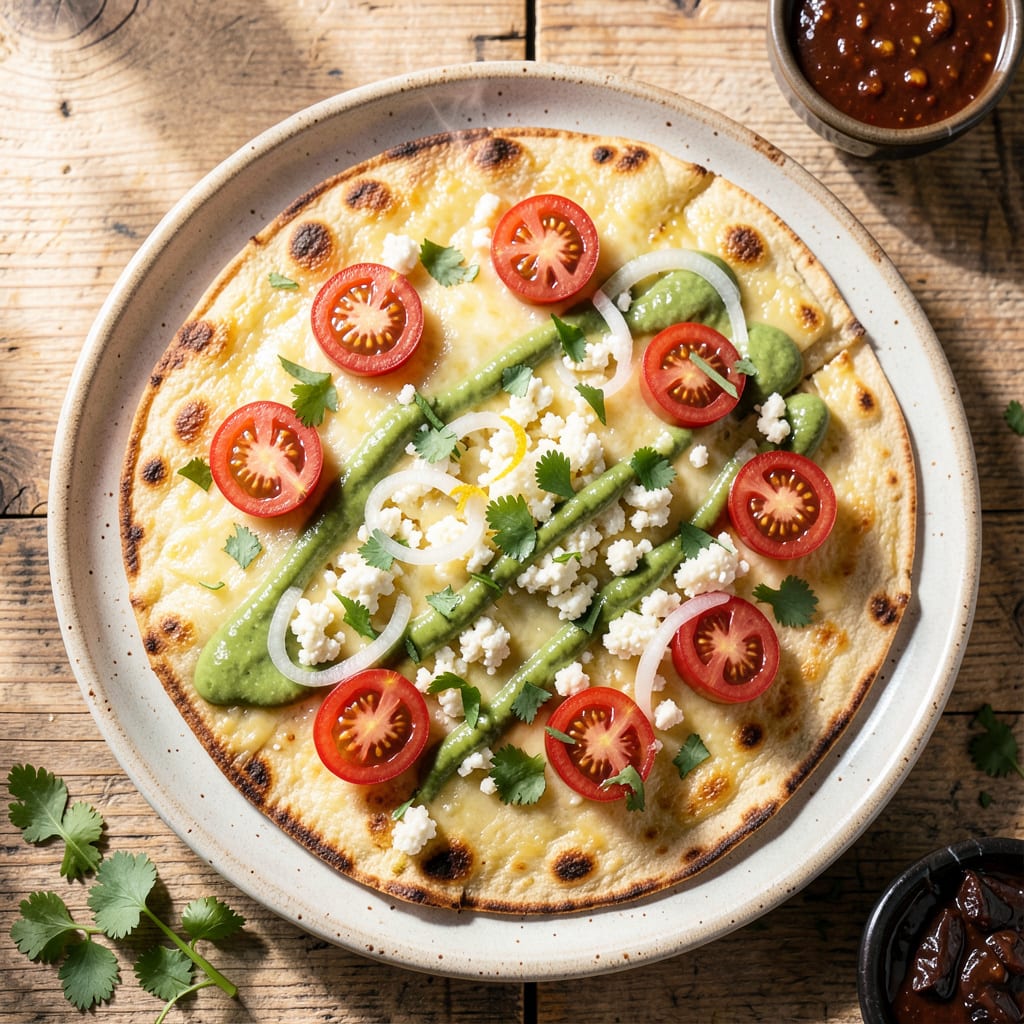
Queso fresco works for quesadillas but doesn’t melt smoothly like traditional cheeses. It softens when heated, offering a creamy texture with mild, tangy flavor—best when mixed with melty cheeses or used in small amounts for authentic taste.
I love using queso fresco in quesadillas when I want that bright, slightly salty kick—it’s a staple in Mexican street food for good reason. The trick is understanding its limits: unlike cheddar or Oaxaca cheese, it won’t create that gooey stretch, but it adds a fresh, crumbly contrast that balances richer fillings. 🔥 Try blending it with Monterey Jack for texture or sprinkling it on top after cooking to keep its signature bite. My go-to move? A quick broil at the end to warm it through without losing its character.
💡 In This Article
- Why Queso Fresco Behaves Differently in Quesadillas
- Best Techniques for Using Queso Fresco in Quesadillas
Why Queso Fresco Behaves Differently in Quesadillas
Queso fresco’s resistance to melting comes down to its unique protein structure and moisture content. Unlike cheddar (which has about 33% fat and 37% moisture), queso fresco typically contains 20-25% fat and a whopping 50-60% moisture.
This high water content creates a physical barrier that prevents the proteins from fully unraveling and bonding during heating—the process that creates that classic cheese “pull” in melted cheeses like mozzarella or Oaxaca.
The protein matrix in queso fresco is also more tightly bound than in melting cheeses. When heated, most cheeses undergo a transformation where their casein proteins separate and flow, but queso fresco’s proteins remain largely intact.
You’ll notice it softens at around 140°F (where cheddar starts melting at 90°F), but instead of becoming liquid, it develops a creamy, almost custard-like texture. This is why it’s perfect for dishes where you want cheese to hold its shape, like in quesadillas de flor de calabaza (squash blossom quesadillas) where texture contrast is key.
✨
In Mexican cuisine, this non-melting quality isn’t a flaw—it’s a feature. Queso fresco is designed to add freshness and brightness rather than gooeyness. When you bite into a properly made quesadilla with queso fresco, you should experience that pleasant crumble against the softer tortilla, almost like the cheese equivalent of pomegranate seeds in a dish.
The mild tang comes from the lactic acid in its production process, which gives it that clean finish that cuts through richer fillings like chorizo or carnitas.
Here’s what happens when you heat it: At 160-180°F, the outer layer will soften significantly while the center remains slightly firm. This creates a textural gradient that’s prized in authentic preparations. Compare this to Oaxaca cheese, which becomes completely homogeneous when melted, or Chihuahua cheese, which develops elastic strings.
Queso fresco’s behavior is closer to halloumi’s, though with a much milder flavor profile that won’t overpower your fillings. 🔥
The fat distribution also plays a role—queso fresco’s fat is more evenly dispersed in small globules rather than in a continuous network like in melting cheeses. This means when heated, those fat pockets soften individually rather than coalescing into a smooth melt.
It’s why you’ll often see it sprinkled on top of quesadillas after cooking in many Mexican fondas (small eateries), where they want to preserve that fresh dairy taste and textural contrast.
For best results, think of queso fresco as your “finishing cheese” rather than your “melting cheese.” Its role is to provide that final hit of freshness and saltiness, much like how a sprinkle of cotija might be used.
When I’m making quesadillas at home, I’ll often cook with a melting cheese base, then add crumbled queso fresco in the last 30 seconds under the broiler—just enough to warm it through while maintaining its character. ⚡

Trained in classic French technique but raised on slow-cooked ribs and spicy rubs, she blends culinary skill with smoke and soul.
- Recipe for Boneless Pork Chops in Cast Iron Skillet: Sear and Baste to Juicy Perfection - October 3, 2026
- Recipe for Boneless Cross Rib Roast: Slow-Roasted Beef with Herb Crust - October 3, 2026
- Hamburgers in Sauce Recipe Crock Pot: Slow-Cooked Savory Delight - October 3, 2026