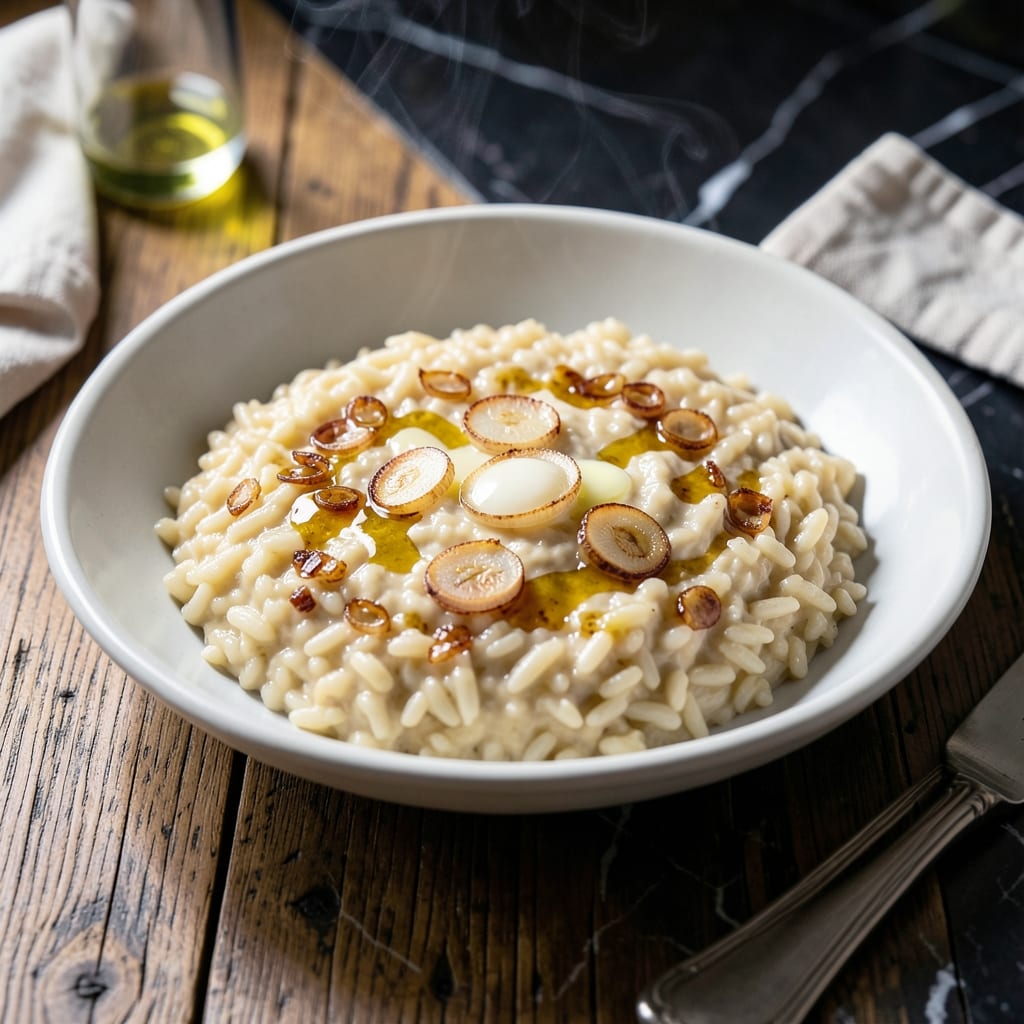
Carnaroli rice transforms any meal into a restaurant-worthy experience with its unmatched ability to create creamy risotto. This Northern Italian staple absorbs liquid slowly while maintaining its firm core, delivering that perfect al dente bite.
I’ve refined this technique over years to ensure consistent results. The key lies in gradual broth addition and constant stirring, which coaxes out the starches for that signature velvety texture. No shortcuts—just patience and precision.
What emerges is a dish with rich, creamy depth and a luxurious mouthfeel that clings to your spoon. The grains stay distinct yet melt together in every bite, proving why Carnaroli is the gold standard for risotto.
Serve it as a main or elegant side. Here’s how to master this classic.
Ingredients for Carnaroli Rice
Superfino rice and rich stock create this velvety Northern Italian classic at home.
| Ingredient | Amount | Notes |
|---|---|---|
| Carnaroli Rice 🌾 | 1 ½ cups | Superfino variety, uncooked |
| Vegetable Stock 🥫 | 6 cups | Low-sodium preferred, warmed |
| Shallots 🧅 | 2 whole | Finely minced for base flavor |
| Garlic Cloves 🧄 | 3 cloves | Minced for aromatic depth |
| Dry White Wine 🍷 | ¾ cup | Crisp variety like Pinot Grigio |
| Unsalted Butter 🧈 | 4 tbsp | Divided for cooking and finishing |
| Parmesan Cheese 🧀 | 1 cup | Freshly grated from wedge |
| Extra-Virgin Olive Oil 🫒 | 2 tbsp | For sautéing aromatics |
| Kosher Salt 🧂 | 1 ½ tsp | Diamond Crystal preferred for precision |
| Freshly Ground Black Pepper 🌶️ | ½ tsp | Coarse grind for texture |
| Fresh Thyme Sprigs 🌿 | 3 pieces | Leaves stripped for garnish |
| Fresh Flat-Leaf Parsley 🍃 | ¼ cup | Chopped for final garnish |
| Lemon Zest 🍋 | 1 tsp | Finely grated for brightness |
[recipe_ingredient_scaler]
Carnaroli is non-negotiable for authentic texture—Eataly or Italian specialty markets carry it, but Amazon works too. Look for superfino on the label; it’s the gold standard. The stock must be low-sodium so you control the seasoning. Use a light-colored, dry white wine—Pinot Grigio or Sauvignon Blanc—to avoid overpowering the dish.
No wine? Substitute extra stock with a splash of lemon juice. Shallots can be replaced with yellow onion at a 1:1 ratio, though the flavor will be slightly sharper. For a vegan version, swap butter for high-quality olive oil and Parmesan for nutritional yeast (use half the amount). Fresh herbs are ideal, but dried work at one-third the quantity.
Store uncooked Carnaroli in an airtight container for up to 1 year. The finished risotto keeps 3-4 days refrigerated but is best served immediately. Reheat gently with extra stock to revive the creamy texture.
Why You’ll Love This Recipe
- I’ll be real: the flavors deepen overnight, so I always make extra for tomorrow’s lunch.
- One Pot Wonder: I love that I can simmer everything—rice, wine, stock—in a single pan and still get that perfect creamy bite.
- Rich, Toasty Depth: The shallots and garlic bloom in the wine before the rice drinks it all up, and honestly, the aroma alone is worth it.
- Weeknight MVP: Between us, this is my Tuesday night lifesaver—fancy enough for guests but unfussy enough for a solo dinner.
Step-by-Step Instructions for Carnaroli Rice Risotto
Master the technique for perfectly creamy risotto with these precise, professional steps.
Step 1: Sauté Aromatics in Olive Oil and Butter
Heat 2 tbsp Extra-Virgin Olive Oil and 2 tbsp Unsalted Butter in a heavy-bottomed pot over medium heat. Add the 2 whole Shallots and cook for 3-4 minutes until translucent and fragrant. The shallots should soften without browning.
Stir in the 3 cloves Garlic Cloves and cook for 30 seconds until aromatic. Be careful not to let the garlic color—it should release its perfume without developing any bitterness. This flavor base is crucial for depth in your risotto.
Step 2: Toast the Rice and Deglaze with Wine
Add the 1.5 cups Carnaroli Rice to the pot and stir to coat every grain in the fat. Toast for 2-3 minutes until the edges of the rice become slightly translucent and you hear a subtle nutty aroma. This step enhances the rice’s natural starches for maximum creaminess.
Pour in the 0.75 cup Dry White Wine and stir constantly until the liquid has fully absorbed and evaporated. The wine should leave a clean path when you draw a spoon through the rice. This deglazing step removes any fond from the pot and adds acidity to balance the richness.
Step 3: Gradually Incorporate Warm Stock
Begin adding the 6 cups Vegetable Stock one ladle at a time (about ½ cup per addition), stirring frequently. Maintain a gentle simmer—you should see small bubbles at the edges. The rice is ready for more stock when the liquid has mostly absorbed and the surface appears slightly dry.
Continue this process for 18-20 minutes, tasting the rice after the first 15 minutes. The grains should be al dente—firm to the bite with a creamy center. The constant stirring releases starch, creating the signature creamy texture. Season with 1.5 tsp Kosher Salt and 0.5 tsp Freshly Ground Black Pepper during this stage.
Step 4: Finish with Butter and Parmesan
Once the rice reaches al dente perfection, remove the pot from heat. Stir in the remaining 2 tbsp Unsalted Butter and the 1 cup Parmesan Cheese. The butter should melt into a glossy emulsion, and the Parmesan should dissolve completely, creating a rich, velvety sauce that coats each grain.
Taste and adjust the seasoning if needed. The risotto should be creamy but not soupy—it will thicken slightly as it rests. The texture should flow slowly when you tilt the pot, with distinct grains suspended in the creamy sauce.
Step 5: Rest and Garnish for Service
Let the risotto rest for 2 minutes off the heat. This brief pause allows the starches to settle and the flavors to meld. Stir once more to redistribute the creaminess before serving.
Garnish with the Fresh Thyme Sprigs (leaves stripped), 0.25 cup Fresh Flat-Leaf Parsley (chopped), and 1 tsp Lemon Zest. The thyme adds an earthy note, the parsley provides freshness, and the lemon zest brightens the rich dish. Serve immediately while the risotto is at its creamy peak.
Pro Tips For Making Carnaroli Rice
- Toast the Rice: Cook the dry Carnaroli in the pan with shallots and garlic for 2-3 minutes until the edges turn translucent—this builds a nutty base flavor that plain boiling can’t match.
- Use Warm Stock: I learned this the hard way: adding cold vegetable stock shocks the rice and stalls cooking, so keep it simmering in a pot next to the stove.
- Skip the Rinse: Carnaroli’s high starch content is what gives risotto its creaminess, so resist the urge to rinse it—just trust the process.
- Deglaze Properly: After toasting, pour in the dry white wine and scrape the browned bits from the bottom—those little flecks pack serious flavor into the final dish.
Storing and Reheating This Recipe
Refrigerator Storage
Let your risotto cool for no more than 2 hours before transferring to airtight containers. Store at 40°F or below for up to 3-4 days. The flavors actually deepen overnight as the starches continue to meld. ❄️
Freezer Storage
Risotto freezes well for up to 2 months without texture loss. I use quart-sized freezer bags laid flat to save space. Squeeze out excess air and leave 1 inch headspace for expansion. Label with the date for easy tracking.
Stovetop Reheating
This is my preferred method because it restores creaminess best. Add ¼ cup warm stock or water per serving and heat over medium-low for 5-7 minutes, stirring frequently. The liquid revives the starches beautifully. 🔥
Microwave Reheating
For quick meals, microwave covered with a damp paper towel. Heat at 70% power for 2 minutes, stir, then continue in 30-second bursts until reaching 165°F. Add a splash of stock if it looks dry.
Pro Tips
I always under-season slightly before storing because flavors concentrate when reheated. If the texture seems too thick after thawing, stir in 1-2 tbsp warm stock at a time until creamy again.
Nutrition Facts
Frequently Asked Questions
Why use Carnaroli instead of Arborio for risotto?
Carnaroli’s larger grains hold their shape better during cooking, creating a creamier texture with a distinct bite. It absorbs liquid more slowly, preventing mushiness. Arborio works but tends to get softer faster.
Can I make this without wine?
Yes! Substitute extra stock with a splash of lemon juice for similar acidity. The dish will lack wine’s depth but still deliver great flavor and texture.
How do I know when it’s done?
The rice should be al dente with a creamy center after 18-20 minutes. Test by biting a grain—the outside should be tender while the center offers slight resistance.
What if my risotto turns out too thick?
Stir in warm stock 1-2 tablespoons at a time until it reaches the desired creaminess. This works for both fresh and reheated risotto.

Trained in classic French technique but raised on slow-cooked ribs and spicy rubs, she blends culinary skill with smoke and soul.
- Recipe for Boneless Pork Chops in Cast Iron Skillet: Sear and Baste to Juicy Perfection - October 3, 2026
- Recipe for Boneless Cross Rib Roast: Slow-Roasted Beef with Herb Crust - October 3, 2026
- Hamburgers in Sauce Recipe Crock Pot: Slow-Cooked Savory Delight - October 3, 2026