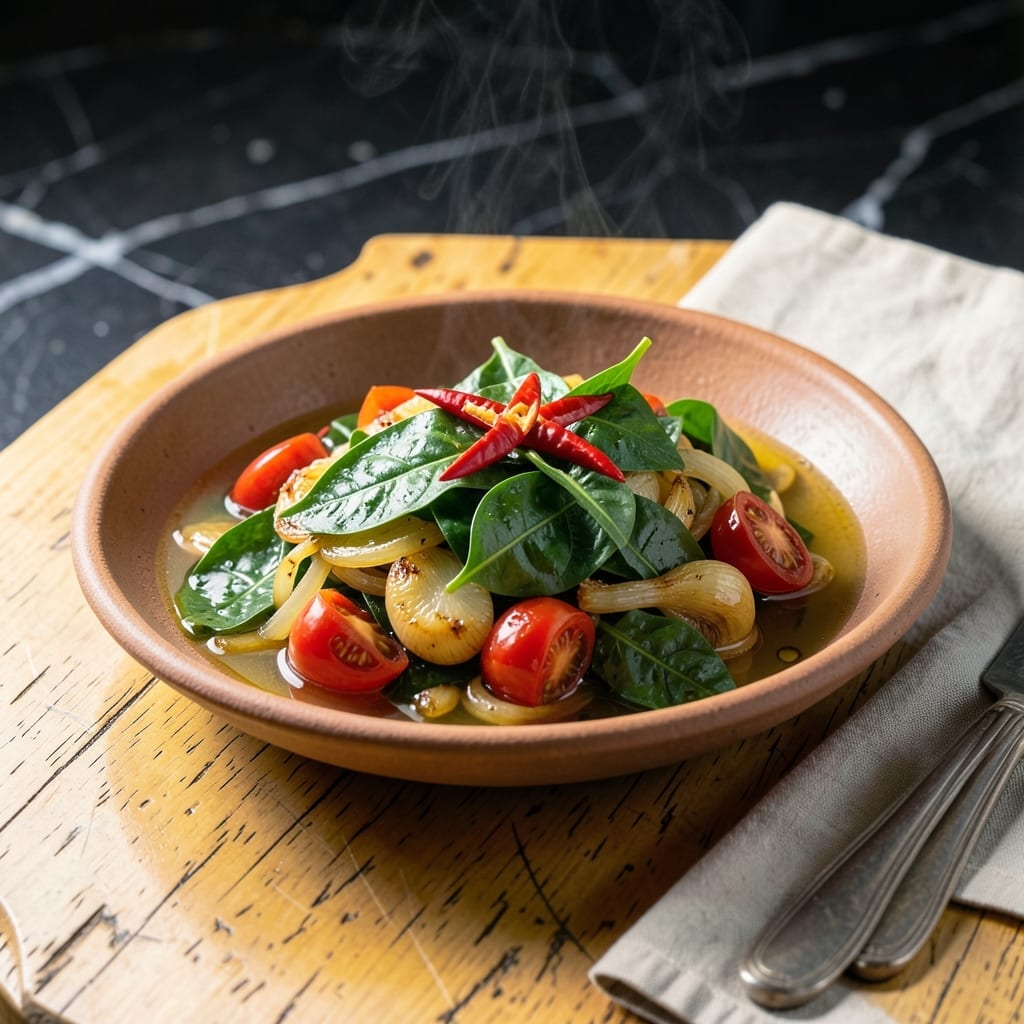
I discovered malunggay leaves while exploring Filipino markets in Boston, and their nutritional power immediately impressed me. These vibrant greens pack a punch of vitamins and minerals in every bite.
This dish comes together in minutes with simple techniques. The leaves cook quickly, retaining their bright color and tender texture. A quick sauté with garlic and onions enhances their natural earthy flavor.
What results is a nutrient-packed side that pairs beautifully with rice or grilled proteins. The leaves soften just enough while maintaining their distinctive taste and health benefits.
Perfect for busy weeknights when you want to add something wholesome to your table without spending hours in the kitchen.
Ingredients for Malunggay Leaves
Fresh malunggay and pantry basics create this vibrant, wholesome Filipino side dish.
| Ingredient | Amount | Notes |
|---|---|---|
| Malunggay Leaves 🌿 | 4 cups | Fresh, tightly packed, stems removed |
| Garlic Cloves 🧄 | 6 cloves | Peeled and minced |
| Yellow Onion 🧅 | 1 whole | Medium, thinly sliced |
| Extra-Virgin Olive Oil 🫒 | 2 tbsp | For sautéing |
| Red Chili Pepper 🌶️ | 1 whole | Optional, sliced for heat |
| Vegetable Broth 💧 | ½ cup | Low-sodium preferred |
| Soy Sauce 🫙 | 1 tbsp | Tamari for gluten-free |
| Salt 🧂 | ½ tsp | Sea salt or kosher |
| Black Pepper 🌶️ | ¼ tsp | Freshly ground |
| Lemon Juice 🍋 | 1 tbsp | Freshly squeezed |
| Tomatoes 🍅 | 2 whole | Medium, diced |
| Coconut Milk 🥥 | ½ cup | Full-fat for creaminess |
[recipe_ingredient_scaler]
Malunggay leaves are the star—look for bright green, tender bunches at Filipino or Asian markets. Boston’s Haymarket often has them in spring and summer, or check Seafood City for frozen. Avoid wilted or yellowing leaves. Garlic and onion should be fresh (the good stuff, not the pre-chopped kind). If using dried malunggay, rehydrate first—fresh is always better here.
Out of soy sauce? Coconut aminos at one-to-one ratio works perfectly. No coconut milk? Cashew cream or a splash of oat milk adds richness. The chili is optional—skip it for a milder dish (or add more if you like heat). Frozen malunggay works in a pinch, but fresh gives the best texture. Don’t overcook the leaves—they should stay bright green.
Best served fresh, but leftovers keep 3-4 days refrigerated. Store malunggay leaves unwashed in a paper bag in the fridge for up to 1 week. Freeze extras in portions for quick weeknight meals.
Why You’ll Love This Recipe
- Five-Minute Sauté: I can get this from pan to plate faster than my kids argue over who sits where.
- Garlic & Chili Magic: That sizzle of garlic and chili in olive oil with the earthy malunggay? It’s the reason I make it every week.
- Feeds More Than Two: Honestly, it stretches from a quick lunch to a side for four without breaking the bank.
- Fridge to Table: Leftovers taste even better the next day—toss them into eggs or soup, no waste, no fuss.
Step-by-Step Instructions for Malunggay Greens
This method highlights the vibrant flavor of moringa leaves with minimal effort and maximum payoff.
Step 1: Sauté Aromatics in Olive Oil
Heat the 2 tbsp Extra-Virgin Olive Oil in a large pot over medium heat. Add the 6 cloves Garlic Cloves and 1 whole Yellow Onion and sauté for 2-3 minutes until fragrant and the onions turn translucent.
If using, add the 1 whole Red Chili Pepper now to infuse its heat. Stir constantly to prevent the garlic from burning—you want it golden, not brown. This base builds the foundation of flavor for your dish.
Step 2: Incorporate Tomatoes and Seasonings
Add the 2 whole Tomatoes and cook for 3-4 minutes until they begin to soften and release their juices. Stir in the 1 tbsp Soy Sauce, 0.5 tsp Salt, and 0.25 tsp Black Pepper to season the mixture deeply.
The tomatoes should break down slightly, creating a light, chunky sauce. This step ensures every bite carries the bright acidity and umami richness that makes this dish so satisfying.
Step 3: Wilt the Malunggay Leaves
Pour in the 0.5 cup Vegetable Broth and bring to a gentle simmer. Add the 4 cups Malunggay Leaves and stir gently to combine. Cover and cook for 3-5 minutes until the leaves wilt and turn a vibrant, deep green.
Avoid overcooking—the leaves should remain tender but not mushy. The broth helps steam the greens while preserving their nutrients and fresh flavor. Stir occasionally to ensure even wilting.
Step 4: Finish with Coconut Milk and Lemon
Reduce the heat to low and stir in the 0.5 cup Coconut Milk. Simmer for 2 minutes to allow the flavors to meld. The coconut milk adds a creamy richness that balances the earthy notes of the malunggay.
Remove from heat and stir in the 1 tbsp Lemon Juice. This final touch brightens the dish, cutting through the richness and enhancing the natural vibrancy of the greens. Taste and adjust seasoning if needed.
Pro Tips For Making Malunggay Leaves
- Sauté Garlic First: Cook the garlic in olive oil over medium-low heat until fragrant but not brown—about 30 seconds. I learned this the hard way after burning a few batches, and now it’s the first thing I do before adding the onions.
- Wash Leaves Thoroughly: Rinse the malunggay leaves in multiple changes of water to remove grit and dirt. Sounds tedious, but it’s non-negotiable—nobody wants a crunchy bite of sand in their dish.
- Skip Overcrowding: Don’t dump all the leaves in at once; add them in batches if needed. Steer clear of this, or they’ll steam instead of sauté and turn mushy.
- Finish with Chili: Add the red chili pepper at the very end, just before serving. This keeps the heat fresh and vibrant instead of bitter from cooking too long.
Regional Styles of These Flavors
Filipino Ginisang Malunggay
The classic Filipino version sautés 4 cups malunggay leaves with garlic, onions, and tomatoes in 2 tbsp olive oil. I learned this from a vendor at Boston’s Haymarket—simple but packed with island flavors. The leaves cook down quickly, retaining their earthy notes. 🌿
Thai Coconut Variation
Inspired by Thai cuisine, I add ½ cup coconut milk and a squeeze of 1 tbsp lemon juice for creaminess. The rich coconut balances the greens’ bitterness beautifully. A pinch of red chili adds authentic heat.
Indian Saag-Style
For an Indian twist, I temper ½ tsp cumin seeds in hot oil before adding the malunggay. The warm spices complement the leaves’ peppery undertones. Serve with naan for a fusion meal.
Spanish-Influenced
My Irish-Italian roots love adding 1 tbsp soy sauce and a splash of vegetable broth for depth. This version nods to Spanish-Filipino culinary history. The umami boosts the greens’ natural sweetness.
I often make this in my tiny Boston kitchen—proof that big flavors need minimal space. ✨
Nutrition Facts
Frequently Asked Questions
Where can I find fresh malunggay leaves?
Check Filipino or Asian grocery stores, as they often carry fresh bunches. In Boston, Haymarket or Seafood City are reliable spots. You can also find frozen leaves in the freezer section of international markets.
Can I use dried malunggay leaves instead?
Yes, but rehydrate them first by soaking in warm water for 10 minutes. Dried leaves have a more concentrated flavor, so reduce the amount by half. Fresh is preferred for the best texture.
How do I store leftover cooked malunggay?
Store in an airtight container in the fridge for up to 3-4 days. Reheat gently on the stove with a splash of water to restore moisture. Avoid microwaving to prevent overcooking.
Why do my leaves turn brown while cooking?
This usually means they’re overcooked. Malunggay wilts quickly—cook just until bright green, about 3-5 minutes. Stir frequently and keep the heat at medium to preserve color.

Trained in classic French technique but raised on slow-cooked ribs and spicy rubs, she blends culinary skill with smoke and soul.
- Recipe for Boneless Pork Chops in Cast Iron Skillet: Sear and Baste to Juicy Perfection - October 3, 2026
- Recipe for Boneless Cross Rib Roast: Slow-Roasted Beef with Herb Crust - October 3, 2026
- Hamburgers in Sauce Recipe Crock Pot: Slow-Cooked Savory Delight - October 3, 2026