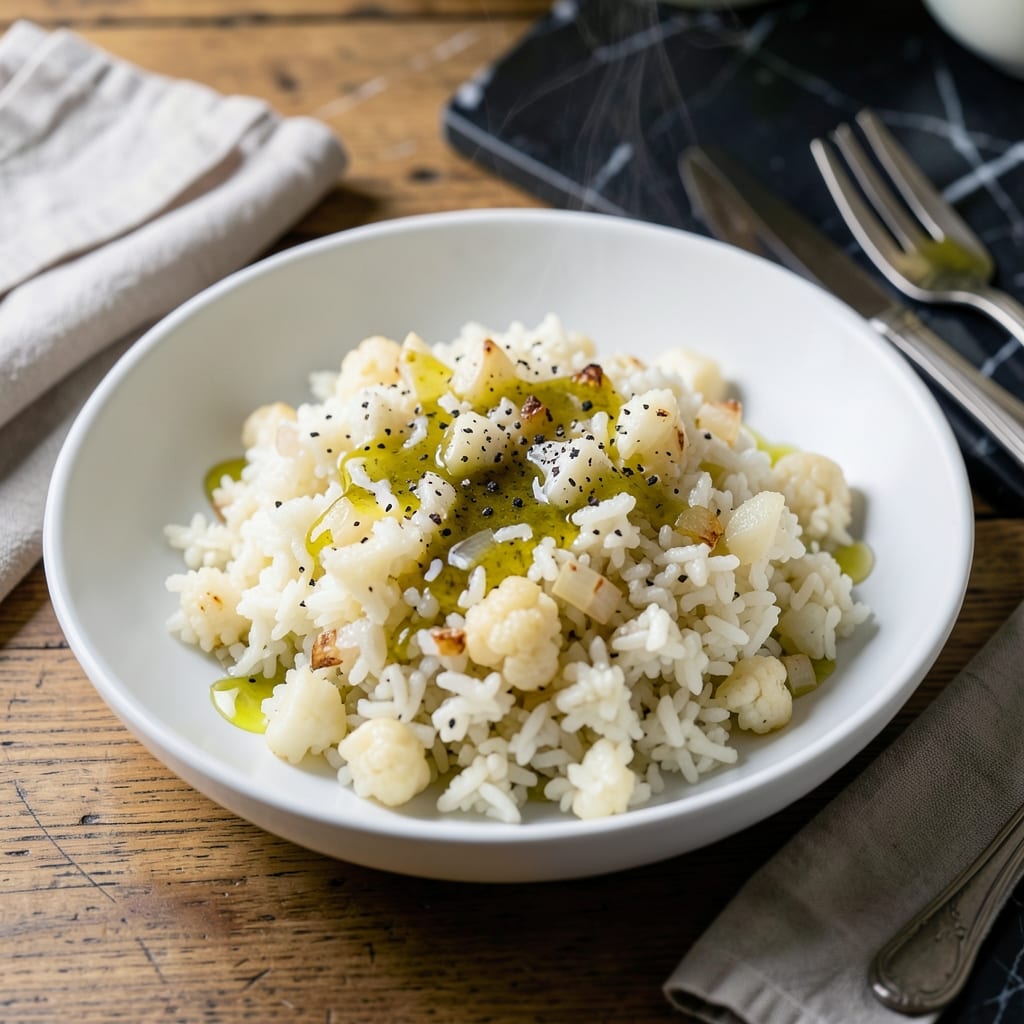
This method transforms frozen cauliflower into light, fluffy rice in just 5 minutes. No thawing required—simply cook straight from the freezer for best texture.
The key is high heat and minimal stirring, which prevents mushiness while achieving that perfect rice-like consistency. It’s the quickest way to add a low-carb, nutrient-packed side to any meal.
Ingredients for Cauliflower Rice Recipe Using Frozen Cauliflower
Frozen cauliflower plus simple pantry staples create this quick, low-carb side dish.
| Ingredient | Amount | Notes |
|---|---|---|
| Frozen Cauliflower Rice 🥬 | 16 oz | Unthawed, riced texture |
| Olive Oil 🫒 | 1 tbsp | Extra-virgin preferred |
| Garlic Cloves 🧄 | 2 cloves | Minced for aroma |
| Onion 🧅 | ¼ whole | Finely diced, yellow preferred |
| Sea Salt 🧂 | ¼ tsp | Fine grain for even distribution |
| Black Pepper 🌶️ | ¼ tsp | Freshly ground for best flavor |
| Ground Turmeric 🌿 | ¼ tsp | Optional for color boost |
| Fresh Parsley 🌿 | 2 tbsp | Chopped, for garnish |
| Lemon Juice 🍋 | 1 tsp | Freshly squeezed for brightness |
| Red Pepper Flakes 🌶️ | 0.125 tsp | Optional for heat |
[recipe_ingredient_scaler]
The frozen cauliflower rice must be unthawed—this is critical for achieving the right texture. Trader Joe’s and Green Giant brands work well, but any store brand will do. Look for packages labeled ‘riced’ rather than whole florets. The olive oil should be extra-virgin for optimal flavor; avoid refined oils that lack depth. Garlic and onion provide the aromatic base, so use fresh for best results.
No fresh garlic? Garlic powder at one-quarter the amount works in a pinch. Swap onion powder for the fresh onion at half the quantity. For a nutty depth, toasted sesame oil can replace the olive oil, but use sparingly. Omit the turmeric if you prefer a white rice appearance. The parsley is optional but adds a fresh finish—cilantro or green onions make good substitutes.
Cooked cauliflower rice keeps in the fridge for 4-5 days in an airtight container. It freezes well for up to 3 months, but texture may soften slightly. Reheat in a dry pan to restore some crispness. For meal prep, portion before storing to maintain the fluffy consistency.
Why You’ll Love This Recipe
- No Chop Needed: I just dump the frozen cauliflower rice straight from the bag—no knife, no cutting board, no mess.
- Garlic & Onion Magic: The sizzle of garlic and onion in olive oil turns plain cauliflower rice into something I crave.
- Meal Prep Hero: I cook a big batch on Sunday and it reheats beautifully for lunches all week.
Step-by-Step Instructions for Cauliflower Rice Using Frozen Cauliflower
This method delivers perfectly fluffy texture with minimal effort and maximum flavor.
Step 1: Sauté Aromatics Until Fragrant
Heat the 1 tbsp Olive Oil in a large skillet over medium-high heat until it shimmers but doesn’t smoke. Immediately add the finely diced 0.25 whole Onion and cook for 2-3 minutes, stirring frequently, until the edges turn translucent and begin to soften.
Add the 2 cloves Garlic Cloves and cook for an additional 30-45 seconds until fragrant. Watch carefully—garlic burns quickly. The onion and garlic should never brown; remove from heat if they threaten to darken.
This aromatic base infuses the cauliflower rice with depth of flavor. The residual moisture from the onion helps prevent the garlic from burning while building a savory foundation.
Step 2: Cook Frozen Cauliflower Rice Directly from Freezer
Add the 16 oz Frozen Cauliflower Rice directly to the skillet—no thawing necessary. The frozen pieces will release moisture, creating steam that initially softens the rice. Spread it evenly in the pan and resist stirring for the first 2 minutes to allow direct heat contact.
Once the initial moisture has evaporated (you’ll see the pan return to a sizzle), stir well to combine with the aromatics. Cook for an additional 3-4 minutes, stirring occasionally, until the cauliflower rice is tender but not mushy. The texture should resemble cooked white rice.
Using frozen cauliflower rice directly prevents it from becoming waterlogged, which is the key to achieving that fluffy, separate-grain texture we’re after.
Step 3: Season and Finish with Bright Flavors
Sprinkle the 0.25 tsp Sea Salt, 0.25 tsp Black Pepper, and 0.25 tsp Ground Turmeric evenly over the cauliflower rice. Stir thoroughly to distribute the seasonings and turmeric’s golden color. The turmeric adds a subtle earthiness and vibrant hue.
Cook for an additional 1 minute to allow the flavors to meld. Taste and adjust seasoning if needed, though the salt measurement should be perfect for the 16 oz quantity.
Remove from heat and stir in the 1 tsp Lemon Juice and 0.125 tsp Red Pepper Flakes. The lemon brightens all the flavors while the red pepper flakes add a subtle warmth that builds with each bite.
Step 4: Garnish and Serve Immediately
Transfer the cauliflower rice to a serving bowl or individual plates. Sprinkle with the 2 tbsp Fresh Parsley, which adds a pop of color and fresh herbal note that complements the earthy turmeric and bright lemon.
Serve immediately while hot. The texture is best right after cooking—it will continue to soften as it sits. For optimal results, don’t cover the dish, as trapped steam will make the rice soggy.
This technique works because we’re using the frozen product’s residual moisture to our advantage, creating steam that cooks the rice evenly before evaporating to reveal the perfect texture.
Pro Tips For Making Cauliflower Rice Recipe Using Frozen Cauliflower
- Thaw First: I learned this the hard way—frozen cauliflower rice steams instead of sautés if you toss it straight into the pan. Spread it on a towel for 10 minutes or microwave for 1-2 minutes to remove excess moisture.
- Crank the Heat: High heat is non-negotiable for getting that light golden color and nutty flavor. About medium-high, with enough olive oil to coat the bottom—around 2 tablespoons.
- Skip the Overcrowding: Resist the urge to dump the whole bag in at once. Cook in batches if needed, or your cauliflower rice will turn mushy instead of tender-crisp.
- Salt Last: Sounds weird, but it works: wait until the cauliflower rice is nearly done before adding sea salt. It draws out less moisture and keeps the texture right.
Best Sauces and Condiments for These Flavors
Creamy Garlic Sauce
Whisk ½ cup Greek yogurt with 1 minced garlic clove, 1 tbsp lemon juice, and ¼ tsp salt. This tangy sauce balances the earthy cauliflower beautifully. I often add 1 tsp chopped dill for extra brightness. 💛
Spicy Sriracha Drizzle
Combine 2 tbsp mayonnaise with 1 tbsp sriracha and 1 tsp honey. The heat from the sriracha pairs perfectly with the mild cauliflower. Drizzle lightly for a flavor boost without overpowering.
Asian-Inspired Soy Glaze
Simmer 3 tbsp soy sauce, 1 tbsp rice vinegar, and 1 tsp sesame oil until slightly thickened. This umami-rich glaze adds depth to the dish. Garnish with toasted sesame seeds for crunch.
Fresh Herb Chimichurri
Blend ½ cup parsley, ¼ cup cilantro, 1 garlic clove, 3 tbsp olive oil, and 2 tbsp red wine vinegar. This vibrant sauce brings freshness and acidity. It’s my go-to for a restaurant-style finish. ✨
Lemon-Tahini Dressing
Whisk ¼ cup tahini with 2 tbsp lemon juice, 1 tbsp water, and 1 tsp maple syrup. The nutty tahini complements the cauliflower’s mild flavor. Thin with more water if needed for drizzling.
Nutrition Facts
Frequently Asked Questions
Do I need to thaw the cauliflower first?
No, cooking from frozen works best. Thawing releases excess moisture, which can make the rice mushy.
How do I prevent soggy texture?
Use medium-high heat and avoid stirring too often. Let the moisture evaporate before stirring.
Can I add other vegetables?
Yes! Toss in diced bell peppers or peas during the last 2 minutes of cooking.
What’s the best pan to use?
A large skillet with a wide surface area works best. Cast iron or stainless steel distributes heat evenly.

Trained in classic French technique but raised on slow-cooked ribs and spicy rubs, she blends culinary skill with smoke and soul.
- Recipe for Boneless Pork Chops in Cast Iron Skillet: Sear and Baste to Juicy Perfection - October 3, 2026
- Recipe for Boneless Cross Rib Roast: Slow-Roasted Beef with Herb Crust - October 3, 2026
- Hamburgers in Sauce Recipe Crock Pot: Slow-Cooked Savory Delight - October 3, 2026