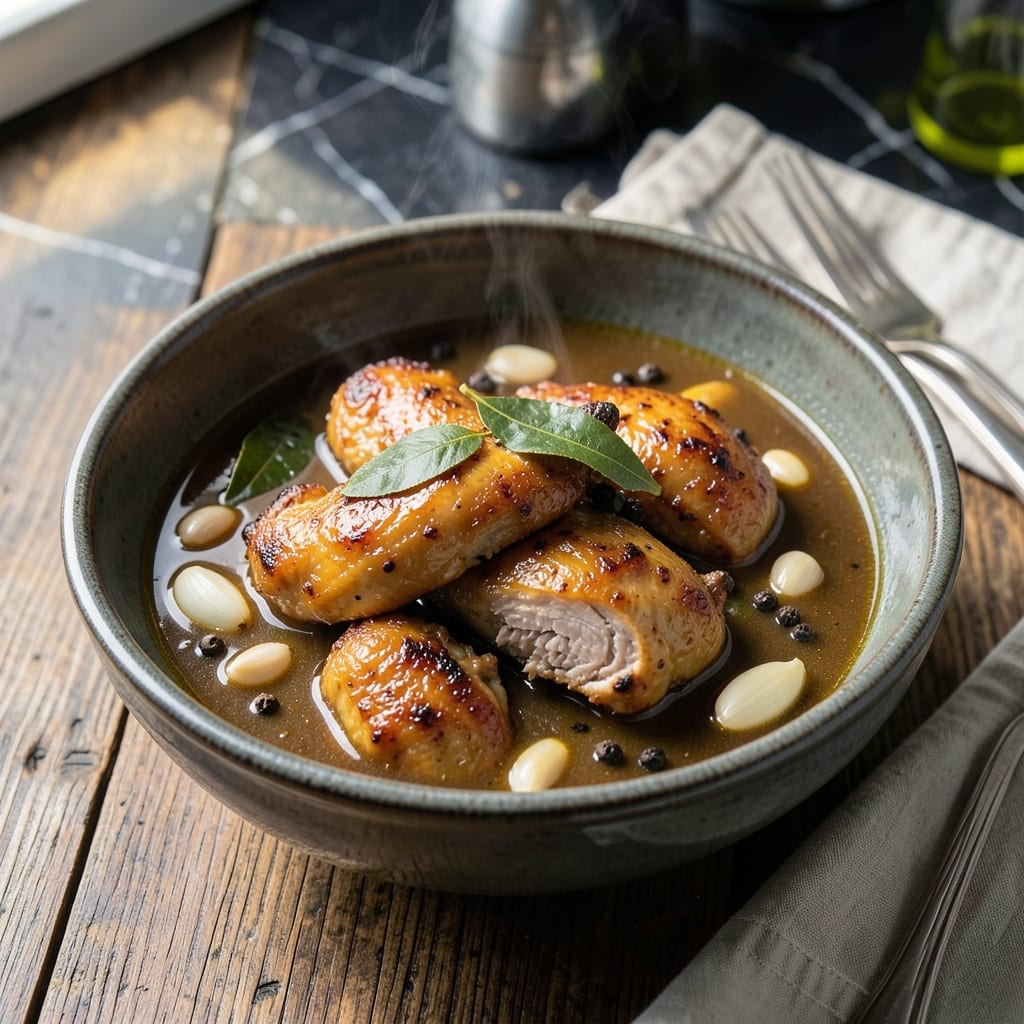
This Filipino classic transforms simple ingredients into a dish with bold, balanced flavors that have made it a national favorite.
I’ve refined this method to capture the authentic taste of adobo—tangy vinegar, salty soy, and aromatic garlic—without complicating the process.
The chicken braises until fall-off-the-bone tender, soaking up a sauce that’s rich, savory, and slightly sharp. It’s comfort food with depth.
Serve over steamed rice to soak up every drop of the sauce. This is how tradition tastes.
Ingredients for Chicken Adobo Recipe Filipino Style
Simple ingredients deliver bold Filipino flavors in this classic adobo dish.
| Ingredient | Amount | Notes |
|---|---|---|
| Chicken Thighs 🍗 | 2 lb | Boneless, skin-on preferred |
| Soy Sauce 🥫 | ¾ cup | Filipino or low-sodium |
| White Vinegar 🧃 | ¾ cup | Cane vinegar preferred |
| Garlic Cloves 🧄 | 10 cloves | Peeled, smashed lightly |
| Bay Leaves 🌿 | 3 whole | Dried, whole leaves |
| Black Peppercorns 🌶️ | 1 tsp | Whole, lightly crushed |
| Brown Sugar 🍚 | 1 tbsp | Light or dark |
| Olive Oil 🫒 | 2 tbsp | For searing chicken |
| Water 💧 | ½ cup | For braising liquid |
| Green Onions 🧅 | 4 whole | Thinly sliced for garnish |
| Salt 🧂 | ½ tsp | Kosher or sea salt |
[recipe_ingredient_scaler]
The chicken is everything here. Thighs stay juicy through the long braise—breasts dry out. Look for skin-on, bone-in for maximum flavor, but boneless works too (just reduce cooking time). I source mine from local Asian markets—they often have better quality and price. The soy sauce should be Filipino brand like Silver Swan or Datu Puti if possible; it’s less salty than Chinese varieties.
No Filipino soy sauce? Low-sodium soy sauce at two-thirds the amount works. White vinegar is non-negotiable for authenticity, but apple cider vinegar in a pinch. Short on bay leaves? One-third teaspoon dried bay leaf (crumbled) substitutes. The garlic must be fresh—jarred minced garlic lacks the aromatic punch. Coconut aminos can replace soy for gluten-free, but the flavor profile shifts slightly.
This tastes even better the next day. Refrigerate in an airtight container for up to 5 days, or freeze for 3 months. The sauce thickens as it cools—just reheat gently with a splash of water. Always serve over hot rice (jasmine or long-grain) to absorb the tangy, savory sauce.
Why You’ll Love This Recipe
- One Pot Wonder: I toss everything in a single pan—chicken, soy sauce, vinegar, garlic—and let it simmer. Cleanup is a breeze.
- Tangy Garlic Bomb: The soy-vinegar combo with those garlic cloves? It’s savory, tangy, and so rich it coats every bite.
- Feeds the Crowd: I make a big batch for Sunday lunch, and it’s just as good reheated for dinner the next day.
- Budget Keeper: Chicken thighs and pantry staples mean I’m spending under $10 for a meal that fills us up. Honestly, it’s a steal.
Step-by-Step Instructions for Chicken Adobo Filipino Style
This method delivers authentic flavor with the perfect balance of tangy and savory elements.
Step 1: Sear the Chicken Thighs to Lock in Flavor
Heat the 2 tbsp olive oil in a large, heavy pot or Dutch oven over medium-high heat. Pat the 2 lb chicken thighs dry with paper towels and season lightly with the 0.5 tsp salt. Once the oil shimmers, add the chicken skin-side down and sear for 5-6 minutes until the skin turns deep golden brown.
Flip the chicken and sear the other side for another 3-4 minutes. You’re looking for a rich, caramelized crust—this builds the foundation of flavor for your adobo. Remove the chicken and set aside, leaving the rendered fat in the pot.
Step 2: Build the Aromatic Base
In the same pot, reduce the heat to medium. Add the 10 cloves garlic cloves and cook for 1-2 minutes until fragrant and just beginning to turn light golden. Be careful not to burn the garlic, as it will turn bitter. Immediately add the 3 whole bay leaves and 1 tsp black peppercorns to toast for 30 seconds.
Pour in the 0.75 cup soy sauce and 0.75 cup white vinegar, using a wooden spoon to scrape up any browned bits from the bottom of the pot. This deglazing step ensures all the caramelized flavors from searing are incorporated into the sauce.
Step 3: Braise the Chicken to Tenderness
Return the chicken to the pot, skin-side up. Add the 0.5 cup water and 1 tbsp brown sugar, stirring to dissolve the sugar. Bring the liquid to a simmer, then reduce the heat to low. Cover the pot and let it braise for 35-40 minutes, turning the chicken once halfway through cooking.
The chicken is done when it reaches an internal temperature of 165°F and the meat easily pulls away from the bone. The sauce should have reduced slightly and taken on a rich, glossy appearance.
Step 4: Reduce the Sauce and Finish
Remove the lid and increase the heat to medium-high. Let the sauce reduce for 5-7 minutes until it thickens enough to coat the back of a spoon. This step intensifies the flavors and creates the signature adobo sauce consistency.
Taste the sauce and adjust the seasoning if needed, though the soy sauce typically provides enough saltiness. The balance should be tangy from the vinegar with a deep umami from the soy.
Step 5: Garnish and Serve
Discard the bay leaves. Transfer the chicken to a serving platter and spoon the sauce over the top. Garnish with the 4 whole green onions, thinly sliced. Let the dish rest for 5 minutes before serving to allow the flavors to meld.
Serve hot with steamed rice to soak up the rich, tangy sauce. The chicken should be fall-off-the-bone tender with a glossy, deeply flavored sauce that perfectly balances the vinegar’s acidity with the soy’s saltiness.
Pro Tips For Making Chicken Adobo Recipe Filipino Style
- Simmer Low and Slow: I learned this the hard way—boiling the adobo too hard makes the chicken tough. Keep it at a gentle simmer for 30-40 minutes so the thighs stay tender while soaking up the soy-vinegar flavor.
- Use Bone-In Thighs: My grandmother swore by this, and she was right: bone-in, skin-on thighs add depth to the sauce and stay juicier than boneless cuts, even after long cooking.
- Balance the Vinegar: After ruining a batch with too much acidity, I now use a 1:1 ratio of soy sauce to vinegar—about ½ cup each for 2 lbs of chicken—and always taste before adding more.
- Reduce the Sauce: Once the chicken is cooked, crank the heat to medium-high for 5-7 minutes to thicken the sauce. Sounds weird, but it works: the flavors concentrate into that rich, sticky adobo glaze everyone loves.
Pro Cooking Tips for Perfect Results
Vinegar Balance
Never add vinegar directly to hot oil—it can cause dangerous splattering. I always pour the 0.75 cup white vinegar into the 0.75 cup soy sauce first, then add the mixture to the pot. This tempers the acidity and prevents bitter notes from developing. 🌡️
Low and Slow Braising
Maintain a gentle simmer during the 35-40 minute braise—boiling will toughen the chicken. I use a heavy Dutch oven with a tight lid to trap steam. If your pot is shallow, check the liquid level and add 2-3 tbsp water if it reduces too quickly.
Sauce Reduction
For the perfect glossy finish, reduce the sauce uncovered at medium-high heat for 5-7 minutes. Stir frequently to prevent burning—the sugar in the 1 tbsp brown sugar can caramelize quickly. The sauce should coat the back of a spoon but still be pourable.
Garlic Protection
Cook the 10 cloves garlic just until fragrant and lightly golden—about 1-2 minutes. Burnt garlic turns bitter and ruins the sauce. I often remove the pan from heat while adding the vinegar mixture to stop the cooking immediately. 🧄
Resting Time
Let the adobo rest off heat for 5 minutes before serving. This allows the juices to redistribute and the flavors to meld. I learned this from my Filipino neighbor in Cincinnati—she insisted resting was non-negotiable for the best texture.
Nutrition Facts
Frequently Asked Questions
Can I use chicken breasts instead of thighs?
You can, but thighs stay juicier during the 35-40 minute braise. Breasts dry out faster, so reduce cooking time to 25-30 minutes and monitor the temperature closely.
Why add sugar to a savory dish?
The 1 tbsp brown sugar balances the vinegar’s sharpness and soy’s saltiness, creating that signature sweet-savory Filipino adobo profile. It also helps caramelize the sauce.
How do I store leftovers?
Keep in an airtight container in the fridge for up to 5 days. The flavors deepen overnight! Reheat gently with a splash of water to loosen the sauce.
Can I make this in a slow cooker?
Yes! Sear the chicken first, then cook on low for 4-5 hours or high for 2-3 hours. Skip the final sauce reduction—it won’t thicken as much in a slow cooker.

Trained in classic French technique but raised on slow-cooked ribs and spicy rubs, she blends culinary skill with smoke and soul.
- Recipe for Boneless Cross Rib Roast: Slow-Roasted Beef with Herb Crust - October 3, 2026
- Hamburgers in Sauce Recipe Crock Pot: Slow-Cooked Savory Delight - October 3, 2026
- Sanjeev Kapoor Egg Biryani Recipe: Fragrant Spiced Rice With Boiled Eggs - October 3, 2026