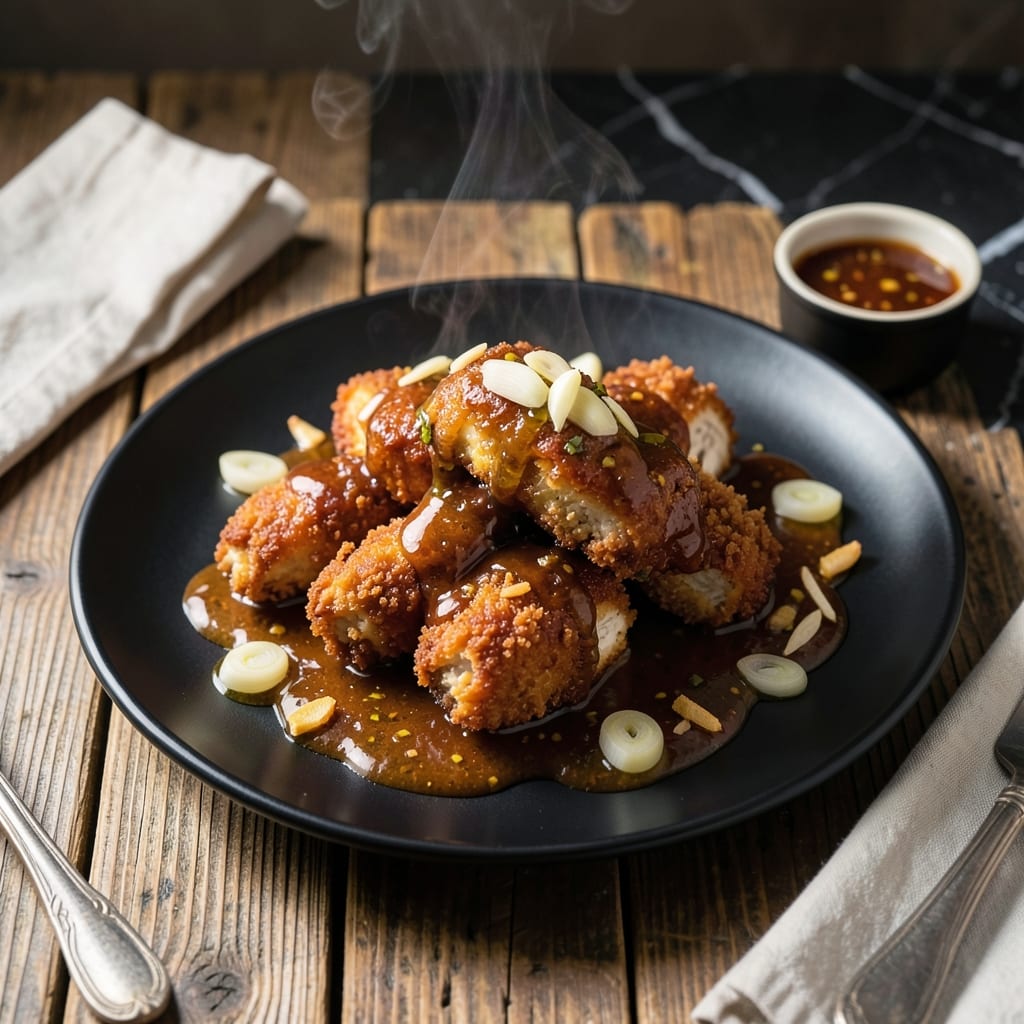
This Japanese glaze transforms simple fried chicken into an irresistible dish with its perfect balance of sweet and tangy flavors. The sauce builds depth through soy sauce, garlic, and ginger, creating a complex profile that elevates every bite.
What makes this recipe special is its versatility—use it as a glaze, dipping sauce, or marinade. The ingredients come together quickly, with a cooking process that takes less than 10 minutes from start to finish.
The result is a glossy, thick sauce that clings beautifully to chicken, delivering layers of umami and sweetness. It’s the ideal accompaniment for achieving restaurant-quality karaage at home.
Make a batch to keep on hand for quick, flavorful meals anytime.
Ingredients for Chicken Karaage Sauce
These ten ingredients create a glossy, umami-packed Japanese glaze in minutes.
| Ingredient | Amount | Notes |
|---|---|---|
| Soy Sauce 🥢 | ½ cup | Low-sodium preferred for balance |
| Rice Vinegar 🍶 | ¼ cup | Unseasoned for clean acidity |
| Mirin 🍚 | 3 tbsp | Sweet rice wine essential |
| Brown Sugar 🍚 | 3 tbsp | Light or dark works equally |
| Fresh Garlic Cloves 🧄 | 4 cloves | Minced finely for even distribution |
| Fresh Ginger Root 🌿 | 1 tbsp | Peeled and grated fresh |
| Honey 🍯 | 2 tbsp | Adds natural sweetness and shine |
| Sesame Oil 🫒 | 1 tsp | Toasted for nutty depth |
| Cornstarch 🌾 | 1 tbsp | Slurry for thickening glaze |
| Water 💧 | 2 tbsp | For cornstarch slurry |
[recipe_ingredient_scaler]
The soy sauce is non-negotiable—Kikkoman or Yamasa deliver the right depth. Mirin is key for authentic sweetness; look for it in the Asian aisle at Whole Foods or H-Mart. Fresh ginger and garlic are mandatory (the jarred stuff lacks punch). For the best results, use light brown sugar—its molasses content complements the soy perfectly without overpowering.
No mirin? Dry sherry plus a pinch of sugar works in a pinch. Substitute agave or maple syrup for honey if needed. The cornstarch slurry can be made with cold water or even pineapple juice for extra tang. If you’re out of rice vinegar, apple cider vinegar at half the amount is acceptable, though the flavor profile will shift slightly.
This glaze keeps beautifully in the fridge for up to 1 week in an airtight container. For longer storage, freeze in ice cube trays for 3 months. Reheat gently on the stove—microwaving can cause separation. Always give it a good stir before using.
Why You’ll Love This Recipe
- One Bowl Wonder: I just dump soy sauce, rice vinegar, mirin, brown sugar, and garlic in a bowl—no whisking marathons, no fancy techniques.
- Umami Bomb: The garlic and soy sauce combo hits that sweet-savory spot I crave every single time.
- Weeknight MVP: Between us, this sauce works for quick dinners, meal prep, or even jazzing up leftovers.
- Budget Keeper: Honestly, five affordable pantry staples and I’ve got a restaurant-worthy sauce that lasts days.
Step-by-Step Instructions for Chicken Karaage Sauce
This method delivers a glossy, perfectly balanced glaze that clings beautifully to fried chicken.
Step 1: Bloom Aromatics in Oil
Heat a medium saucepan over medium heat. Add the 1 tsp Sesame Oil and swirl to coat the bottom of the pan. The oil should shimmer but not smoke—too high heat will burn the aromatics.
Add the 4 cloves Fresh Garlic Cloves and 1 tbsp Fresh Ginger Root, stirring constantly for 30-45 seconds until fragrant. You want the garlic to soften slightly but not brown—burnt garlic will impart a bitter taste to the sauce.
Step 2: Combine Liquid Ingredients and Sweeteners
Pour in the 0.5 cup Soy Sauce, 0.25 cup Rice Vinegar, and 3 tbsp Mirin. Stir to combine, scraping up any browned bits from the bottom of the pan. These bits contain concentrated flavor that will deepen the sauce’s complexity.
Add the 3 tbsp Brown Sugar and 2 tbsp Honey, stirring until the sugar fully dissolves. The mixture will appear thin at this stage, but the cornstarch slurry will thicken it later. Bring the mixture to a gentle simmer.
Step 3: Simmer and Reduce the Base
Reduce heat to medium-low and let the sauce simmer uncovered for 5-7 minutes. You’ll notice the liquid gradually reducing and the flavors intensifying. The sauce should coat the back of a spoon lightly but still be pourable.
Stir occasionally to prevent sticking, especially as the sauce thickens. The Rice Vinegar provides the tangy backbone, while the Mirin and Honey balance it with sweetness. This simmering step is crucial for melding these flavors together.
Step 4: Thicken with Cornstarch Slurry
In a small bowl, whisk together the 1 tbsp Cornstarch and 2 tbsp Water until smooth. Slowly pour this slurry into the simmering sauce while whisking continuously to prevent lumps from forming.
Continue cooking for an additional 1-2 minutes until the sauce thickens to a glossy, syrup-like consistency. It should be thick enough to coat the back of a spoon heavily but still drizzle easily. Remove from heat immediately once the desired thickness is achieved.
Step 5: Finish and Cool Slightly
Let the sauce cool for 2-3 minutes before using. As it cools, it will thicken slightly more. The finished sauce should have a beautiful sheen and a balance of sweet, tangy, and umami flavors that perfectly complements crispy chicken.
Drizzle over freshly fried karaage or use as a dipping sauce. For best results, serve warm—the sauce will thicken further as it cools completely.
Pro Tips For Making Chicken Karaage Sauce
- Simmer, Don’t Boil: Keep the sauce at a gentle simmer—boiling it hard turns the brown sugar bitter and makes the mirin lose its sweetness.
- Grate the Garlic: Use a microplane to grate the fresh garlic cloves instead of mincing; it blends seamlessly into the sauce and avoids those harsh raw chunks.
- Bloom the Garlic: Sauté the grated garlic in a little oil for 30 seconds before adding liquids—it mellows the bite and deepens the flavor.
- Balance Last: Taste before serving and adjust with a splash of rice vinegar if it’s too sweet or a pinch of sugar if too sharp—sauces change as they cool.
Health Benefits of This Dish
Rich in Antioxidants
This sauce packs ginger and garlic, both loaded with antioxidants that combat inflammation. I love how fresh ginger adds not just flavor but gingerol, a compound known for its anti-inflammatory benefits. 💪
Low-Calorie Flavor Boost
A 2-tbsp serving adds minimal calories while delivering maximum taste. The rice vinegar and soy sauce provide bold flavor without excess fat, making this a guilt-free way to enhance meals.
Gut Health Support
Fermented ingredients like soy sauce and rice vinegar promote a healthy gut microbiome. These probiotics aid digestion, and the mirin adds prebiotic fiber to feed your gut’s good bacteria.
Blood Sugar Benefits
Despite its sweetness, the sauce’s brown sugar and honey have a lower glycemic index than refined sugar. The protein in soy sauce helps slow sugar absorption, preventing spikes.
Heart-Healthy Fats
The sesame oil contains polyunsaturated fats, including omega-6 fatty acids, which support heart health. It’s a small amount per serving but contributes to your daily intake of these essential fats.
Nutrient-Dense Ingredients
Garlic is rich in vitamins C and B6, while ginger provides magnesium and potassium. Together, they turn this sauce into more than just a flavor enhancer—it’s a nutrient-packed addition to any dish. ✨
Nutrition Facts
Frequently Asked Questions
Can I make this sauce ahead of time?
Yes! It keeps in an airtight container in the fridge for up to 1 week. For longer storage, freeze in ice cube trays for up to 3 months. Reheat gently on the stove before using.
What can I use instead of mirin?
Substitute with dry sherry plus a pinch of sugar or 1 tbsp honey mixed with 1 tbsp water. These alternatives provide similar sweetness and depth, though the flavor may vary slightly.
Why did my sauce turn out too thin?
This usually happens if the cornstarch slurry wasn’t cooked long enough. Return it to medium heat and simmer for another 1-2 minutes while stirring constantly. If needed, add a bit more cornstarch mixed with water.
Can I use this sauce for other dishes?
It’s fantastic on grilled meats, tofu, or roasted vegetables. The glossy texture and balanced flavors work well with almost any savory dish.

Trained in classic French technique but raised on slow-cooked ribs and spicy rubs, she blends culinary skill with smoke and soul.
- Recipe for Boneless Pork Chops in Cast Iron Skillet: Sear and Baste to Juicy Perfection - October 3, 2026
- Recipe for Boneless Cross Rib Roast: Slow-Roasted Beef with Herb Crust - October 3, 2026
- Hamburgers in Sauce Recipe Crock Pot: Slow-Cooked Savory Delight - October 3, 2026