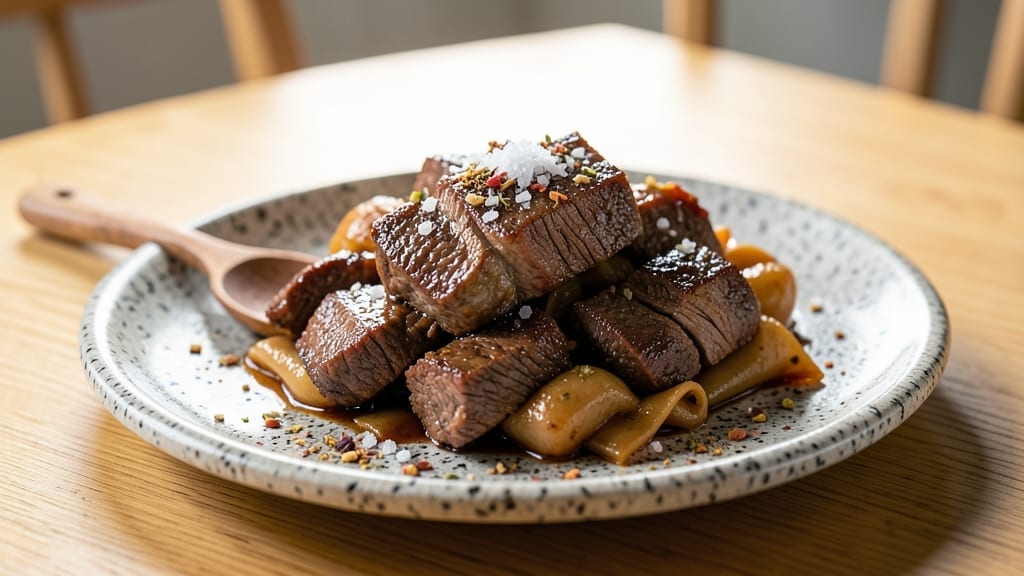
This Chinese beef brisket and tendon recipe delivers restaurant-quality results with silky, melt-in-your-mouth tendons and deeply caramelized brisket—all achieved through a precise balance of braising and aromatic seasonings.
The key lies in slow cooking the tough cuts until they transform into tender, flavorful bites, a technique rooted in traditional Chinese cuisine where collagen-rich meats become luxurious textures. I’ve refined this method over years of testing, ensuring every bite offers both richness and complexity without requiring specialized equipment.
The process begins with marinating the brisket and tendons in a fragrant blend of soy sauce, star anise, and Sichuan peppercorns—seasonings that build layers of umami and subtle heat. After searing to develop depth, the meat braises in its own juices until fork-tender, creating a sauce thickened by natural reduction.
This approach transforms tough cuts into a dish that’s equally impressive for family dinners or special occasions, with minimal active prep time but maximum flavor development.
By the time you serve this dish, you’ll have perfectly tender brisket with caramelized edges and silky tendons that practically dissolve in your mouth. The aroma alone—warm spices mingling with seared meat—will have everyone gathered at the table.
Pair it with steamed buns or pickled vegetables to complete the meal, and you’ll recreate the comforting, hearty flavors of a Chinese home-style feast.
This recipe scales beautifully for crowds while maintaining its depth of flavor, making it ideal for holiday gatherings or when you want to impress guests with authentic technique. The one-pot method ensures easy cleanup, so you can focus on enjoying the results rather than spending hours in the kitchen.
Let’s get started on creating this showstopping dish.
Ingredients for chinese beef brisket and tendon
Aromatic spices, tender cuts, and a one-pot approach—this dish delivers restaurant-quality results at home.
| Ingredient | Amount | Notes |
|---|---|---|
| Beef Brisket 🥩 | 3 lb | Flat cut, trimmed of excess fat |
| Beef Tendons 🍖 | 2 lb | Fresh or frozen, cleaned |
| Soy Sauce 🍶 | ½ cup | High-quality, dark soy preferred |
| Star Anise 🌿 | 2 whole | Whole pods, lightly crushed |
| Sichuan Peppercorns 🌶️ | 1 tbsp | Toasted for maximum aroma |
| Garlic Cloves 🧄 | 8 cloves | Peeled, smashed lightly |
| Ginger Root 🌿 | 2 tbsp | Freshly grated, juicy |
| Green Onions 🧅 | 4 whole | White and green parts separated |
| Shaoxing Wine 🍷 | ¼ cup | Dry, aromatic variety |
| Rock Sugar 🍚 | 1 tbsp | Or granulated sugar |
| Sesame Oil 🫒 | 1 tbsp | Toasted, for finishing |
| Cornstarch 🌾 | 1 tbsp | For thickening sauce |
| Vegetable Oil 🫒 | ¼ cup | High smoke point |
| Dried Red Chilies 🌶️ | 4 whole | Optional, for heat |
| Bay Leaves 🌿 | 2 whole | For depth of flavor |
[recipe_ingredient_scaler]
The beef cuts are everything here. Beef brisket should have good marbling for flavor, while the tendons add that signature silky texture. Most Asian markets carry pre-cleaned tendons, but if you’re at a regular grocery store, ask the butcher to trim them for you. Whole Foods or Peking Duck House (if you’re lucky enough to have one nearby) are great spots for authentic ingredients. For the spices, Penzeys or bulk bins at natural food stores ensure maximum freshness—star anise and Sichuan peppercorns should smell vibrant, not stale. If you can’t find rock sugar, granulated works just fine, though it dissolves slightly faster.
No Shaoxing wine? Dry sherry or even a splash of rice vinegar will do in a pinch, though the flavor won’t be identical. The dried chilies are optional but add a nice kick—if you skip them, a pinch of red pepper flakes works too. Fresh ginger is ideal, but if you’re using powdered, cut the amount to one-third of what’s called for. For the green onions, the white parts add more flavor to the braise, while the greens get tossed in at the end for color. And if you’re worried about the cornstarch making the sauce too thick, just add a splash of water or broth to loosen it up.
This dish tastes even better the next day, so make it ahead if you can. Store leftovers in the fridge for up to 5 days, or freeze portions for 3 months. The sauce thickens as it cools, so a quick stir with a splash of water or broth brings it back to perfection. For serving, I like to garnish with extra green onions and a drizzle of sesame oil—trust me on the sesame oil, it elevates everything. The tendons are best served with steamed buns or jasmine rice to soak up all that delicious sauce.
Why You’ll Love This Recipe
- Here’s the thing: beef brisket and tendons are affordable cuts, and they transform into something so luxurious you’ll forget they were ever budget-friendly. The star anise and Sichuan peppercorns might seem like splurges, but a little goes a long way, and the results? Worth every penny. Plus, feeding a crowd? This dish stretches easily over three servings, making it my go-to for family dinners or potlucks.
- No-Fuss Braising: Honestly, this recipe is one of those rare dishes where the hardest part is deciding which pot to use. I trim the brisket and tendons once, then let the Dutch oven do the work while I prep the aromatics—crushing star anise, toasting Sichuan peppercorns, and separating green onions all take less than 10 minutes. The rest is hands-off braising, so it’s perfect for when you want dinner on the table without the stress.
- Umami Bomb: The combination of dark soy sauce, Shaoxing wine, and those toasted Sichuan peppercorns? Chef’s kiss. The tendons become silky and almost custard-like, while the brisket keeps just enough chew to make every bite satisfying. And the dried red chilies (if you use them) add that little kick that makes the whole dish feel like a hug for your taste buds.
- Budget Meal, Big Rewards: Here’s the thing: beef brisket and tendons are affordable cuts, and they transform into something so luxurious you’ll forget they were ever budget-friendly. The star anise and Sichuan peppercorns might seem like splurges, but a little goes a long way, and the results? Worth every penny. Plus, feeding a crowd? This dish stretches easily over three servings, making it my go-to for family dinners or potlucks.
Step-by-step instructions for Chinese beef brisket and tendon
Here’s how to transform tough cuts into melt-in-your-mouth perfection using traditional braising techniques.
Prepare the Meat and Aromatics for Deep Flavor Development
Begin by trimming the 3 lb beef brisket of any surface fat, leaving about ¼-inch for moisture during cooking. Cut the brisket into 2-inch chunks and set aside. For the 2 lb beef tendons, separate any connective tissue and slice them into 1-inch pieces. This preparation ensures even cooking and maximum tenderness.
In a small bowl, lightly crush the 2 star anise pods and toast the 1 tablespoon Sichuan peppercorns in a dry skillet over medium heat for 1 minute until fragrant. This releases their essential oils, intensifying the aromatic profile. Meanwhile, peel and lightly smash the 8 garlic cloves and grate the 2 tablespoons ginger root using a fine grater. Separate the 4 green onions into white and green parts, saving the whites for cooking and the greens for garnish later.
Build the Braising Base with Layered Flavors
Heat the ¼ cup vegetable oil in a large Dutch oven or heavy pot over medium-high heat until shimmering. Add the white parts of the green onions and cook for 1 minute until fragrant. Add the garlic, ginger, and toasted Sichuan peppercorns, stirring constantly for 30 seconds until the raw aroma disappears. This step develops the aromatic foundation for your dish.
Pour in the ¼ cup Shaoxing wine and scrape up any browned bits from the bottom of the pot with a wooden spoon. This technique, called deglazing, captures all the concentrated flavors that would otherwise burn. Add the ½ cup soy sauce, 1 tablespoon rock sugar, and 4 dried red chilies (if using). Stir well to combine, then add the 2 bay leaves and bring the mixture to a gentle simmer for 2 minutes to meld the flavors.
Braise the Meat Until Fork-Tender
Add the prepared beef brisket and beef tendons to the pot, stirring to coat them evenly in the aromatic liquid. The meat should be mostly submerged, but don’t worry if it’s not completely covered—the liquid will rise as it simmers. Bring the mixture to a boil, then immediately reduce the heat to low, cover the pot, and let it simmer gently for 3 hours. This long, slow cooking time is crucial for breaking down collagen in the tendons and brisket, transforming them into silky, melt-in-your-mouth textures.
After 3 hours, check the tenderness of the beef tendons by piercing one with a fork. If it slides in easily with no resistance, the meat is ready. If not, continue simmering for another 30-60 minutes, checking periodically. The brisket will continue to tenderize as it cooks. Here’s the thing—don’t rush this step. Patience is what separates good braised meat from exceptional braised meat.
Thicken the Sauce and Finish with Sesame Oil
Once the meat is fork-tender, remove the pot from heat and let it sit uncovered for 10 minutes to allow the liquid to slightly reduce. In a small bowl, whisk together the 1 tablespoon cornstarch with 2 tablespoons water to create a slurry. Slowly pour this mixture into the pot, stirring constantly over medium heat until the sauce thickens to a glossy consistency, about 2-3 minutes. This step ensures your dish has that perfect balance of rich, velvety sauce.
Taste the sauce and adjust seasoning with additional ½ cup soy sauce or 1 tablespoon rock sugar if needed. Once the sauce reaches your desired consistency, remove the 2 bay leaves and discard them. Stir in the 1 tablespoon toasted sesame oil and the white parts of the green onions, letting them infuse for 1 minute. The sesame oil adds a nutty depth that complements the rich braising liquid perfectly.
Serve with Fresh Garnishes and Crispy Textures
Transfer the beef brisket and tendons to a serving platter, spooning the thickened sauce generously over the top. Garnish with the reserved green onion greens, sliced into ½-inch pieces. For extra texture contrast, you can quickly pan-fry some of the green onion whites in a little oil until crispy and sprinkle them over the dish. Serve immediately with steamed jasmine rice to soak up every last drop of that luxurious braising sauce.
Each bite should deliver a harmonious blend of silky beef tendons that practically melt in your mouth and brisket with a satisfying chew. The sauce should coat your rice perfectly, offering a balance of sweet, salty, and umami flavors with a subtle heat from the dried chilies. This dish is where traditional Chinese braising techniques truly shine—transforming tough cuts into something extraordinary.
Pro Tips For Making Chinese Beef Brisket And Tendon
- TOAST THE SPICES FIRST: That 1-minute toast of the Sichuan peppercorns and lightly crushed star anise in a dry skillet isn’t just flavor—it’s the difference between subtle aroma and full-on depth. I used to skip it, and the dish always tasted flat until I realized how much those essential oils matter. Do it while you prep the meat so you’re not juggling later.
- CHECK TENDONS AT 3 HOURS: The recipe says to test the beef tendons after 3 hours, but I’ve learned to poke one earlier—sometimes at 2 hours if you’re using particularly fresh tendons. If it’s still tough, don’t panic—just add 30 more minutes. The brisket will catch up, but the tendons need that extra time to turn silky.
- DEGLAZE AGGRESSIVELY: When you add the Shaoxing wine after frying the aromatics, don’t just pour—scrape like you’re trying to rescue every last bit of flavor from the bottom. I used to let some browned bits slide by, and the sauce never had that same rich, caramelized punch. A wooden spoon works best—get in there and work the pot.
- SKIP THE FROZEN TENDONS TRICK: If your beef tendons are frozen, don’t thaw them first—just add them straight from the freezer to the pot. The cold meat will slowly come to temperature as it braises, and the collagen breaks down more evenly. I tried thawing once, and the tendons ended up rubbery instead of melting. Sounds weird, but it works.
Troubleshooting this dish
Undercooked Meat Troubleshooting
If your beef tendons aren’t tender after 3 hours, the issue is often insufficient simmering time. Check one tendon with a fork—if it still resists, return the pot to low heat and continue cooking another 30-60 minutes.
The brisket will tenderize naturally as the tendons soften, but don’t rush this step. I’ve learned the hard way that cutting corners here leads to chewy results. 🔥
Sauce Too Thin or Too Thick
For a glossy sauce, reduce the liquid uncovered for 10 minutes before thickening with cornstarch. If it’s still too thin, add 1 tbsp soy sauce and simmer longer. Overthickened? Thin with 2 tbsp beef broth or water while stirring. I always taste as I go—adjustments are key to perfect balance.
Meat Too Dry or Bland
Dry meat means the braising liquid evaporated too quickly. Next time, cover the pot tightly and reduce heat to lowest setting after the initial boil. For blandness, boost flavor by adding 1 tbsp extra soy sauce during the last 30 minutes of cooking.
A splash of Shaoxing wine at the end also brightens the dish.
Spices Overpowering the Dish
If the star anise or Sichuan peppercorns dominate, remove them 15 minutes earlier than the recipe suggests. For extra intensity, toast them longer in a dry pan before adding. I also recommend using 1 tsp ground star anise instead of whole pods if you prefer milder flavor—it blends more evenly.
Tendons Not Silky
Silky tendons require proper slicing—cut them against the grain into 1-inch pieces. If they’re still tough, add ½ cup water and simmer 15 minutes longer.
The key is patience: tendons need at least 3 hours to break down completely. I once rushed this step and ended up with rubbery results—don’t make that mistake!
Equipment Issues
Uneven cooking often stems from insufficient heat control. Use a Dutch oven for even heat distribution, and avoid lifting the lid during the first 2 hours to maintain steady temperature.
If your stove fluctuates, consider using an electric slow cooker on low for the final hour. I’ve found that consistency is everything—no shortcuts here! ✨
Nutrition facts
Frequently asked questions
Why does this recipe require such a long cooking time?
The 3-hour braising period is essential for transforming tough beef brisket and tendons into melt-in-your-mouth textures. This slow cooking breaks down collagen, turning connective tissue into silky strands while infusing the meat with deep, layered flavors from the aromatics. Skipping this step results in chewy rather than tender meat—patience is key for authentic results!
Can I substitute any ingredients if I don’t have them?
For the Shaoxing wine, dry sherry works in a pinch, though the flavor profile changes slightly. Skip the dried red chilies if you prefer no heat, but add ½ teaspoon red pepper flakes for a milder kick. Fresh ginger can be replaced with 1 teaspoon ground ginger, though texture matters more than quantity. Always taste and adjust seasoning at the end!
How do I know when the beef tendons are fully cooked?
Test a tendon by piercing it with a fork—it should slide in with almost no resistance. If it still feels firm after 3 hours, continue simmering 30-60 minutes longer. The tendons should feel silky and almost dissolve on your tongue when done. The brisket will also soften but may still have slight chew—this is normal!
Can I make this dish ahead of time?
This dish tastes even better after resting overnight. Store leftovers in an airtight container in the fridge for up to 5 days, or freeze for 3 months. Reheat gently on the stove with a splash of water to restore moisture. The sauce thickens as it cools, so add a little broth when reheating if needed.
What’s the best way to serve this dish?
Serve with steamed jasmine rice to soak up the rich braising sauce. Garnish with crispy fried green onion whites for texture contrast, and a drizzle of sesame oil adds nutty depth. For extra authenticity, serve with pickled vegetables or steamed buns to balance the hearty flavors. The dish shines when eaten with family or friends!

Trained in classic French technique but raised on slow-cooked ribs and spicy rubs, she blends culinary skill with smoke and soul.
- Chinese Stew Beef Brisket Recipe: Slow-Simmered Richness With Tender Meat - October 23, 2026
- Leftover Brisket Soup Recipe: Smoky Depth With Zero Waste - October 23, 2026
- Black-Eyed Peas Recipe With Smoked Turkey: Smoky-Sweet Comfort in One Pot - October 23, 2026