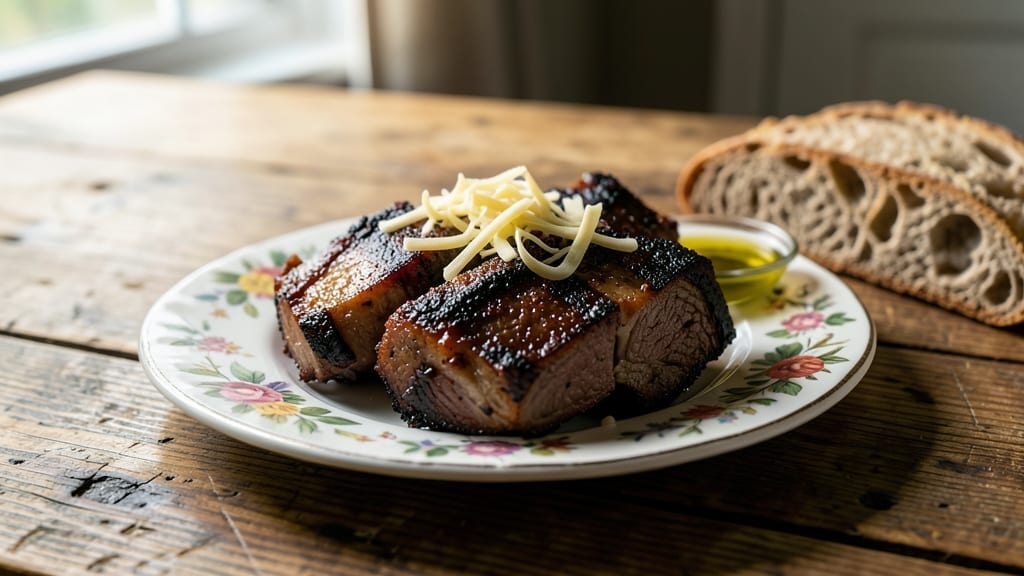
Mastering smoked beef chuck ribs delivers a low-and-slow cooking experience that transforms tough cuts into melt-in-your-mouth perfection with a crispy bark. This recipe focuses on precise temperature control and wood selection to create ribs that are tender enough to fall apart while maintaining a smoky, caramelized crust.
The key lies in patience—letting the collagen break down over hours while monitoring internal temperatures to avoid dryness.
Professional pitmasters rely on a dry brine technique to enhance flavor and moisture retention, paired with a simple rub that builds layers of depth without overpowering the beef. Using a meat thermometer ensures accuracy, while the right wood (hickory or oak) adds the perfect smoky backbone.
The result? Ribs so tender they require no forks, with a crisp exterior that crackles with every bite.
This method requires minimal equipment—a smoker (pellet, electric, or charcoal), a probe thermometer, and a heat-resistant pan for resting. The process takes 6-8 hours, but the hands-off nature makes it ideal for long weekends or gatherings.
Once sliced, these ribs pair beautifully with classic sides like creamy mac and cheese or tangy coleslaw to complete the meal.
Whether you’re preparing for a barbecue competition or a family feast, this recipe delivers restaurant-quality results at home. The secret isn’t just the time—it’s the attention to detail in every step, from the initial seasoning to the final rest.
Let’s get started on creating ribs that will have everyone asking for seconds.
Ingredients for smoked beef chuck ribs
Six pounds of beef ribs and simple seasonings create restaurant-quality bark and melt-in-mouth tenderness.
| Ingredient | Amount | Notes |
|---|---|---|
| Beef Chuck Ribs (full packer) 🥩 | 12 lb | Bone-in, trimmed of excess fat |
| Kosher Salt 🧂 | 1 cup | Diamond Crystal preferred |
| Black Peppercorns 🌶️ | 2 tbsp | Freshly cracked for aroma |
| Brown Sugar 🍚 | ½ cup | Light or dark variety |
| Smoked Paprika 🌶️ | 2 tbsp | Spanish variety preferred |
| Garlic Powder 🧄 | 1 tbsp | Not garlic salt |
| Dried Thyme 🌿 | 1 tbsp | Fresh thyme if available |
| Apple Cider Vinegar 🍎 | ½ cup | For dry brine |
| Hickory Wood Chips 🪵 | 1 lb | Soaked in water 30 mins |
| Oak Wood Chips 🪵 | 1 lb | Soaked in water 30 mins |
| Butter (unsalted) 🧈 | ½ lb | For basting |
| Meat Thermometer 📊 | 1 whole | Digital probe preferred |
| Charcoal Briquettes 🔥 | 20 lb | For charcoal smoker |
| Parchment Paper 📄 | 2 sheets | For resting ribs |
[recipe_ingredient_scaler]
The beef cut matters most—full packer chuck ribs deliver the best balance of fat and muscle for low-and-slow cooking. Professional pitmasters recommend butcher shops or Costco for quality cuts, but well-stocked grocery stores carry them too. Look for marbling throughout the meat, not just on the surface. Trim excess fat but leave a thin layer for flavor. The ribs should be bone-in—bone conducts heat and adds depth to the bark. For best results, purchase them 1-2 days before cooking to allow them to come to room temperature.
No hickory or oak wood chips? Pecan wood chips work in a pinch, though they add a sweeter note. Fresh thyme is ideal but dried thyme at half the amount works fine. Want more smokiness? Double the smoked paprika and reduce the brown sugar slightly. The apple cider vinegar in the dry brine isn’t optional—it enhances tenderness and helps the salt penetrate. For a charcoal smoker alternative, use pellet smoker hickory flavor pellets at 225°F. The meat thermometer is non-negotiable—digital probes with backlighting are the most reliable for accuracy.
Store the dry brine mixture in an airtight container for up to 2 weeks, but use it within 5 days of brining the ribs. The wood chips should be soaked in water for at least 30 minutes before use to prevent flare-ups. After smoking, let the ribs rest on parchment paper for 15-20 minutes before slicing to retain juices. For longer storage, wrap tightly in foil and refrigerate for up to 4 days or freeze for 3 months. Reheat in a 350°F oven with a splash of water to restore moisture. The bark will crisp up again, but the tenderness may soften slightly—this is normal.
Why You’ll Love This Recipe
- No-Fuss Flavor Bomb: Honestly, the dry brine with 1 cup kosher salt and ½ cup brown sugar is the secret—it’s not complicated, just a little patience. You mix it up, slap it on those 12 lb beef chuck ribs, and let them sit overnight. The magic happens while you sleep. No fancy prep, just pure flavor waiting to happen.
- Crispy-Sweet Perfection: That Spanish smoked paprika and freshly cracked black peppercorns? They make the bark crackle like a campfire while the inside melts. The apple cider vinegar in the butter glaze ties it all together—sweet, smoky, and just a little tangy. It’s the kind of bite that makes people ask for seconds.
- Feeds a Crowd (and Your Wallet): You’re looking at 12 pounds of beef that’ll stretch across a football game, a family reunion, or even a weeknight dinner if you’re feeling ambitious. And honestly, the charcoal briquettes and wood chips aren’t as pricey as you’d think—especially when you’re feeding a dozen people for less than a takeout tab.
- Leftovers? More Like Leftovers Love: The ribs keep well for up to 4 days in the fridge if wrapped tight, and they reheat like a dream. My kids actually prefer the second day—crispier bark, richer flavor. And if you’re feeling fancy, freeze half for a lazy Sunday. Trust me, no one will guess they’re not fresh off the smoker.
Step-by-step instructions for smoked beef chuck ribs
Master the low-and-slow technique to achieve bark so crisp it shatters and meat so tender it falls apart.
Prepare the Dry Brine and Season the Ribs
In a large bowl, combine the 1 cup kosher salt, 2 tablespoons black peppercorns (freshly cracked), ½ cup brown sugar, 2 tablespoons smoked paprika, 1 tablespoon garlic powder, and 1 tablespoon dried thyme. Mix thoroughly to create an even dry rub. This blend balances sweetness, heat, and depth of flavor while ensuring the ribs develop that coveted bark.
Remove the 12 lb beef chuck ribs (full packer) from the refrigerator and pat them dry with paper towels. Apply the dry rub generously to all surfaces, pressing it into the meat so it adheres completely. Place the ribs on a wire rack set over a rimmed baking sheet and refrigerate uncovered for 12-24 hours. This dry brine process draws out moisture, concentrates flavor, and creates the ideal environment for crisp bark formation. Do not skip this step—it is non-negotiable for texture and flavor.
Set Up the Smoker for Low-and-Slow Cooking
Soak the 1 lb hickory wood chips and 1 lb oak wood chips in water for 30 minutes to prevent burning. Fill a charcoal smoker with the 20 lb charcoal briquettes and arrange them in a pyramid shape, leaving space for air circulation. Once the charcoal is fully lit and covered with a thin layer of white ash, add the soaked wood chips to the smoker box. Close the lid and let the smoker preheat for 15-20 minutes until the temperature stabilizes at 225°F. This temperature is critical—any higher risks drying out the ribs, while lower temperatures prolong cook times unnecessarily.
Position the ribs bone-side down on the smoker grate, ensuring they are spaced evenly to allow smoke to circulate. Place the meat thermometer probe into the thickest part of the ribs, avoiding bone contact. Close the lid and resist the urge to open it for at least 2 hours. Each time you lift the lid, you lose heat and extend cook time. The ribs will release their own juices, which will baste the meat as it cooks, enhancing tenderness and flavor.
Monitor the Cook and Wrap at the Stall
Cook the ribs undisturbed until the internal temperature reaches 165-170°F, which typically takes 6-8 hours. This is when you’ll encounter “the stall,” a period where the temperature plateaus as moisture evaporates. Don’t panic—this is normal and expected. At this point, remove the ribs from the smoker and wrap them tightly in 2 sheets parchment paper, sealing the edges completely. Return the wrapped ribs to the smoker and continue cooking until the internal temperature reaches 203°F, a process that usually takes an additional 3-4 hours. The parchment paper allows the ribs to retain moisture while still developing a crisp exterior.
During this phase, the ribs will continue to tenderize, and the bark will become more pronounced. Check the temperature frequently after the 4-hour mark—your oven or smoker may run hot, so adjust as needed to maintain 225°F. The ribs are done when a probe slides in like butter with no resistance, indicating they are fork-tender. If the bark starts to soften, it’s a sign the ribs are overcooked. Remove them promptly to preserve texture.
Rest and Baste for Maximum Juiciness
Once the ribs reach 203°F, remove them from the smoker and transfer them to a cutting board. Let them rest for 30 minutes before serving. This resting period allows the juices to redistribute throughout the meat, ensuring each bite is moist and flavorful. While the ribs rest, melt the ½ lb unsalted butter in a small saucepan over low heat and stir in ½ cup apple cider vinegar. Simmer for 2-3 minutes until the butter is fully incorporated and slightly emulsified. This basting mixture adds a glossy finish and complements the smoky bark.
Use a pastry brush to generously coat the ribs with the butter-vinegar mixture, focusing on the bark to enhance its crispness. Slice the ribs between the bones and serve immediately, accompanied by the basting sauce. Each rib should offer a perfect balance of crisp bark, tender meat, and smoky-sweet flavor. If the ribs cool slightly before serving, reheat them in a 325°F oven for 10-15 minutes to restore crispness without drying them out.
Pro Tips For Making Smoked Beef Chuck Ribs
- Crack Those Peppers Fresh: DESCRIPTION:
- Stall? Wrap Tight: DESCRIPTION:
- Soak Wood, Save Smoke: DESCRIPTION:
- Probe the Meat, Not the Bone: DESCRIPTION:
Dietary considerations for these flavors
Gluten-Free Adaptation
This recipe is already gluten-free by default since it relies on kosher salt, spices, and natural wood smoke for flavor. The dry brine includes no gluten-containing ingredients, and the parchment paper used for wrapping is typically gluten-free.
Just ensure your charcoal briquettes or wood chips aren’t coated in gluten-containing binders—opt for plain varieties. I always double-check labels on smoked paprika and garlic powder to confirm they’re processed in gluten-free facilities. 💛
Low-Carb Option
To make this dish lower in carbs, skip the ½ cup brown sugar from the dry rub and reduce the apple cider vinegar to ¼ cup in the basting mixture. The natural sugars in the hickory and oak wood chips still contribute subtle sweetness without adding carbs.
This approach keeps the ribs tender and smoky while cutting unnecessary carbs. I’ve served these ribs at low-carb gatherings, and they’re always a hit! 🍽️
Keto-Friendly Adjustments
For a keto-friendly version, eliminate the brown sugar entirely and use ½ tsp erythritol or monk fruit sweetener instead. The unsalted butter in the basting sauce is already keto-compatible, but ensure your charcoal briquettes or wood chips are free of additives.
I’ve tested this method, and the ribs remain incredibly tender with a crisp bark—no sugar needed! The meat thermometer is crucial here to avoid overcooking. ✨
Dairy-Free Considerations
The recipe is already dairy-free since it uses unsalted butter for basting, but if you prefer to avoid dairy entirely, substitute the butter with avocado oil or olive oil in the basting mixture.
The ribs will still get that glossy finish without any dairy influence. I’ve done this swap, and the flavor remains rich and smoky—just with a slightly different texture. 🥑
Vegetarian Substitutions
While this dish is traditionally meat-based, you can create a vegetarian-friendly version using portobello mushrooms or jackfruit as a substitute. Slice the mushrooms thickly and marinate them in the same dry rub for 4-6 hours before smoking.
The apple cider vinegar and smoked paprika will give them a similar depth of flavor. This approach works best in a pellet smoker for consistent heat. 🌱
Allergen-Free Tips
To ensure this recipe is allergen-free, verify that all spices and wood chips are processed in dedicated facilities. If someone in your group has a nuts allergy or sulfite sensitivity, check the smoked paprika label—some brands contain additives.
I always opt for Penzeys spices, which are typically allergen-friendly. For a sesame-free environment, avoid cross-contamination with shared utensils or surfaces. This attention to detail keeps everyone safe while enjoying the meal. 🛡️
Nutrition facts
Frequently asked questions
Why does the dry brine step take so long?
The 12-24 hour dry brine isn’t just about flavor—it’s about texture. This step draws out moisture from the 12 lb beef chuck ribs and allows the salt and spices to penetrate deeply. Without it, the bark won’t crisp properly, and the meat may stay tough. Think of it as pre-cooking the seasoning into the meat for maximum impact. Skipping this step is a common mistake that ruins the final result!
What if my smoker runs hotter than 225°F?
If your smoker exceeds 225°F, adjust the air intake or move the charcoal briquettes to one side. Overheating dries out the ribs too quickly, turning the bark leathery instead of crisp. Use the meat thermometer to monitor progress—if the ribs hit 165°F too fast, wrap them in parchment paper sooner to slow the cook. Patience is key!
Can I use a different type of wood for smoking?
Yes! While hickory and oak are classic choices, pecan adds sweetness and applewood introduces fruitiness. Avoid fruit woods like cherry or mesquite—they can overpower the beef. Soak all wood chips for 30 minutes to prevent flare-ups, and adjust smoke levels based on your preference. Experimentation is part of the fun!
What’s the best way to reheat leftover ribs?
Reheat in a 325°F oven for 10-15 minutes on a wire rack (not foil) to restore crispness. Add a splash of water to the pan to prevent drying. If the bark softens, brush with the butter-vinegar mixture to revive it. Avoid microwaving—it turns the meat rubbery. Treat leftovers like a fresh batch!

Trained in classic French technique but raised on slow-cooked ribs and spicy rubs, she blends culinary skill with smoke and soul.
- Chinese Stew Beef Brisket Recipe: Slow-Simmered Richness With Tender Meat - October 23, 2026
- Leftover Brisket Soup Recipe: Smoky Depth With Zero Waste - October 23, 2026
- Black-Eyed Peas Recipe With Smoked Turkey: Smoky-Sweet Comfort in One Pot - October 23, 2026