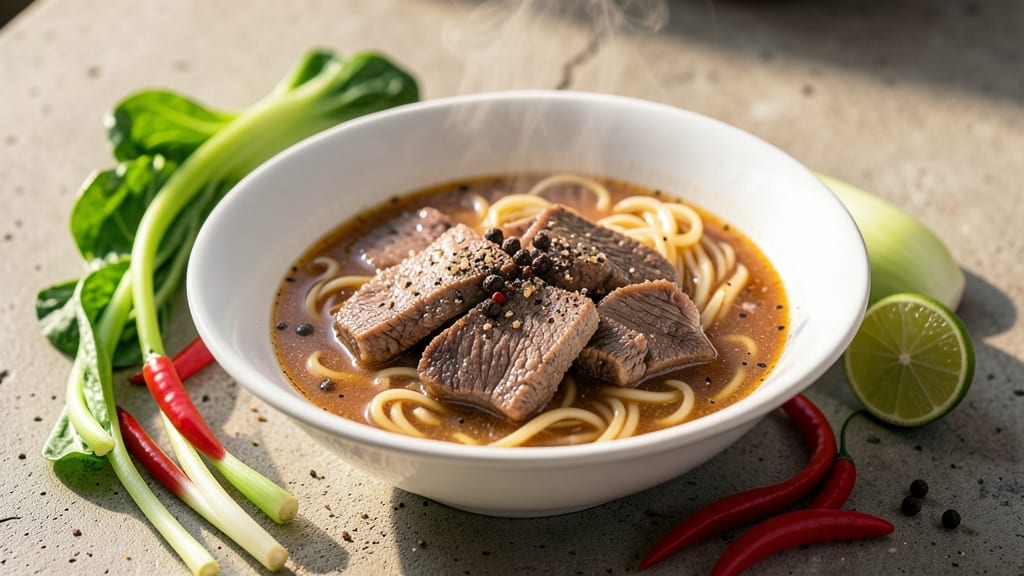
This Chinese beef brisket noodle soup recipe delivers the kind of slow-simmered richness that transforms a simple meal into a comforting centerpiece. 🌟 The secret lies in braising the beef brisket until it’s fork-tender, then building layers of aromatic broth with star anise, ginger, and soy sauce—all while the noodles cook directly in the pot.
I perfected this technique during a particularly chilly winter when I needed something hearty enough to warm both body and soul.
The beauty of this recipe is its balance between tradition and practicality. While the beef brisket requires patience—typically 3 to 4 hours of simmering—the rest of the process moves quickly. The broth develops deep, caramelized notes from the slow cooking, while the noodles absorb the flavors perfectly.
This isn’t just a soup; it’s a one-pot meal that feels like a hug in a bowl.
By the time you’re ready to serve, you’ll have tender beef that practically melts in your mouth, a fragrant broth that’s rich without being heavy, and perfectly cooked noodles. Top it with fresh scallions, bean sprouts, and a drizzle of chili oil for the perfect balance of textures and flavors.
It’s the kind of dish that tastes even better the next day, making it ideal for meal prep.
Whether you’re feeding a family or treating yourself to a comforting solo meal, this recipe delivers restaurant-quality results with minimal cleanup.
The slow-simmered beef and aromatic broth make it worth every minute of wait time—trust me, the first bowl will have you reaching for seconds before you even finish the first.
Ingredients for chinese beef brisket noodle soup
A slow-simmered pot of comfort. Beef brisket, aromatic spices, and noodles cooked together.
| Ingredient | Amount | Notes |
|---|---|---|
| Beef Brisket 🥩 | 2 lb | Fat cap trimmed, cubed 1-inch pieces |
| Fresh Ginger Root 🌿 | 4 oz | Peeled, sliced thinly |
| Garlic Cloves 🧄 | 8 cloves | Peeled, smashed |
| Star Anise Pods 🌿 | 4 whole | Whole for best flavor |
| Dried Red Chili Peppers 🔥 | 2 tbsp | For heat and color |
| Light Soy Sauce 🧂 | 1 cup | Low sodium preferred |
| Dark Soy Sauce 🧂 | 1 tbsp | For color depth |
| Shaoxing Wine 🍷 | ½ cup | Dry, aged variety |
| Rock Sugar 🍯 | ¼ cup | Or substitute brown sugar |
| Chinese Egg Noodles 🍜 | 16 oz | Fresh or dried, uncooked |
| Beef Broth 💧 | 6 cups | Homemade or good quality |
| Sesame Oil 🫒 | 1 tbsp | For finishing touch |
| Scallions 🌱 | ½ cup | Fresh, chopped |
| Bean Sprouts 🌱 | 1 cup | Fresh, rinsed |
| Chili Oil 🌶️ | 2 tbsp | For serving |
[recipe_ingredient_scaler]
The beef brisket is everything here. Look for a well-marbled cut—the fat renders down for incredible flavor. I always buy mine from Whole Foods or Costco when they have it on sale, but any good butcher will work. Trim the fat cap yourself for cleaner cooking. Don’t skip the fat, though—it’s what makes the broth rich. If you can’t find brisket, chuck roast works in a pinch, but it’ll be slightly less tender. The ginger and garlic should be vibrant and fresh—yellowish for ginger, no green sprouts for garlic.
No Shaoxing wine? Dry sherry or dry white wine gets you close, but the flavor isn’t quite the same. Dried red chili peppers can be replaced with 1 tsp red pepper flakes, but you’ll lose some depth. For the soy sauces, low-sodium soy sauce plus a dash of salt works if you’re out of light soy. The rock sugar is key for sweetness—brown sugar or honey can substitute, but the texture won’t be exactly the same. Egg noodles are non-negotiable here; ramen noodles won’t hold up as well to the long simmer. If you’re using dried noodles, soak them for 20 minutes before adding to the pot.
This soup tastes even better the next day, so make it ahead if you can. The beef broth keeps 5 days in the fridge, and the soup 4 days if you store it properly. I freeze portions in ziplock bags for up to 3 months. The noodles cook in the broth, so don’t pre-cook them—just add them at the end. For serving, keep the chili oil separate until you’re ready to drizzle. The scallions and bean sprouts add freshness, so add them right before eating. The fat that rises to the top? Skim it off before reheating—it’ll make the soup greasier.
Why You’ll Love This Recipe
- One-Pot Magic: Honestly, the fact that this comes together in just one Dutch oven? Game-changer. You sear the beef, toast the star anise and chili peppers, then let everything slow-cook while you prep the noodles—minimal cleanup, maximum flavor.
- Umami Bomb: The Shaoxing wine and dark soy sauce give this soup that deep, savory punch you crave. Plus, the star anise and ginger root? They infuse the broth with warmth that lingers like a hug—every spoonful feels like a little reward.
- Freezer’s Best Friend: I make this on Sundays, then freeze half for the week. The beef broth alone lasts five days in the fridge, and the soup? Four days if you portion it right. Need a quick lunch? Boom—just reheat and top with fresh bean sprouts and scallions.
- Budget’s BFF: Two pounds of brisket might sound pricey, but it stretches for four hearty servings. The star anise and dried chili peppers? A little goes a long way, and you can reuse them for future broths. For the cost, this is one of those meals that actually feeds your soul and your wallet.
Step-by-step instructions for Chinese beef brisket noodle soup
Here’s how to create a deeply flavorful, one-pot wonder that balances tender brisket with aromatic broth.
🔥 Step 1: Sear and Build the Flavor Base
Heat a large Dutch oven over medium-high heat. Add the 2 lb beef brisket (cubed 1-inch pieces) in a single layer, letting them sear undisturbed for 3-4 minutes until deeply browned. This step develops the rich Maillard reaction that forms the soup’s foundation.
Remove the brisket and set aside. In the same pot, add 2 tablespoons dried red chili peppers, 4 star anise pods, and 8 smashed garlic cloves. Toast for 30 seconds until fragrant—you’ll smell the garlic deepen and the chili peppers release their aroma. This aromatic trio becomes the soul of your broth.
🍳 Step 2: Simmer the Brisket with Aromatics
Pour in ½ cup Shaoxing wine and scrape up any browned bits from the bottom of the pot. Add 4 oz sliced fresh ginger root, 1 cup light soy sauce, 1 tablespoon dark soy sauce, and ¼ cup rock sugar. Stir to combine, then return the brisket to the pot.
Pour in 6 cups beef broth and bring to a gentle boil. Reduce heat to low and cover partially. Let it simmer for 1 hour, stirring occasionally. The broth should reduce slightly and develop a deep, caramelized color—this is your signal the flavors are melding beautifully.
⏰ Step 3: Cook the Noodles and Finish the Broth
While the brisket simmers, prepare the 16 oz Chinese egg noodles according to package instructions. I like to cook them 1 minute less than directed—they’ll finish cooking in the hot broth. Drain and set aside.
After the 1-hour simmer, check the brisket for tenderness. It should be fork-tender with no resistance. If needed, continue simmering uncovered for another 15-20 minutes until the broth reduces to your desired consistency. Taste and adjust seasoning with additional soy sauce or rock sugar if needed.
🥘 Step 4: Assemble and Serve
Add the cooked noodles to the pot and stir gently to coat them in the flavorful broth. Let everything simmer together for 2-3 minutes to meld the flavors. The noodles should absorb just enough broth to become tender.
Divide the soup among bowls. Top each serving with ½ cup chopped scallions and 1 cup bean sprouts. Drizzle with 1 tablespoon sesame oil and finish with 2 tablespoons chili oil. The contrast of the fresh bean sprouts and chili oil adds brightness and heat to balance the rich broth.
Pro Tips For Making Chinese Beef Brisket Noodle Soup
- Brown the Brisket Properly: That 3-4 minute sear isn’t just for looks—it builds the deep, meaty flavor that carries through the soup. Crowd the pot too soon and you’ll steam the beef instead of getting that caramelized crust. Work in batches if needed, and resist the urge to stir until each piece has a golden-brown bottom.
- Toast the Aromatics Right: Those 30 seconds with the star anise, garlic, and chili peppers might feel short, but rushing this step means missing out on their full aroma. Watch closely—they’ll darken fast, and that’s when the magic happens. If you smell burning, pull the pot immediately; it’s better to under-toast than over.
- Don’t Skimp on Ginger Prep: Thin, even slices of ginger (about 1/8-inch thick) release flavor more evenly than thick chunks or grated ginger. I learned this the hard way—lumpy ginger just sits there, underseasoning the broth. Peel and slice it right before adding to keep it fresh, too.
- Simmer Low and Slow: The broth needs that gentle simmer to develop depth, not a rolling boil that turns the brisket tough. After the initial hour, check the heat—it should be just enough to keep tiny bubbles breaking the surface. If it’s too aggressive, the wine and soy sauce will cook off too fast, leaving your soup flat.
Serving suggestions for this dish
Plating for Maximum Impact
I always serve this soup in deep, wide bowls that let the noodles and toppings shine. A ceramic bowl with a slight lip works perfectly—it holds the broth beautifully while letting the fresh scallions and bean sprouts peek out.
Arrange the noodles in a loose spiral at the bottom, then ladle the rich broth over them. This creates visual interest while keeping everything balanced. 🍜
Garnish Like a Pro
The right garnishes elevate this dish from comforting to extraordinary. Start with ½ cup chopped scallions and 1 cup bean sprouts per bowl—these add crunch and freshness that cuts through the richness.
Finish with a light drizzle of 1 tablespoon sesame oil and 2 tablespoons chili oil on the side so everyone can customize their heat level. A sprinkle of toasted sesame seeds adds texture and nutty depth.
Bread Pairings
This soup pairs beautifully with simple, sturdy breads that can soak up the broth. I reach for steamed bao buns or crusty baguette slices—both hold up well to the hot soup while adding a satisfying contrast.
For a quicker option, steamed mantou (Chinese steamed buns) are perfect—they’re soft enough to absorb the flavors without getting soggy. 🥖
Side Dish Complements
If you want to round out the meal, add a crisp side that balances the soup’s richness. A simple cucumber salad with rice vinegar and sesame oil keeps things light, while steamed bok choy adds a touch of bitterness that cleanses the palate.
I also love serving pickled mustard greens—their tangy crunch cuts through the soup’s depth beautifully.
Drink Recommendations
For a refreshing contrast, I always serve this soup with a light, crisp white wine like Riesling or Pinot Grigio. The acidity helps balance the rich broth. If you prefer beer, a light lager like Tsingtao keeps things balanced without overpowering.
For a non-alcoholic option, jasmine tea with a touch of honey pairs surprisingly well—it’s floral and soothing. 🍷
Make It Special
For a restaurant-quality touch, add a drizzle of black vinegar or chili crisp on top before serving. These finishing touches add complexity and visual appeal. I also like to serve the soup family-style so everyone can share and build their own bowls.
This communal feel makes it even more special, especially on chilly nights when you’re craving comfort. 💛
Nutrition facts
Frequently asked questions
How do I ensure the beef brisket becomes fork-tender?
The key is patience—simmer the 2 lb beef brisket for at least 1 hour at low heat after adding the aromatics and broth. If it’s not tender enough after that, continue simmering uncovered for another 15-20 minutes. The brisket should easily shred with a fork. For extra tenderness, consider pre-marinating the beef overnight with light soy sauce and Shaoxing wine before searing. This extra step breaks down the collagen further.
Can I substitute any of the ingredients if I don’t have them?
Yes! If you can’t find Shaoxing wine, use dry sherry or dry white wine as a close alternative. For rock sugar, brown sugar or honey works, though the texture won’t be identical. The dried red chili peppers can be swapped for 1 tsp red pepper flakes, though you’ll lose some depth of flavor. Always check your soy sauce for sodium content—opt for low-sodium soy sauce if possible.
Why does the recipe say to cook the noodles 1 minute less than directed?
The noodles finish cooking in the hot broth during the final 2-3 minutes of simmering, so cooking them 1 minute less than package instructions prevents them from becoming mushy. This step ensures the noodles absorb the rich, flavorful broth without losing their texture. If using dried noodles, soak them for 20 minutes before adding to the pot.
How can I make this soup ahead of time?
This soup tastes even better the next day! Make the broth and beef mixture up to 24 hours ahead, then refrigerate or freeze. When ready to serve, reheat gently on the stove, add the noodles, and cook for 2-3 minutes. The noodles will absorb the broth and cook perfectly. Store the soup in an airtight container for up to 4 days in the fridge or freeze in portions for up to 3 months.
What’s the best way to serve the chili oil?
Keep the chili oil separate until serving to let everyone customize their heat level. Drizzle it over the soup just before eating, or let guests add it themselves. This way, you can enjoy the rich, aromatic broth without the initial spiciness. Pair it with sesame oil for a balanced flavor profile.

Trained in classic French technique but raised on slow-cooked ribs and spicy rubs, she blends culinary skill with smoke and soul.
- Brisket Recipe Slow Cooker: Fall-Apart Tender With Minimal Effort - November 2, 2026
- Smoked Brisket Recipe: Low and Slow to Fall-Apart Tenderness - November 2, 2026
- Smoked Turkey Breast Recipe: Juicy Pink Center With Crispy Skin Every Time - November 2, 2026