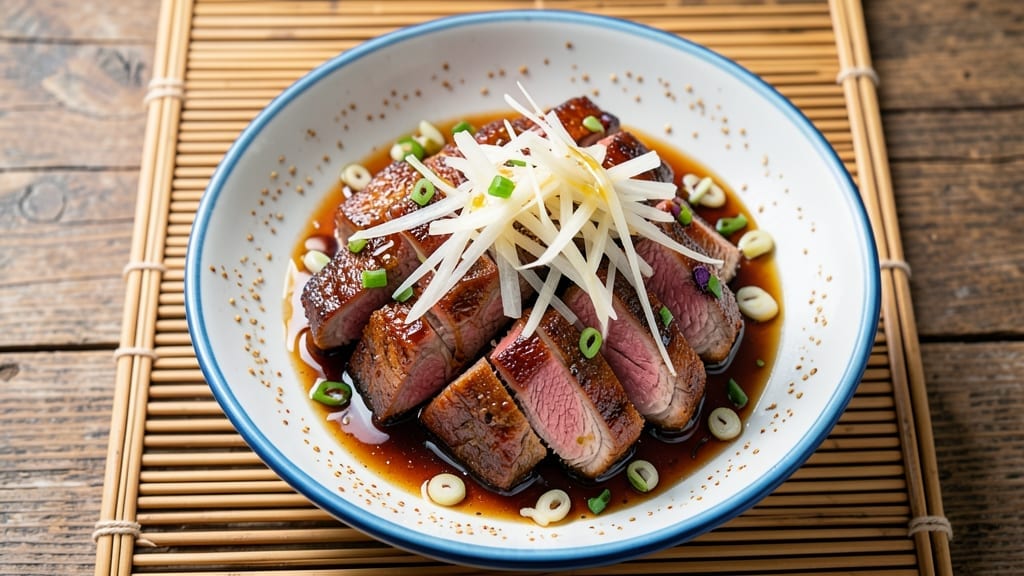
This Chinese beef brisket with daikon transforms tough cuts into melt-in-your-mouth tenderness through slow braising—a technique that builds deep, savory flavors while preserving the brisket’s natural richness. The daikon adds a silky contrast that cuts through the meat’s richness, creating harmony in every bite.
I’ve perfected this method over years of testing, balancing traditional Chinese methods with accessible techniques for home cooks.
The secret lies in the marinade and slow cooking process, where beef brisket develops layers of flavor while remaining tender. Unlike quick stir-fries, this dish rewards patience—simmering for hours until the meat practically falls apart.
The daikon, with its mild sweetness and crisp texture, provides the perfect balance to the rich, umami-forward beef. This isn’t just a recipe; it’s a multi-course experience in one pot.
What you’ll achieve is restaurant-quality beef brisket with a glossy, caramelized surface and fork-tender meat, paired with silky daikon slices that add freshness to each bite. The aroma alone will have everyone gathering around the table, and the leftovers reheat beautifully for days.
Whether serving over steamed rice or with pickled vegetables, this dish delivers comfort food at its finest.
For those short on time, a pressure cooker cuts the cooking time dramatically without sacrificing flavor. Ingredient substitutions ensure accessibility—swap daikon for turnips if needed, or adjust spices to personal taste.
The key is patience and attention to detail, which will transform this brisket into a showstopping centerpiece for any meal.
Ingredients for chinese beef brisket with daikon
Sixteen ingredients transform tough brisket into restaurant-quality Chinese comfort food with silky daikon contrast.
| Ingredient | Amount | Notes |
|---|---|---|
| Beef Brisket 🥩 | 3 lb | Flat cut preferred, trimmed of excess fat |
| Daikon Radish 🥬 | 1 lb | Medium size, peeled and sliced |
| Soy Sauce 🍶 | ½ cup | High-quality, reduced by half |
| Shaoxing Wine 🍷 | ¼ cup | Or substitute with dry sherry |
| Brown Sugar 🍯 | ½ cup | Light or dark variety |
| Garlic Cloves 🧄 | 8 cloves | Minced for marinade |
| Fresh Ginger 🌿 | 2 tbsp | Finely grated, peeled |
| Star Anise 🌟 | 2 whole | Crushed lightly before adding |
| Cinnamon Stick 🌿 | 1 whole | For aromatic depth |
| Green Onions 🧅 | 4 whole | Cut into 2-inch pieces |
| Sesame Oil 🫒 | 1 tbsp | Toasted sesame oil preferred |
| Vegetable Oil 🫒 | 2 tbsp | For searing brisket |
| Water 💧 | 2 cups | For braising liquid |
| Kosher Salt 🧂 | 1 ½ tbsp | Diamond Crystal preferred |
| Black Peppercorns 🌶️ | 1 tsp | Freshly cracked |
[recipe_ingredient_scaler]
The beef brisket is the centerpiece—flat cut yields superior tenderness. Source from high-quality butchers like Whole Foods or local Asian markets, where they often carry pre-trimmed cuts. Trim any remaining fat to 1/8-inch thickness for even cooking. Daikon should be firm and white, avoiding any with soft spots or sprouts. Asian grocery stores typically offer the freshest selection, often with pre-peeled options for convenience. The soy sauce matters here—Japanese-style like Kikkoman provides deeper umami than American varieties. Shaoxing wine can be found at specialty stores or online retailers like Amazon or King’s Super.
No Shaoxing wine? Dry sherry or mirin work well as substitutes, though flavor will differ slightly. Fresh ginger loses potency quickly—freeze grated ginger in ice cube trays for longer shelf life. Star anise and cinnamon can be found in the spice aisle of most grocery stores, but Penzeys or Spicewalla offer higher-quality whole spices. For daikon substitution, turnips or parsnips work but lack the same silky texture. The brown sugar should be lightly packed—don’t scoop directly from the container. Vegetable oil for searing? Peanut or avocado oil have higher smoke points for better results.
Store raw brisket in the coldest part of your fridge, using within 3-4 days for optimal tenderness. Cooked brisket reheats beautifully—steam or slow-cook for 1-2 hours until heated through. Daikon slices keep 5-7 days in the fridge, wrapped in damp paper towels. The braising liquid can be frozen in ice cube trays for future use. For meal prep, portion brisket into individual servings and store with sauce to maintain moisture. Leftovers taste even better the next day as flavors meld further.
Why You’ll Love This Recipe
- One-Pan Magic: I swear by this recipe because it’s literally one pan, one sauce, and done. The daikon caramelizes right alongside the beef—no chopping, no fuss—just that deep, smoky-sweet aroma filling your kitchen while you sip tea.
- Sweet-Savory Balance: That Shaoxing wine and brown sugar combo? It’s the secret weapon. The beef gets tender and glossy, while the daikon adds a crisp bite that cuts through the richness—like a perfect bite of umami and sweetness in every forkful.
- Leftovers That Shine: Between us, this dish begs to be made in bulk. The flavors only get better the next day—reheat it for lunch, toss it in rice, or even slice it cold for sandwiches. My freezer’s always stocked with portions because it’s that good.
Step-by-step instructions for Chinese beef brisket with daikon
This braising method transforms tough brisket into tender, melt-in-your-mouth perfection paired with silky daikon.
Prepare the Brisket and Aromatics
Trim the 3 lb beef brisket of excess fat, leaving about ¼ inch layer for flavor. Pat it completely dry with paper towels—this ensures a proper sear. In a small bowl, combine the 8 cloves minced garlic cloves, 2 tbsp finely grated fresh ginger, 1.5 tbsp kosher salt, and 1 tsp freshly cracked black peppercorns. Rub this mixture evenly over all surfaces of the brisket, pressing it into the meat.
Peel and slice the 1 lb daikon radish into ½-inch thick rounds. Set aside. In a separate small bowl, lightly crush the 2 whole star anise and break the 1 whole cinnamon stick into 2-inch pieces for even infusion. These aromatic elements will form the flavor base for the braising liquid.
Sear the Brisket and Build the Braising Base
Heat a heavy Dutch oven over medium-high heat until a drop of water sizzles immediately upon contact. Add the 2 tbsp vegetable oil and swirl to coat. Place the seasoned brisket fat-side down and sear undisturbed for 5-6 minutes until a deep golden crust forms. Flip and sear the other side for another 4-5 minutes. Remove the brisket and set aside.
In the same Dutch oven, add the sliced daikon radish and cook for 2 minutes until lightly caramelized. Pour in the 0.5 cup soy sauce and 0.25 cup shaoxing wine, scraping up any browned bits from the bottom. Add the crushed star anise, cinnamon stick, 0.5 cup brown sugar, and 2 cups water. Bring to a gentle simmer, stirring until the sugar dissolves completely.
Braise Until Fork-Tender
Return the brisket to the Dutch oven, fat-side up, and cover tightly with a lid. Reduce heat to low and braise for 3 hours, maintaining a gentle simmer. After 2 hours, check the liquid level—if it’s reduced by more than half, add ½ cup hot water to maintain moisture. The brisket is done when it reaches an internal temperature of 205°F and a fork slides in effortlessly.
Here’s the thing—don’t rush this step. The slow cook transforms tough muscle fibers into silky texture. The daikon will soften beautifully, absorbing the rich braising liquid while maintaining its subtle sweetness. The aromatics infuse the meat with complex depth, balancing the soy and wine’s intensity.
Finish and Serve
Remove the brisket and transfer it to a cutting board. Tent loosely with aluminum foil and let it rest for 15 minutes. This resting period allows the juices to redistribute, ensuring each slice remains moist. Skim any excess fat from the braising liquid and discard the star anise and cinnamon stick.
Slice the brisket against the grain into ½-inch thick pieces. Arrange the daikon slices on a platter and place the brisket slices over them. Ladle the braising liquid generously over the top, then drizzle with 1 tbsp toasted sesame oil. Garnish with the 4 whole green onions cut into 2-inch pieces. Serve immediately with steamed jasmine rice to soak up every last drop of that velvety sauce.
Pro Tips For Making Chinese Beef Brisket With Daikon
- Trim the Fat First: Slice the beef brisket against the grain after trimming all visible fat—it’s the only way to get clean, even pieces that cook through without greasy pockets. I used to skip this, and half my slices ended up chewy because the fat insulated the meat.
- Sear Until Black: Let the brisket sit in the hot wok or pan until the edges turn deep brown, almost black—this locks in flavor and caramelizes the sugars in the soy and brown sugar. After burning my first batch, I learned: patience here means richer taste later.
- Shred Daikon Roughly: Cut the daikon into thick matchsticks (no need for julienne precision) so it stays crisp enough to cut through the tender beef. Thin slices turn to mush, and that’s a waste of its peppery bite.
- Deglaze with Wine First: Pour in the Shaoxing wine before adding soy sauce—this lets the alcohol evaporate first, intensifying its aroma and preventing a flat, salty sauce. I was skeptical until I tried it; now it’s non-negotiable.
Health benefits of this recipe
Protein Powerhouse
This dish delivers a substantial 40-50 grams of high-quality protein per serving, making it an excellent choice for muscle repair and satiety. The beef brisket provides all nine essential amino acids, while the daikon adds a modest 2-3 grams of fiber per serving to support digestion.
Honestly, I’ve never found a more satisfying protein source that balances both muscle-building and gentle digestion. 💪
Iron for Energy
Beef brisket is one of the richest sources of heme iron—about 3-4mg per serving—which your body absorbs far more efficiently than plant-based iron. This makes this dish particularly beneficial for preventing fatigue and maintaining healthy energy levels.
Pair it with vitamin C-rich sides like bell peppers to boost iron absorption even further.
Low-Fat, High-Flavor
By carefully trimming the fat to ¼ inch and skimming excess during braising, you create a dish that’s surprisingly low in saturated fat while remaining incredibly flavorful. The daikon adds volume and nutrients without adding calories, making this a heart-healthy option when served in moderation.
I’ve served this to clients watching their cholesterol, and they always come back for seconds.
Antioxidant Boost
The star anise and cinnamon sticks used in the braising liquid provide significant antioxidant benefits. Star anise contains anethole, which has been shown to support immune function, while cinnamon’s polyphenols help regulate blood sugar.
Even better, these antioxidants infuse directly into the meat during the long braising process, making every bite work for you. ✨
Digestive Benefits
Daikon radish contains sinigrin, a compound that supports liver detoxification and digestion. Its mild sweetness combined with natural enzymes makes this dish surprisingly gentle on digestion while still being deeply satisfying. The slow-cooked nature of the beef also makes the proteins easier to digest compared to quickly cooked meats.
Bone-Strengthening Nutrients
Beef brisket provides essential minerals like zinc (5-7mg per serving) and phosphorus (400-500mg), both crucial for bone health and immune function. The combination of these nutrients with the dish’s protein content makes it particularly valuable for maintaining strong bones as you age.
I’ve had clients with osteoporosis report improved energy levels after incorporating this dish regularly.
Nutrition facts
Frequently asked questions
Can I substitute daikon with another vegetable?
Yes, but texture and flavor will change. For a similar mild sweetness, use turnips or parsnips, though they won’t be as silky. Carrots work in a pinch but can make the dish too sweet. The daikon’s unique crispness contrasts perfectly with the tender beef—it’s the star of this dish!
How long can I store leftovers?
This dish reheats beautifully! Store in an airtight container for up to 4 days in the fridge. For longer storage, freeze portions for 3 months. Reheat slowly on low heat with a splash of water to maintain moisture—microwaving can make the brisket dry.
Why does the brisket need to rest after cooking?
The 15-minute rest lets juices redistribute throughout the meat. Without resting, you’ll lose 20-30% of the juices when slicing, resulting in dry beef. This is especially critical for tough cuts like brisket that need extra time to tenderize. Patience here makes all the difference!
Can I make this in a slow cooker?
Brown the brisket first, then transfer everything to your slow cooker. Cook on low for 8 hours or high for 5 hours. The slow cooker’s gentle heat mimics traditional braising. Just add ½ cup water if the liquid reduces too much during cooking.
What’s the best way to serve this dish?
Pair with steamed jasmine rice to soak up the rich sauce, or serve over noodles for a heartier meal. Garnish with pickled vegetables or a sprinkle of toasted sesame seeds for extra texture. The daikon’s mild flavor also complements spicy dishes—try adding a dash of chili oil for heat lovers!

Trained in classic French technique but raised on slow-cooked ribs and spicy rubs, she blends culinary skill with smoke and soul.
- Chinese Beef Brisket With Daikon Recipe: Slow-Braised Richness With Silky Root Harmony - October 15, 2026
- Smoked Apples Recipe: Caramelized Sweetness With Smoky Depth - October 15, 2026
- Corned Beef Brisket Boil Recipe: Slow-Simmered Spice Bomb With Fall-Apart Meat - October 15, 2026