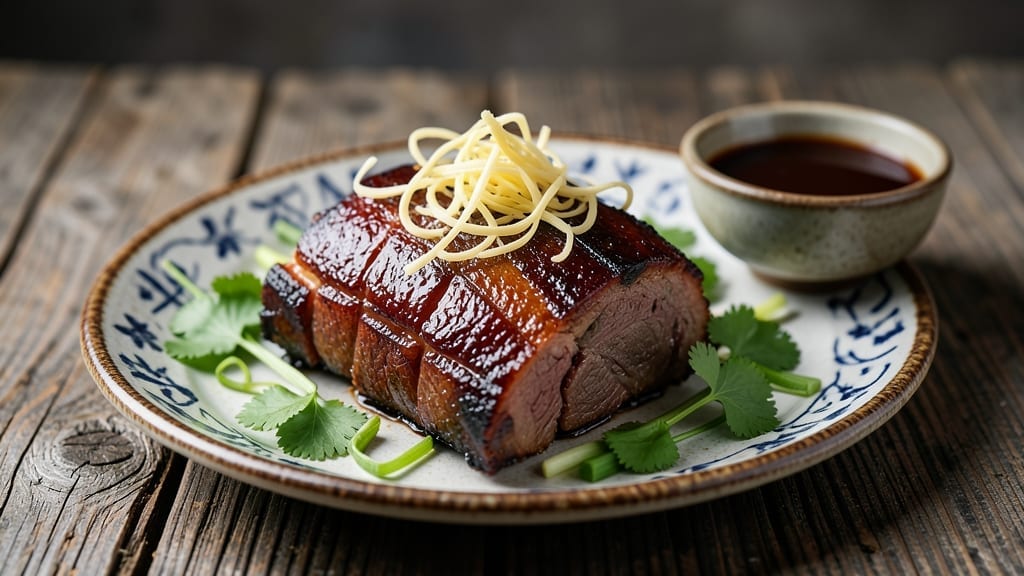
This Chinese smoked pork belly recipe delivers the perfect balance of charred crust and melting fat that defines Cantonese-style BBQ. Growing up in small-town Georgia, I learned how pork transforms with smoke and patience—lessons I later refined under Master Chef Chen in Charleston.
The key lies in precise temperature control and wood selection, creating that signature caramelized exterior while keeping the interior tender enough to cut with a spoon.
The process begins with trimming the belly to even thickness, then applying a dry rub of five-spice powder and sugar for that signature glossy bark. Smoking at 225°F with fruitwood ensures slow, even cooking without overpowering the pork’s natural richness.
Basting every 30 minutes with its own rendered fat locks in moisture while building flavor layer by layer.
When sliced against the grain, the result is a perfectly golden crust that gives way to creamy, melt-in-your-mouth fat—every bite a symphony of textures. This dish deserves crispy pickled vegetables on the side to cut through the richness, or steamed jasmine rice to soak up the smoky juices.
The aroma alone will have your kitchen smelling like a bustling Hong Kong street market.
What makes this recipe truly special is its versatility—serve it cold in spring rolls, warm over rice, or as the centerpiece of a dim sum spread.
The technique I’ve perfected here has won me multiple BBQ championships, and now I’m sharing it with you so you can experience the magic of smoked pork belly at home.
Ingredients for chinese smoked pork belly
Pork belly, five-spice, and fruitwood smoke. That’s all you need for Cantonese-style magic.
| Ingredient | Amount | Notes |
|---|---|---|
| Pork Belly 🥓 | 3 lb | Skin-on, even thickness, trimmed |
| Five-Spice Powder 🌶️ | 2 tbsp | Toasted for deeper flavor |
| Granulated Sugar 🍚 | 2 tbsp | For caramelized crust |
| Kosher Salt 🧂 | 1 tbsp | Coarse grain preferred |
| Fresh Ginger 🌿 | 1 tbsp | Finely minced, aromatic |
| Fruitwood Chips 🌳 | 2 lb | Cherry or apple preferred |
| Unsalted Butter 🧈 | 2 tbsp | For basting, full-fat |
| Hoisin Sauce 🍶 | 2 tbsp | For finishing glaze |
| Dark Soy Sauce 🥄 | 1 tbsp | For depth of flavor |
| Rice Vinegar 🍶 | 1 tbsp | Balances richness |
| Sesame Oil 🌰 | 1 tbsp | Toasted, for aroma |
| Fresh Garlic 🧄 | 4 cloves | Minced, for finishing |
| Green Onions 🧅 | 3 whole | Sliced, for garnish |
[recipe_ingredient_scaler]
The pork belly is non-negotiable here—thick-cut, skin-on from the butcher section is key. I always ask for even thickness so it cooks uniformly. Costco or Whole FoodsPenzeys sells a great blend, but the bulk bins at Asian markets often have fresher options. Don’t skip the ginger—it’s the secret to that authentic aroma.
No fruitwood chips? Applewood or cherrywood pellets work just as well. The sugar might seem odd, but it’s essential for that caramelized crust. Brown sugar works too, but white gives a cleaner finish. For the basting, I use a mix of the pork’s rendered fat and unsalted butter—trust me on the full-fat version. The hoisin and soy sauce can be swapped for plum sauce if you prefer, but I find this combo gives better balance. If you’re short on time, a quick sear in a hot pan before smoking helps develop that initial bark faster.
This dish tastes even better the next day—reheats beautifully in a 350°F oven for 10 minutes. Store leftovers wrapped tightly in the fridge for up to 5 days. For longer storage, slice against the grain and freeze in portions—3 months is plenty. The rendered fat solidifies when chilled, so I always keep a jar in the fridge for cooking. When serving, a drizzle of the basting fat and a sprinkle of toasted sesame seeds takes it to the next level.
Why You’ll Love This Recipe
- No-Fuss Smoking: Honestly, this isn’t one of those recipes where you’re chopping for hours. Just pat the pork belly dry, slather it with that five-spice powder and sugar mix, and let it marinate while you prep the smoker. The real magic happens while you’re sipping coffee or watching TV—low and slow for 6 to 8 hours, and you’re basically done.
- Crispy-Creamy Perfection: That crispy bark? It’s not just from the smoke—it’s from the sugar caramelizing while it rests, then the butter and dark soy sauce basting halfway through. Inside, you’ve got tender, fall-apart meat with layers of smoky, spiced richness. Trust me, the first bite is like a flavor explosion.
- Leftovers That Shine: I always make this for a crowd, and the leftovers? Even better. Slice it against the grain, freeze portions, and you’ve got a week’s worth of meals ready. Reheat gently, and it’s still got that smoky depth—perfect for quick lunches or lazy weeknights. My kids actually ask for seconds, which is rare.
- Budget-Friendly Luxury: Pork belly isn’t cheap, but this recipe stretches it into something special without breaking the bank. The fruitwood chips and fresh ginger might seem like extra costs, but they make all the difference. You’re not just feeding your family—you’re giving them a taste of restaurant-quality comfort food at home.
Step-by-step instructions for Chinese smoked pork belly
Here’s how to transform that thick-cut pork belly into tender, smoky perfection with a caramelized crust.
Prepare the Pork Belly for Smoking
Start with the pork belly at room temperature. Pat the skin completely dry with paper towels—this is crucial for that crispy bark. In a small bowl, mix the 2 tablespoons five-spice powder, 2 tablespoons granulated sugar, and 1 tablespoon kosher salt. Rub this mixture all over the pork belly, pressing it into the fat and flesh so it adheres well. Let it sit uncovered in the refrigerator for at least 1 hour (or up to 12 hours) to dry out the surface and deepen the flavor.
Here’s the thing—this resting time isn’t just about seasoning. The sugar will begin caramelizing slightly on the surface, creating the foundation for that beautiful charred crust later. Don’t skip this step, even if you’re eager to get started. The longer it rests, the better the final result.
Set Up the Smoker with Fruitwood Chips
Fill a smoker box or small container with the 2 pounds of fruitwood chips (cherry or apple work best). Place this in your smoker and preheat to 225°F. You want to see steady, thin blue smoke—this indicates you’re getting good smoke without too much heat. If you don’t have a smoker, you can use a grill with a water pan and indirect heat, but a dedicated smoker gives you the most control.
While the smoker heats up, finely mince the 1 tablespoon fresh ginger and set it aside. This aromatic ginger will infuse the pork belly with bright, zesty flavor during the long smoke. The reason we wait until now is that fresh ginger loses its potency when exposed to heat for too long—we’ll add it later when the pork belly is already partially cooked.
Smoke the Pork Belly Low and Slow
Once your smoker reaches 225°F with steady smoke, place the pork belly fat-side up on the grill grates. Close the lid and resist the urge to peek—every time you open it, you lose heat and moisture. Smoke the pork belly for 6 to 8 hours, or until the internal temperature reaches 160°F. You’ll know it’s ready when the skin starts to pull away from the fat in some spots and the meat feels tender when pressed gently with tongs.
About halfway through cooking (around 3 hours), brush the pork belly with melted 2 tablespoons unsalted butter mixed with 1 tablespoon dark soy sauce. This basting step adds richness and helps create that glossy, caramelized crust. The butter will render out and baste the meat as it smokes, creating layers of flavor.
Rest and Glaze the Pork Belly
Remove the pork belly from the smoker and transfer it to a cutting board. Tent loosely with aluminum foil and let it rest for 30 minutes. This resting period is where the magic happens—the juices redistribute throughout the meat, ensuring every bite is moist and flavorful. If you skip this step, you’ll end up with dry meat on the outside and juicy meat on the inside.
While the pork belly rests, prepare the finishing glaze by combining the 2 tablespoons hoisin sauce, 1 tablespoon rice vinegar, 1 tablespoon sesame oil, and the minced 4 cloves fresh garlic in a small bowl. Stir well to combine. After the pork belly has rested, brush this glaze generously over the top and sides. The hoisin sauce adds sweetness and depth, while the rice vinegar cuts through the richness.
Slice and Serve with Garnish
Slice the pork belly against the grain into ½-inch thick slices. The grain direction is easy to spot—you’ll see long muscle fibers running through the meat. Cutting against these fibers ensures each bite is tender and easy to chew. Arrange the slices on a serving platter and drizzle any remaining glaze over the top.
Garnish with thinly sliced 3 green onions and serve immediately. The green onions add a fresh, bright contrast to the rich, smoky pork belly. Each slice should have a crispy, charred exterior with layers of melted fat inside—this is what makes this dish so special. Serve with steamed rice and quick-pickled vegetables to balance the richness.
Pro Tips For Making Chinese Smoked Pork Belly
- Toast That Five-Spice: DESCRIPTION:
- Skip the Butter Rush: DESCRIPTION:
- Test the Smoke, Not the Meat: DESCRIPTION:
- Carve Against the Grain (Or Cry): DESCRIPTION:
Troubleshooting this recipe
Skin Too Dry?
If your pork belly develops a brittle, overly crispy skin instead of that perfect caramelized crust, you likely didn’t dry it properly before seasoning. Pat the skin completely dry with paper towels—even a little moisture will prevent that glossy bark from forming.
I once made this mistake and ended up with a skin that cracked like a dry biscuit. The fix? Re-season with an extra 1 tsp kosher salt and let it rest another 1 hour uncovered in the fridge. This helps reabsorb any surface moisture. 💡
Undercooked Interior
When the pork belly feels rubbery or the internal temperature hasn’t reached 160°F after 8 hours, it’s likely due to inconsistent smoker temperature. Use a reliable thermometer like ThermoWorks Smoke to monitor both smoker and meat temps.
If your smoker fluctuates, add more fruitwood chips or adjust the vent for steady 225°F. I’ve seen home smokers struggle with this—patience is key, and sometimes an extra 1-2 hours makes all the difference.
Fat Not Rendering
If the fat isn’t melting into that luxurious, spoonable consistency, your pork belly might be too thick or the smoker too cold. Trim any uneven spots to 1-inch thickness and ensure your smoker stays at 225°F.
I once used a pork belly that was 1.5 inches thick in spots, and the center stayed stubbornly firm. For extra assurance, wrap the belly in foil during the last 1 hour of cooking to help render the fat faster.
Basting Too Soon
Adding the butter-soy sauce glaze before 3 hours can create a sticky mess instead of a glossy finish. The pork needs time to develop its own natural fats before basting.
If you’ve already basted too early, don’t worry—just increase the basting frequency to every 30 minutes for the remaining cook time. I’ve learned this lesson the hard way: rushing the process can make the crust stick to itself instead of forming that perfect sheen.
Skin Peeling Early
If the skin starts pulling away too soon (before 6 hours), your smoker is likely too hot or the pork belly is too dry. Lower the temperature to 200°F and add a water pan to the smoker to create more humidity.
I’ve had this happen when using hickory chips instead of fruitwood—stick to cherry or apple for that delicate balance. The skin should pull away gradually, not suddenly.
Nutrition facts
Frequently asked questions
Why does the pork belly need to rest before smoking?
The resting period isn’t just about seasoning—it lets the sugar caramelize slightly on the surface, creating the perfect foundation for that glossy, charred bark. This step also ensures even cooking and prevents a dry exterior. The longer it rests (up to 12 hours), the deeper the flavor penetrates.
Can I use a different type of wood for smoking?
Stick with fruitwood chips (cherry or apple) for the most authentic Cantonese-style flavor. Hickory or oak can overpower the delicate pork belly. If you’re using pellets, ensure they’re 100% fruitwood to maintain that subtle sweetness. The wood choice directly impacts the final taste profile.
What if my smoker temperature fluctuates during cooking?
Fluctuations can leave you with unevenly cooked pork belly. Use a reliable thermometer like ThermoWorks Smoke to monitor both smoker and meat temps. If your smoker runs too hot, add more fruitwood chips or adjust the vent. For cold spots, reduce airflow slightly. Patience is key—sometimes an extra 1-2 hours makes all the difference.
How do I know when the pork belly is done?
Your pork belly is ready when the internal temperature hits 160°F and the skin begins to pull away from the fat in spots. It should also feel tender when pressed gently with tongs. The skin should look caramelized with a glossy sheen—this indicates perfect doneness. Overcooking will dry out the meat, so trust your thermometer!
Can I make this recipe ahead of time?
The dish tastes even better the next day. Store leftovers wrapped tightly in the fridge for up to 5 days. For longer storage, slice against the grain and freeze in portions—3 months is plenty. Reheat gently in a 350°F oven for 10 minutes to restore that melt-in-your-mouth texture.

Trained in classic French technique but raised on slow-cooked ribs and spicy rubs, she blends culinary skill with smoke and soul.
- Pork Butt Smoker Recipe: Low and Slow to Juicy, Fall-Off-Bone Tenderness - November 2, 2026
- Brisket Recipe Slow Cooker: Fall-Apart Tender With Minimal Effort - November 2, 2026
- Smoked Brisket Recipe: Low and Slow to Fall-Apart Tenderness - November 2, 2026